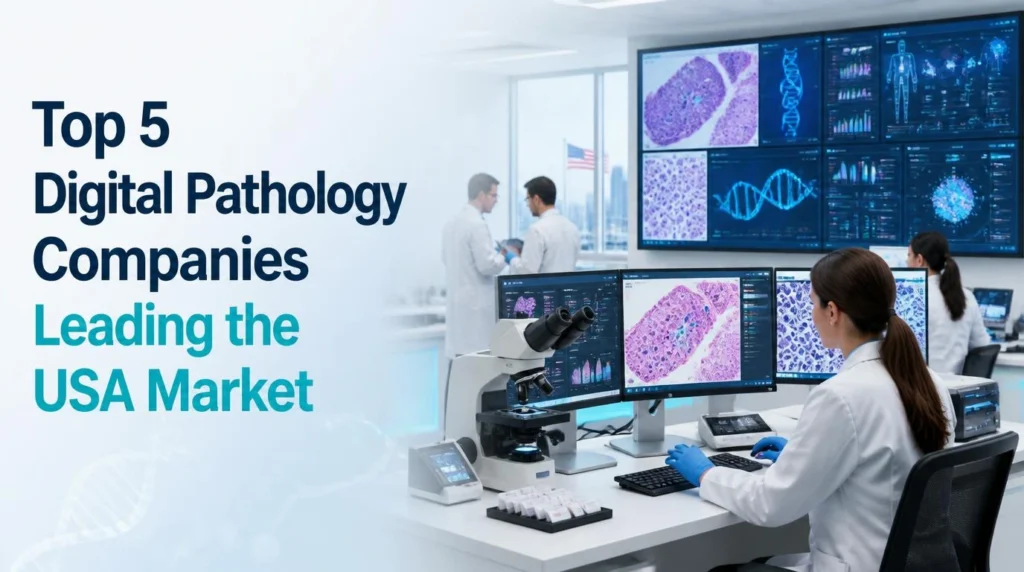
Digital pathology is reshaping how laboratories, hospitals, and research centers diagnose disease across the country. This guide breaks down the five companies driving that shift and rounds out with tips for building a reliable Pathologists Email List for outreach. Whether you’re a lab administrator, a healthcare marketer, or simply curious about where diagnostic technology is headed, this article walks through the players setting the pace in 2026.
Understanding the Digital Pathology Landscape
Digital pathology refers to the process of scanning glass slides into high-resolution digital images that can be viewed, shared, and analyzed on a screen instead of under a traditional microscope. This shift has opened the door to remote consultations, AI-assisted image analysis, and centralized storage systems that make second opinions and case sharing far easier than they used to be.
The transition away from glass slides isn’t just a convenience upgrade. It’s a fundamental change in how diagnostic labs operate. Digital pathology slides can be annotated, measured, and examined using AI-powered algorithms that identify subtle patterns not easily detected through visual inspection alone. They can also be sent instantly to a specialist across the country, cutting down the time patients wait for a diagnosis.
Market researchers have tracked this growth closely. The digital pathology market was valued at roughly USD 2.01 billion in 2026 and is projected to surpass USD 3.2 billion by 2031, growing at a compound annual rate of about 9.9 percent. North America accounted for close to 48 percent of global revenue in 2025, underscoring how central the U.S. market is to this technology’s future. Rising cancer rates, workforce shortages among trained pathologists, and growing comfort with AI-assisted tools are all pushing adoption forward.
Against that backdrop, a handful of companies have distinguished themselves in the United States through scanner technology, software platforms, and AI-driven diagnostic tools. Below are five companies that consumers, healthcare professionals, and industry watchers should know.
Leica Biosystems (A Danaher Company)
Leica Biosystems has built a long-standing reputation in histology and slide-scanning hardware, and it remains one of the most recognized names in digital pathology today. As part of Danaher Corporation, Leica benefits from substantial research funding and a broad distribution network across hospitals and reference labs nationwide.
The company’s Aperio line of whole-slide scanners is widely used in both clinical and research settings. In January 2026, Leica Biosystems introduced the Aperio CS5 scanner, a compact unit built to support low- to medium-volume digital workflows with high image quality. This kind of incremental hardware innovation has helped Leica maintain a strong foothold even as newer, software-first competitors enter the space.
Leica has also expanded through partnerships rather than working in isolation. In January 2025, the company announced an alliance with Indica Labs, an AI-focused digital pathology software firm, aimed at developing companion diagnostics and improving biomarker analysis for cancer and other conditions. This kind of collaboration reflects a broader industry trend: hardware manufacturers teaming up with AI software developers instead of trying to build every layer of the stack themselves.
For hospitals and labs already invested in Leica’s scanning equipment, this ecosystem approach makes upgrades and integrations smoother. It also signals where the company is headed: not just selling scanners, but building a connected pipeline from slide digitization to AI-assisted analysis.
Philips Digital Pathology
Koninklijke Philips N.V., commonly known as Philips, is a Netherlands-based company with a substantial and growing presence in the U.S. digital pathology market. Philips is consistently named alongside Danaher as one of the leading players in this space, thanks to its combination of imaging hardware, cloud storage, and clinical workflow software.
Philips’ IntelliSite Pathology Solution was among the earliest whole-slide imaging systems to receive regulatory clearance for primary diagnosis in the United States, a milestone that gave hospitals more confidence in fully replacing microscope-based review for certain diagnostic tasks. That early clearance helped Philips establish credibility with pathology departments that were cautious about moving away from traditional methods.
Beyond scanning hardware, Philips has invested heavily in cloud-based image management, allowing labs to store, retrieve, and share massive volumes of slide data without maintaining expensive on-site servers. This matters increasingly as patient case volumes grow and health systems look for ways to reduce the storage and IT burden that comes with digitizing entire pathology departments.
Philips also markets its platform as vendor-neutral in certain integrations, meaning labs aren’t necessarily locked into a single ecosystem. For hospital administrators comparing long-term costs and flexibility, that openness can be a meaningful differentiator compared to more closed systems.
PathAI
PathAI represents the newer wave of digital pathology companies: ones built from the ground up around artificial intelligence rather than around scanning hardware. Based in Massachusetts, PathAI develops machine learning models trained to assist pathologists with tasks ranging from cancer detection to biomarker quantification.
Instead of competing with digital pathology scanner manufacturers, PathAI offers software that integrates seamlessly with existing digital pathology systems. Its algorithms are trained on large datasets of annotated pathology images, allowing them to flag areas of concern, quantify biomarkers relevant to treatment decisions, and support pharmaceutical companies running clinical trials that depend on consistent, standardized pathology assessments.
This focus on pharmaceutical and biotech partnerships sets PathAI apart from companies primarily selling to hospitals. Drug developers need highly consistent, reproducible pathology assessments across large trials involving hundreds or thousands of patients, and manual review introduces variability that AI-assisted scoring can help reduce. That use case has made PathAI a notable name not just in clinical diagnostics circles but in the broader life sciences research community as well.
For patients, the practical benefit of tools like PathAI’s isn’t always visible directly, but it shows up in faster, more consistent diagnostic turnaround and, over time, in drug development processes that move a bit more efficiently because pathology data is more standardized.
Paige AI
Paige, often referred to as Paige AI, is another U.S.-based company that has carved out a significant reputation in AI-powered cancer diagnostics. The company’s tools are designed to assist pathologists in detecting prostate cancer, breast cancer, and other conditions by analyzing digitized slides and highlighting regions that warrant closer review.
What distinguishes Paige from some competitors is its emphasis on regulatory clearance and clinical validation. The company has pursued FDA clearances for specific diagnostic applications, a process that requires extensive clinical evidence showing the AI performs reliably compared to human review alone. This regulatory rigor has helped Paige build trust among pathology departments that are understandably cautious about integrating AI into decisions that directly affect patient care.
Paige is frequently listed among the top AI companies working in digital pathology today, and its tools are increasingly integrated into broader digital pathology platforms rather than sold purely as standalone products. This kind of integration, where AI results appear directly within a pathologist’s existing digital workflow instead of requiring a separate application, has become an important selling point across the industry. Pathologists are busy, and tools that require constant switching between screens tend to see lower adoption regardless of how accurate the underlying technology is.
Paige’s continued expansion into new diagnostic categories suggests the company is aiming to become a broad AI layer across many cancer types, not just a single-condition tool.
Indica Labs
Rounding out this list is Indica Labs, a U.S.-based company known for its HALO and HALO AI software platforms used in both research and clinical pathology settings. Indica Labs offers a comprehensive portfolio of image analysis software, including the HALO AI platform built for quantitative pathology, and serves both research institutions and clinical labs with tools for managing pathology data.
Indica’s software is widely used in pharmaceutical research, where quantitative image analysis helps researchers measure biomarkers with a level of consistency that’s difficult to achieve through manual scoring alone. This has made Indica a common choice among biotech and pharma organizations running large-scale studies that depend on standardized image data.
The company’s partnership with Leica Biosystems, mentioned earlier, further illustrates how digital pathology companies are increasingly collaborating rather than operating as isolated competitors. Indica provides the AI and quantitative analysis layer, while Leica supplies scanning hardware, creating a more complete pipeline for labs that want an integrated solution without piecing together tools from multiple vendors themselves.
For research-focused institutions and academic medical centers, Indica’s flexibility across both clinical and research use cases makes it a practical choice, especially for organizations that need to support multiple types of pathology work under one software umbrella.
Why These Five Companies Matter
Each of these five companies approaches digital pathology from a slightly different angle. Leica and Philips bring decades of experience in imaging hardware and have the manufacturing scale to support large hospital systems. PathAI, Paige, and Indica Labs represent the AI-driven software side of the industry, each carving out a niche: PathAI in pharmaceutical trial support, Paige in FDA-cleared cancer detection tools, and Indica in quantitative research-grade image analysis.
Together, they illustrate a broader pattern taking shape across the entire industry: hardware and software companies increasingly working together rather than competing head-on. Partnerships like the one between Leica Biosystems and Indica Labs are becoming more common as companies look to combine scanning technology with AI-powered analysis, giving hospitals and labs a more complete solution without having to manage relationships with a dozen different vendors.
Hospital and reference laboratories continue to lead adoption, representing the largest share of the digital pathology market, but pharmaceutical and biotechnology organizations are growing at a notably faster pace as they lean on AI-assisted image analysis for drug development and clinical trials. This dual growth path, driven by both clinical diagnostics and life sciences research, is part of what makes the U.S. digital pathology market so dynamic right now.
The Role of AI in Shaping the Next Wave
Artificial intelligence has moved from a novelty in pathology to something close to a standard expectation among forward-looking labs. AI tools now support pathologists across multiple stages of the digital workflow, from initial triage of cases to detailed image analysis for things like molecular profiling. This doesn’t replace the pathologist’s judgment, but it does help manage caseloads more efficiently and can catch subtle patterns that support a more confident diagnosis.
One practical challenge labs face is integration. Many AI vendors build standalone tools, which means pathologists sometimes have to switch between several different applications during a single case review. Newer platforms are addressing this by integrating multiple AI vendors directly into a single viewing screen, so a specialist can access several diagnostic tools without leaving their primary workspace. This kind of consolidation is likely to become more common as labs look for ways to adopt AI without adding friction to their daily workflow.
For consumers and patients, none of this happens in a vacuum they can see directly, but it does translate into real-world benefits: faster diagnoses, more consistent results across different labs, and better access to specialist review even for patients in smaller or rural healthcare systems that may not have an on-site pathologist for every subspecialty.
Considerations for Healthcare Marketers and Vendors
For companies selling digital pathology equipment, software, or related services, reaching the right professional audience is just as important as building good technology. Pathologists, lab directors, and hospital administrators are the decision-makers evaluating these tools, and connecting with them requires targeted, relevant outreach rather than broad, generic marketing.
This is where a well-maintained Pathologists Email lists strategy becomes valuable for vendors, conference organizers, and continuing education providers trying to reach this specialized audience. Building or sourcing an accurate list of pathologists, lab managers, and pathology department decision-makers allows companies to share relevant product updates, clinical study invitations, or educational content directly with the professionals who will actually evaluate and adopt new technology.
A quality list should be segmented by specialty (anatomic pathology, molecular pathology, hematopathology, and so on), practice setting (academic medical center, private lab, hospital system), and geographic region, since adoption trends and purchasing processes can vary meaningfully across these groups. Outreach that respects professional communication norms, includes clear opt-out options, and complies with relevant email marketing regulations tends to perform far better than mass, untargeted campaigns.
Marketers working in this space should also keep in mind that pathologists are a relatively small, highly specialized professional group. Overly frequent or irrelevant messaging can damage trust quickly, so quality and relevance of contact data matter more than sheer volume when planning any campaign built around a professional list.
What This Means for Patients and Healthcare Consumers
While much of the digital pathology conversation centers on technology and business strategy, the end goal is ultimately patient care. Faster slide digitization, AI-assisted review, and easier remote consultation all point toward the same outcome: patients getting accurate diagnoses more quickly, regardless of where they happen to be treated.
Digital pathology allows physical tissue slides to be converted into high-resolution digital images that can then be analyzed using advanced software, AI algorithms, and collaborative review tools, offering benefits like faster turnaround times, improved accuracy through machine assistance, and the ability for specialists to consult remotely across distances. For patients in areas with limited access to specialist pathologists, this technology can mean the difference between waiting weeks for a second opinion and receiving one within days.
As adoption continues to grow across hospital systems nationwide, patients are likely to see these benefits become more standard rather than something reserved for major academic medical centers. The five companies covered in this article are among the key players driving that shift toward a more connected, AI-assisted diagnostic process across the United States.
Conclusion
Digital pathology companies like Leica Biosystems, Philips, PathAI, Paige AI, and Indica Labs are steadily transforming how diagnoses happen across American hospitals, labs, and research centers. Each brings a distinct strength, whether that’s scanning hardware, cloud infrastructure, or AI-driven image analysis, and together they’re pushing the industry toward faster, more consistent, and more accessible pathology care.
For vendors and organizations hoping to reach this specialized professional community, building a thoughtful, well-segmented Pathologists Mailing list remains one of the most effective ways to connect decision-makers with relevant tools and resources. As adoption grows nationwide, the companies and outreach strategies that prioritize accuracy and relevance will likely see the strongest long-term results.