Skip to main content
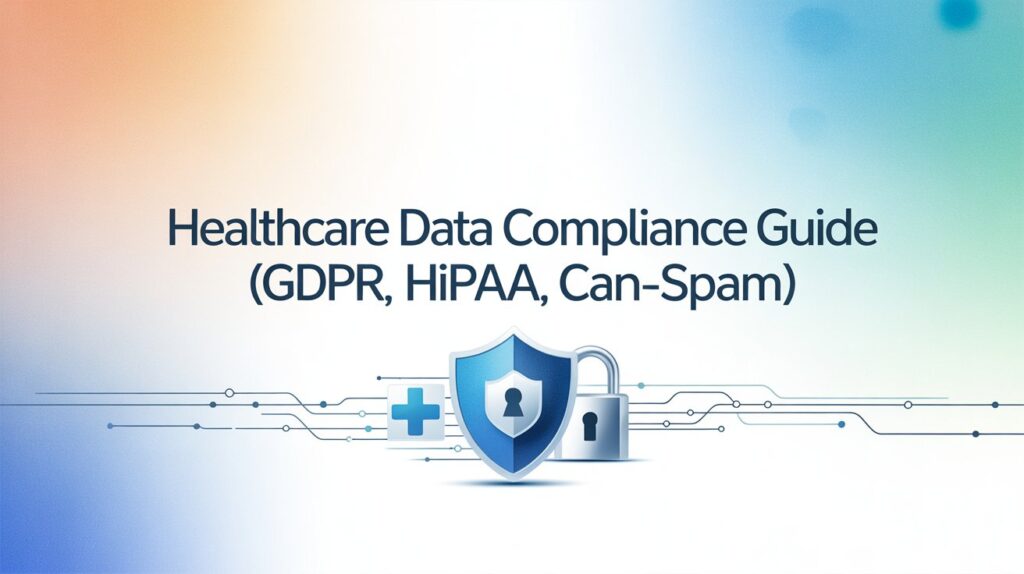
The Healthcare Data Compliance Guide (GDPR, HIPAA, CAN-SPAM) explains how healthcare organizations must manage sensitive data responsibly while running marketing and communication campaigns. This is especially important when handling Healthcare Email Lists used for B2B outreach and professional email marketing. GDPR focuses on protecting personal data and privacy rights for EU citizens, while HIPAA safeguards patient health information in the United States. CAN-SPAM regulates commercial email practices, ensuring transparency and allowing recipients to unsubscribe easily. Following these regulations helps businesses avoid legal penalties, reduce data breach risks, and maintain trust with patients and healthcare professionals. By implementing secure storage, permission-based communication, and proper data handling practices, organizations can run ethical and compliant healthcare marketing successfully.
Why Healthcare Data Compliance Matters
Healthcare organizations deal with large volumes of personal data every day. This data can include:
- Patient names and addresses
- Medical history
- Diagnostic reports
- Lab results
- Insurance details
- Prescription records
- Appointment schedules
- Physician communication records
- Email contact information
If this information is exposed or misused, it can lead to identity theft, financial fraud, legal disputes, and reputational damage. Compliance rules ensure organizations collect, store, and use data responsibly.
Beyond legal requirements, compliance also improves business credibility. Patients, doctors, and healthcare partners are more likely to trust organizations that follow strict privacy and security standards.
What Is Healthcare Data?
Healthcare data refers to any information related to a person’s health condition, treatment, or medical services. Depending on the region, healthcare data may also include personally identifiable information (PII), such as email addresses and phone numbers.
Healthcare data can be categorized into:
1. Personally Identifiable Information (PII)
Indirect or direct identification of a person, such as:
- Full name
- Email address
- Phone number
- Address
- ID numbers
2. Protected Health Information (PHI)
Health-related information linked to an individual, such as:
- Medical diagnosis
- Treatment history
- Lab results
- Prescription details
- Hospital visits
PHI is especially protected under HIPAA regulations in the United States.
Part 1: GDPR Compliance in Healthcare
What Is GDPR?
The General Data Protection Regulation (GDPR) is a European Union privacy law introduced in 2018. In the EU and EEA, it governs how organizations collect, process, and store personal data.
GDPR applies not only to EU companies, but also to any organization worldwide that processes data of EU citizens.
How GDPR Affects Healthcare Data
GDPR considers healthcare data to be “special category data. This means it has extra protection because misuse can cause significant harm.
Healthcare organizations must ensure:
- Data is collected legally and transparently
- Individuals know how their data will be used
- Data is stored securely
- Individuals have control over their data
Key GDPR Principles for Healthcare
1. Lawful Basis for Processing
Healthcare organizations are required to have a valid legal basis before collecting or using personal data. Common lawful bases include:
- Consent
- Medical necessity
- Legal obligation
- Public interest in healthcare
- Legitimate interest (in limited cases)
2. Data Minimization
Collect only the information you actually need. Do not collect unnecessary details.
3. Purpose Limitation
The purpose for which data was collected should be the only purpose for which it is used.
. For example, patient appointment data cannot be used for marketing without consent.
4. Transparency
Individuals must be informed about:
- What data is collected
- Why it is collected
- How long it will be stored
- Who it will be shared with
5. Security and Confidentiality
Organizations must protect data through encryption, access controls, and security systems.
GDPR Rights for Individuals
GDPR gives individuals strong rights, including:
- Right to access their data
- Right to correct inaccurate data
- Right to delete data (“Right to be Forgotten”)
- Right to restrict processing
- Right to data portability
- Right to object to marketing communications
It is the responsibility of healthcare organizations to respond to these requests within a certain timeframe.
GDPR Compliance Requirements for Healthcare Marketers
If you are running healthcare email marketing campaigns, GDPR requires:
- Clear opt-in consent before sending marketing emails
- Easy unsubscribe option
- Transparent privacy policy
- Secure storage of email list data
- Proof of consent records
Using purchased healthcare email lists without proper consent can be risky under GDPR.
Part 2: HIPAA Compliance in Healthcare
What Is HIPAA?
HIPAA, officially known as the Health Insurance Portability and Accountability Act, is a U.S. federal regulation created to protect sensitive health information.
law designed to safeguard confidential patient health information and ensure it is handled securely.
HIPAA applies to:
- Healthcare providers
- Health plans (insurance companies)
- Healthcare clearinghouses
- Business associates handling healthcare data
HIPAA’s goal is to ensure that patient information is not disclosed without permission.
What Counts as PHI Under HIPAA?
Protected Health Information (PHI) includes any data that can identify a patient and relates to their health condition or medical services.
Examples of PHI include:
- Patient name linked to diagnosis
- Medical records and prescriptions
- Insurance claim information
- Appointment details
- Lab results
- Hospital discharge summaries
Even a patient’s email address can become PHI if connected to medical treatment details.
Key HIPAA Rules
HIPAA includes three major rules:
1. Privacy Rule
Controls how PHI can be used and shared.
2. Security Rule
It mandates that organizations secure PHI by implementing administrative, physical, and technical protection measures.
3. Breach Notification Rule
Requires organizations to report data breaches involving PHI to affected individuals and authorities.
HIPAA Safeguards for Data Protection
Healthcare organizations must implement:
- Secure passwords and authentication
- Role-based access control
- Encrypted data storage
- Secure email communication
- Regular employee training
- Audit logs to track data access
- Backup and disaster recovery systems
HIPAA and Email Marketing
HIPAA does not ban marketing, but it restricts using PHI for promotional purposes. Healthcare marketers must ensure:
- No patient health details are included in marketing emails
- Patient data is not shared with third parties without authorization
- Marketing communications are separated from treatment communications
If a healthcare provider wants to send promotional emails to patients, they must obtain clear permission.
Part 3: CAN-SPAM Compliance for Healthcare Email Marketing
What Is CAN-SPAM?
The CAN-SPAM Act is a US law that regulates commercial email communication. It applies to all businesses sending promotional emails, including healthcare companies.
CAN-SPAM is designed to prevent spam emails and ensure recipients have control over what they receive.
CAN-SPAM Requirements
To comply with CAN-SPAM, your email must include:
1. Accurate Sender Information
The “From” name and email address must be real and identifiable.
2. Honest Subject Lines
Your subject line must match the content of the email.
3. Clear Identification as an Advertisement
If the email is promotional, it should not mislead the recipient.
4. Valid Business Address
All promotional emails should clearly mention a valid physical address of the business.
5. Unsubscribe Option
You must include an unsubscribe link and honor opt-out requests quickly.
6. Fast Opt-Out Processing
Unsubscribe (opt-out) requests must be handled and completed within 10 working days.
CAN-SPAM and Purchased Email Lists
CAN-SPAM does not explicitly ban purchased lists, but the responsibility is still on the sender. This means if your list includes people who never requested your emails, you may face complaints and reputation issues.
Healthcare businesses should ensure the list is verified and responsibly sourced.
GDPR vs HIPAA vs CAN-SPAM: Key Differences
Although all three regulations protect privacy and data, they focus on different areas:
Regulation | Region / Country | Main Focus | Applies To | Key Requirement |
GDPR | European Union (EU/EEA) | Protecting personal data and privacy rights | Any organization handling EU citizen data | Requires consent, transparency, and user data rights |
HIPAA | United States | Protecting patient health information (PHI) | Healthcare providers, insurers, and business associates | Requires secure handling and confidentiality of PHI |
CAN-SPAM | United States | Regulating commercial email marketing | Any business sending promotional emails | Requires unsubscribe option and valid business address |
Best Practices for Healthcare Data Compliance
Compliance is not just about avoiding penalties—it’s about building trust and reducing risks.
Below are best practices every healthcare organization should follow.
1. Use Permission-Based Data Collection
Collect contact data through:
- Website signup forms
- Webinar registrations
- Event participation
- Newsletter subscriptions
Always clearly mention how the data will be used.
2. Maintain Secure Storage and Access Controls
Store healthcare data in secure systems with:
- Encryption
- Limited access permissions
- Strong authentication
- Regular monitoring and audits
3. Train Employees Regularly
Human error is one of the biggest reasons for healthcare data breaches. Train employees on:
- phishing awareness
- password security
- safe data handling
- compliance guidelines
4. Use Email Marketing Platforms with Compliance Features
Choose email platforms that provide:
- unsubscribe management
- opt-in record tracking
- bounce handling
- GDPR compliance features
- secure data storage
5. Avoid Sharing Sensitive Data Over Email
Email is not always secure. Avoid sending PHI unless:
- encryption is enabled
- secure communication systems are used
- the recipient is verified
6. Maintain Documentation and Audit Trails
To prove compliance, maintain records such as:
- consent proof
- email marketing logs
- security audits
- access records
- breach response plans
7. Have a Clear Privacy Policy
A privacy policy should explain:
- what data you collect
- how you use it
- how you protect it
- how users can request deletion
- who you share data with
This is mandatory under GDPR and recommended for all healthcare businesses.
Common Compliance Risks in Healthcare Marketing
Many healthcare businesses unknowingly violate compliance standards. Common risks include:
- Sending promotional emails without consent
- Using outdated or unverified mailing lists
- Sharing patient information with third-party vendors
- Storing data without encryption
- Failing to include unsubscribe links
- Not responding to data deletion requests
- Poor password and access control practices
Even small mistakes can result in penalties and reputational loss.
Penalties for Non-Compliance
Failing to follow healthcare compliance regulations can result in serious and costly penalties.
GDPR Penalties
Up to €20 million or 4% of annual global revenue (whichever is higher).
HIPAA Penalties
Fines can range from thousands to millions of dollars depending on the violation.
CAN-SPAM Penalties
Fines can be charged per email violation, and repeated offenses can be extremely costly.
These penalties show why compliance is not something to take lightly.
How to Stay Compliant While Using Healthcare Email Lists
If your business uses healthcare email lists for B2B marketing, follow these steps:
- Use verified and updated data
- Segment your audience properly
- Send relevant, professional content
- Include unsubscribe and business information
- Avoid collecting or sharing PHI
- Maintain records of consent (especially for EU contacts)
- Use secure systems for storage and email delivery
Compliance should be built into your marketing strategy from the beginning.
Conclusion
Healthcare data compliance is essential for building trust and protecting sensitive information. Regulations such as GDPR, HIPAA, and CAN-SPAM ensure that organizations manage personal and healthcare-related data responsibly and securely. Whether you are handling patient records, conducting B2B healthcare marketing campaigns, or using physician mailing lists for outreach, following compliance standards should always be a top priority. Implementing permission-based data collection, strong security measures, clear privacy policies, and ethical email marketing practices helps reduce legal risks and prevents data misuse. By staying compliant, healthcare businesses can strengthen credibility, improve customer confidence, and operate successfully in a regulated industry.