Skip to main content
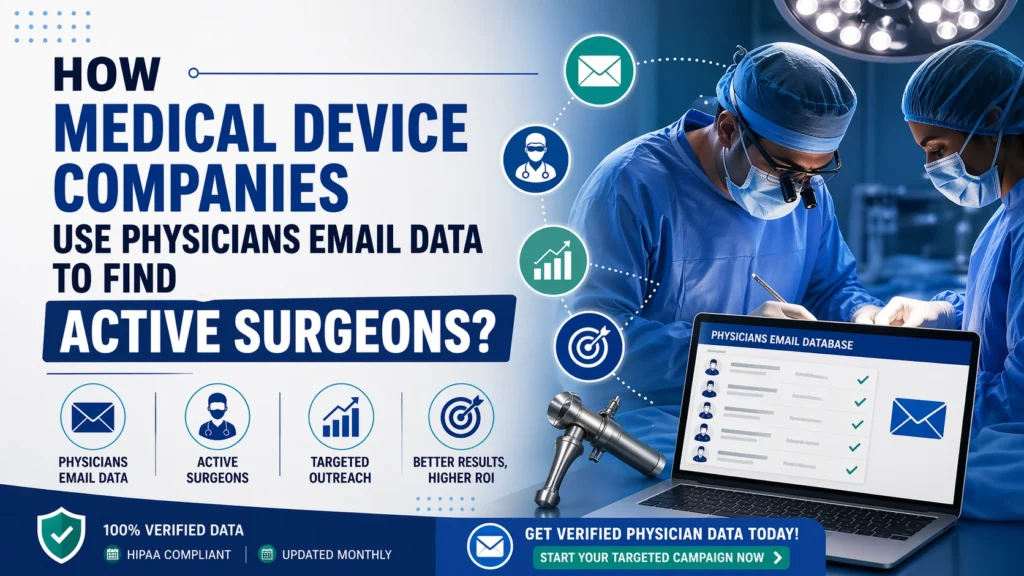
In the competitive world of medical devices, success depends on reaching the right surgeons, not just reaching more doctors. Marketing teams often struggle to identify which specialists are actively performing the procedures their devices are built for. This is where a Physicians Email List becomes far more than a contact database—it becomes a source of clinical intelligence.
Medical device companies need accurate, behavior-driven data to focus their outreach, improve conversions, and reduce wasted effort. This blog explains how physician email data helps device brands find surgeons who are actually performing relevant procedures and how this approach transforms healthcare marketing.
The Real Challenge Medical Device Companies Face
Medical device marketing is very different from traditional B2B marketing. A company selling orthopedic implants, surgical robots, cardiac stents, or diagnostic equipment cannot market to every doctor. They must reach surgeons who:
- Perform specific procedures regularly
- Work in facilities equipped for those procedures
- Influence purchasing decisions in their hospitals
- Stay updated with new technologies and techniques
Without accurate data, device companies often rely on:
- Conference attendee lists
- Purchased generic medical lists
- Random cold outreach
- Sales rep assumptions
This results in poor targeting, low response rates, and high marketing costs.
Why Identifying “Active Surgeons” Matters
An “active surgeon” is not just someone with a medical degree and a specialty. It is a doctor who:
- Regularly performs surgeries related to your device
- Works in hospitals or clinics where such procedures are common
- Has decision-making or influencing power for device adoption
For example, a company selling knee implants needs to find orthopedic surgeons performing multiple knee replacement surgeries each month—not every orthopedic doctor in a region.
Finding this level of precision manually is almost impossible. This is where physician email data becomes useful.
What Physician Email Data Actually Contains
A modern physician database is not limited to names and emails. It often includes:
| Data Point | Why It Matters to Device Companies |
| Specialty and sub-specialty | Identifies relevant surgeons |
| Practice location and hospital affiliation | Shows where procedures happen |
| Procedure indicators | Suggests clinical activity level |
| Verified contact details | Enables direct outreach |
| Conference/webinar participation | Shows interest in innovation |
| Research or publication areas | Indicates clinical focus |
| Referral and professional networks | Reveals influence patterns |
This transforms a simple contact list into a targeting engine.
How Device Companies Use This Data Step-by-Step
Step 1: Define the Ideal Surgeon Profile
A device company first defines who they want to reach.
Example:
A cardiac stent manufacturer may look for:
- Interventional cardiologists
- Surgeons practicing in multi-specialty hospitals
- Doctors performing frequent angioplasty procedures
Step 2: Filter Surgeons Using Data
Using physician email data, marketers can filter doctors by:
- Specialty
- Location
- Hospital type
- Activity indicators
This creates a highly relevant segment instead of a broad list.
Step 3: Plan Focused Outreach
Sales and marketing teams can now:
- Send educational emails about the device
- Invite surgeons to demos or webinars
- Schedule sales rep visits strategically
Because the outreach is relevant, response rates improve.
Practical Example: Orthopedic Implant Company
Imagine a company manufacturing hip replacement implants.
Without data:
They send emails to thousands of orthopedic doctors, many of whom do not perform hip surgeries.
With physician email data:
They identify surgeons performing hip replacements in high-volume hospitals and contact only them.
The result:
- Higher engagement
- Faster sales cycles
- Better ROI
Role of Hospital Affiliation in Targeting
Knowing where a surgeon practices is as important as knowing what they do.
If multiple targeted surgeons work at the same hospital, the device company can approach hospital management with stronger evidence of demand and clinical relevance.
Improving Sales and Marketing Alignment
Physician data allows marketing teams to create qualified lists for sales reps. Instead of guessing, reps know:
- Which surgeon to meet
- What procedure they perform
- How the device fits their practice
This alignment saves time and improves productivity.
How This Reduces Marketing Waste
Traditional outreach often leads to:
- Emails ignored by irrelevant doctors
- Low conversion from campaigns
- High cost per lead
Data-driven targeting reduces these problems by focusing only on relevant surgeons.
Supporting Product Launches
When launching a new device, companies must quickly reach early adopters. Physician data helps identify surgeons interested in new techniques or technologies through their activity and engagement history.
Building Long-Term Relationships
Instead of one-time outreach, companies can build ongoing communication with surgeons through educational content, training invites, and updates relevant to their specialty.
Compliance and Ethical Outreach
Using verified and responsibly sourced physician data ensures outreach remains professional and compliant with healthcare communication standards.
Why Generic Medical Lists Fail
Generic lists include:
- Inactive doctors
- Irrelevant specialties
- Outdated contact details
They lack the depth needed for precise targeting.
Benefits Summary
| Benefit | Impact |
| Precise targeting | Higher response rates |
| Better segmentation | Personalized messaging |
| Sales efficiency | Fewer wasted visits |
| Improved ROI | Lower marketing cost |
| Faster adoption | Reaching the right surgeons quickly |
Turning Data into Strategy
The key is not just owning data but using it strategically:
- Segment by procedure relevance
- Personalize communication
- Coordinate marketing and sales efforts
The Future of Device Marketing
Healthcare marketing is becoming data-driven. Companies that use physician intelligence will outperform those relying on traditional methods.
Conclusion
Medical device marketing is no longer about reaching more doctors; it is about reaching the right surgeons. Physician email data enables companies to identify active specialists, understand their clinical focus, and communicate in a meaningful way. This approach improves efficiency, reduces waste, and accelerates device adoption across hospitals and clinics. For organizations looking to refine their outreach and connect with surgeons who truly matter, a well-structured Physician Email Mailing List becomes an essential part of their marketing toolkit.