Skip to main content
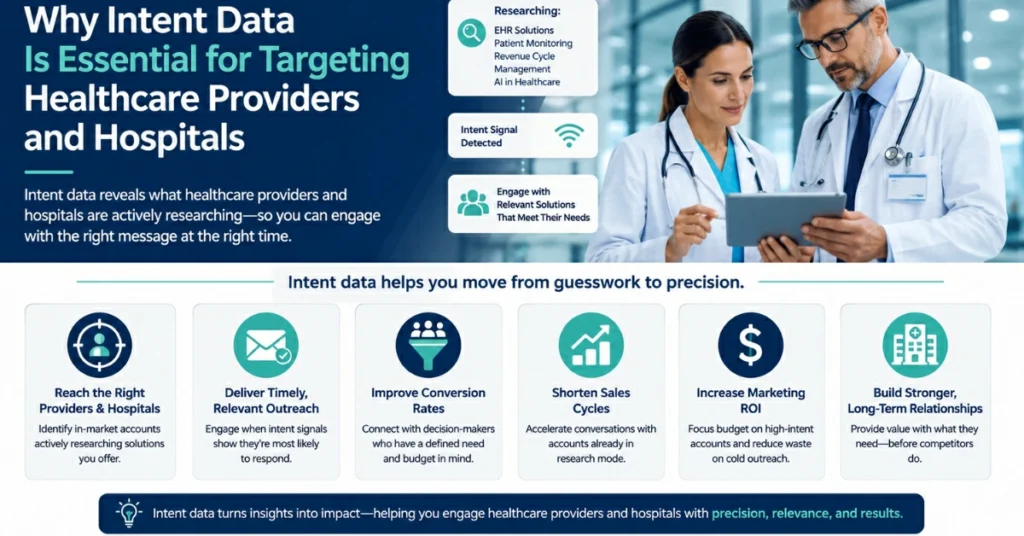
Healthcare providers and hospitals are increasingly difficult to reach through traditional marketing methods, as healthcare decision-makers receive large volumes of information every day. Modern marketers need more precise strategies to identify organizations actively researching products and services.
Intent data has emerged as a valuable solution by revealing online behaviors that indicate purchasing interest and engagement. Physicians Email Lists, when combined with intent data, help marketers improve audience targeting and connect with relevant healthcare professionals more effectively. By understanding buyer intent, organizations can prioritize high-potential prospects, personalize outreach efforts, and engage providers at the right stage of the buying journey. This approach improves campaign efficiency, lead quality, and overall marketing performance.
Understanding Intent Data
Intent data refers to information collected from digital activities that indicate a person’s interest in a particular topic, product, or service. These activities may include:
- Searching for industry-related information
- Reading healthcare articles
- Downloading whitepapers
- Attending webinars
- Comparing solutions online
- Visiting vendor websites
- Engaging with healthcare-related content
These signals help marketers identify organizations and professionals who may be actively evaluating solutions or planning future purchases.
Unlike demographic data, which focuses on who a person is, intent data focuses on what they are interested in at a specific point in time.
Why Healthcare Marketing Requires Better Targeting
Healthcare purchasing decisions are often complex and involve multiple stakeholders. Hospitals and healthcare systems may include:
- Physicians
- Department directors
- Procurement teams
- Clinical specialists
- IT leaders
- Hospital administrators
- Financial decision-makers
Because several individuals influence purchasing decisions, healthcare marketers must identify the organizations currently showing interest in relevant solutions.
Without intent data, marketers often rely on broad outreach strategies that target thousands of contacts without knowing which prospects are actively researching solutions.
Intent data enables businesses to focus their efforts on prospects that show stronger interest and a higher likelihood of making a purchase.
How Intent Data Works in Healthcare Marketing
Intent data is collected from various online interactions across websites, content platforms, search engines, and publisher networks.
The data is then analyzed to identify patterns that indicate growing interest in specific healthcare topics.
For example, a hospital may show increasing activity around:
- Electronic health records
- Telehealth platforms
- Medical imaging equipment
- Patient engagement software
- Healthcare cybersecurity
- Revenue cycle management
These signals suggest that decision-makers may be researching new solutions, creating an opportunity for marketers to engage them with relevant content and offers.
Benefits of Using Intent Data in Healthcare Campaigns
Improved Audience Identification
One of the biggest advantages of intent data is the ability to identify organizations actively researching healthcare solutions.
Instead of targeting every hospital or provider in a database, marketers can focus on those demonstrating interest in specific topics.
This targeted approach improves efficiency and increases the likelihood of engagement.
Better Lead Quality
Intent signals help marketers prioritize leads that are further along in the buying process.
These prospects often have greater interest and are more likely to respond to marketing messages compared to cold audiences.
As a result, sales teams spend less time pursuing unqualified leads and more time engaging high-potential opportunities.
Increased Marketing Efficiency
Healthcare marketing budgets must be allocated carefully.
Intent data helps organizations concentrate resources on accounts most likely to convert.
This leads to:
- Lower acquisition costs
- Higher engagement rates
- Better campaign performance
- Improved return on investment
Faster Sales Cycles
When marketers engage prospects already researching solutions, conversations often progress more quickly.
Potential buyers may already understand the problem they need to solve and may be actively evaluating vendors.
This helps accelerate the buying process by moving prospects more efficiently from initial engagement to final decision-making.
Intent Data vs Traditional Healthcare Marketing
| Traditional Marketing | Intent-Based Marketing |
| Broad audience targeting | Highly targeted audience selection |
| Limited visibility into buyer interest | Real-time insight into buyer behavior |
| Higher marketing waste | Improved efficiency |
| Lower conversion rates | Higher conversion potential |
| Generic messaging | Personalized messaging |
| Reactive outreach | Proactive engagement |
This comparison demonstrates why intent-driven strategies have become increasingly valuable for healthcare marketers.
Supporting Account-Based Marketing Strategies
Account-Based Marketing (ABM) has become a popular approach within healthcare marketing.
Rather than targeting large groups of prospects, ABM focuses on high-value organizations and key decision-makers.
Intent data strengthens ABM efforts by helping marketers identify accounts that are actively researching solutions.
This enables teams to:
- Prioritize target accounts
- Develop personalized campaigns
- Deliver relevant content
- Improve engagement rates
The result is a more focused and effective marketing strategy.
Enhancing Content Personalization
Healthcare buyers expect relevant information that addresses their unique challenges.
Intent data helps marketers understand which topics are attracting attention from specific audiences.
For example:
A hospital researching cybersecurity may respond better to:
- Security assessments
- Compliance guides
- Data protection case studies
A healthcare organization researching telehealth solutions may prefer:
- Telemedicine implementation guides
- Virtual care success stories
- Technology comparison reports
Personalized content increases engagement and builds credibility with healthcare decision-makers.
Identifying Emerging Market Opportunities
Intent data can also reveal broader market trends.
By monitoring research activity across healthcare organizations, marketers can identify growing interest in specific technologies or services.
Examples may include:
- Artificial intelligence in healthcare
- Remote patient monitoring
- Healthcare automation
- Clinical workflow optimization
- Population health management
Understanding these trends allows marketers to adjust strategies and capitalize on emerging opportunities.
Improving Multi-Channel Marketing Campaigns
Intent data can enhance multiple marketing channels simultaneously.
Email Marketing
Marketers can send highly targeted campaigns based on demonstrated interests.
For example:
- EHR-focused content for hospitals researching digital records
- Cybersecurity resources for organizations showing security-related intent
Content Marketing
Intent insights help identify the most relevant topics for healthcare audiences.
This improves content engagement and lead generation efforts.
Digital Advertising
Intent-based audience segments allow marketers to serve relevant advertisements to organizations actively researching solutions.
Sales Outreach
Sales teams can prioritize accounts showing strong intent signals and tailor conversations accordingly.
This creates more meaningful interactions and improves sales productivity.
Why Timing Matters in Healthcare Marketing
Timing is often one of the most important factors in successful healthcare marketing.
A prospect may not be interested in a solution today but could become highly engaged once a need arises.
Intent data helps marketers identify these shifts in buyer behavior.
Rather than waiting for prospects to contact vendors, marketers can proactively engage organizations during the research phase.
This early engagement helps establish relationships before competitors enter the conversation.
Combining Intent Data with Healthcare Contact Databases
Intent data becomes even more valuable when paired with accurate healthcare contact information.
Once marketers identify organizations demonstrating buying signals, they need reliable ways to reach key stakeholders.
Comprehensive databases help connect intent insights with actual outreach efforts.
This combination enables marketers to:
- Identify interested organizations
- Locate relevant decision-makers
- Deliver targeted communications
- Improve campaign effectiveness
When intent data and contact intelligence work together, healthcare organizations can execute highly focused marketing programs.
Common Use Cases for Intent Data in Healthcare
Healthcare marketers use intent data across various applications, including:
Medical Technology Marketing
Technology vendors can identify hospitals researching software, devices, or digital transformation initiatives.
Pharmaceutical Marketing
Pharmaceutical organizations can better understand provider interests and educational content engagement.
Healthcare Staffing Services
Recruitment firms can identify organizations researching workforce solutions and staffing support.
Healthcare Consulting
Consulting firms can target organizations exploring operational improvements, compliance initiatives, or strategic planning.
Medical Equipment Sales
Manufacturers can engage hospitals showing interest in equipment upgrades or expansion projects.
Challenges and Considerations
Although intent data provides significant advantages, marketers should use it strategically.
Key considerations include:
Data Quality
Accurate data is essential for effective targeting and decision-making.
Privacy Compliance
Healthcare marketers must ensure compliance with applicable privacy regulations and industry standards.
Integration
Intent data should be integrated with existing CRM systems, marketing automation platforms, and sales processes.
Continuous Monitoring
Buyer interests change over time, making ongoing monitoring essential for maintaining campaign relevance.
Organizations that address these considerations can maximize the value of intent-driven marketing.
The Future of Intent Data in Healthcare
As healthcare purchasing processes continue to evolve, intent data will likely become an increasingly important component of marketing strategy.
Before engaging with suppliers, healthcare professionals typically evaluate products and services through extensive online research.. Marketers who understand these behaviors gain a significant advantage in identifying opportunities and delivering relevant information.
Advances in analytics, artificial intelligence, and predictive modeling are expected to further improve the accuracy and usefulness of intent signals.
Organizations that invest in intent-driven marketing today will be better positioned to compete in the future healthcare landscape.
Conclusion
Intent data has transformed the way healthcare marketers identify, prioritize, and engage providers and hospitals. By revealing which organizations are actively researching specific topics and solutions, intent data helps marketers focus resources where they are most likely to generate results.
From improving lead quality and campaign efficiency to supporting personalized outreach and account-based marketing, intent data offers significant advantages for healthcare organizations seeking stronger marketing performance. When combined with reliable healthcare contact resources such as Physicians Email Lists, marketers can reach decision-makers more effectively and build meaningful connections with high-value prospects.
As healthcare marketing becomes increasingly data-driven, leveraging intent signals alongside a quality Physician Mailing List can help organizations improve targeting accuracy, accelerate engagement, and achieve better overall marketing outcomes.