Skip to main content
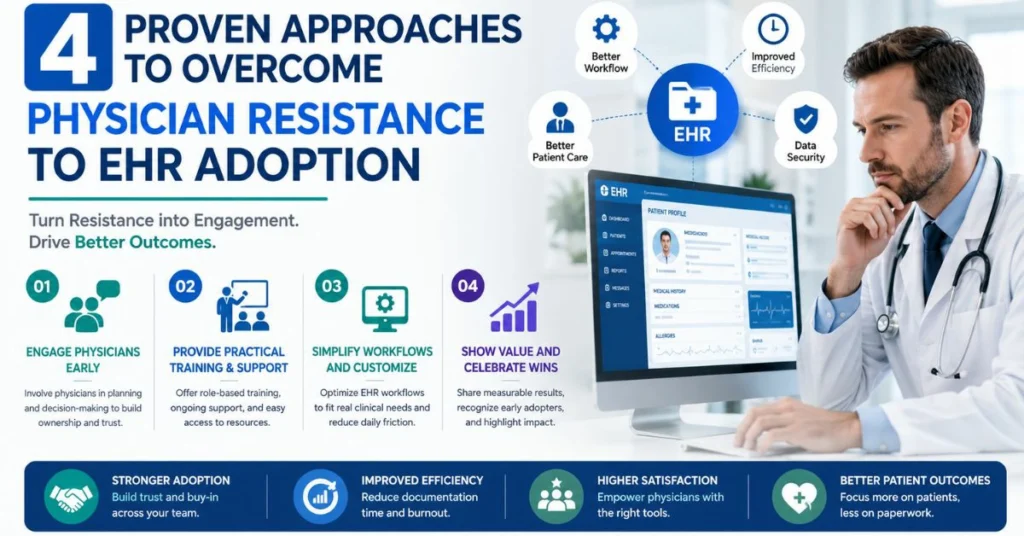
EHR Adoption has become a critical priority for healthcare organizations seeking to improve patient care, streamline clinical workflows, and enhance operational efficiency in an increasingly digital healthcare environment. Electronic Health Records offer significant advantages, including better data accessibility, improved care coordination, and more informed clinical decision-making. Healthcare marketers often use a Physicians Email List to communicate updates about emerging technologies, industry trends, and digital transformation initiatives to medical professionals. However, despite the proven benefits of EHR systems, physician resistance remains a major obstacle to successful implementation. Concerns related to workflow disruptions, usability challenges, administrative workload, and data security can slow adoption, making effective change management and physician engagement essential for long-term success.
Why Physicians Resist EHR Adoption
Before discussing solutions, it’s important to understand the root causes of resistance. Physicians are primarily focused on delivering quality patient care. Any technology that appears to interfere with this goal may face skepticism.
Common reasons for resistance include:
- Increased documentation requirements
- Time-consuming data entry processes
- Poor user interface design
- Concerns about patient interaction quality
- Fear of reduced productivity
- Insufficient training and support
- Data privacy and cybersecurity concerns
Addressing these concerns directly is essential for creating a successful EHR implementation strategy.
1. Provide Comprehensive Training and Ongoing Support
One of the most effective ways to overcome physician resistance is through proper education and continuous support.
Many physicians become frustrated when they are expected to learn complex EHR systems with minimal guidance. Without adequate training, even the most advanced software can feel overwhelming and inefficient.
Best Practices for EHR Training
Healthcare organizations should:
- Offer role-specific training programs
- Provide hands-on practice sessions
- Create easy-to-access learning resources
- Schedule refresher courses after implementation
- Establish dedicated support teams
Training should not be viewed as a one-time event. Continuous learning opportunities help physicians gain confidence and discover new ways to use the system effectively.
Organizations that invest in comprehensive training often see higher adoption rates, improved user satisfaction, and fewer workflow disruptions.
Benefits of Ongoing Support
When physicians know help is readily available, they are more likely to embrace change. Support teams can quickly address technical issues, answer questions, and provide guidance when challenges arise.
This proactive approach helps reduce frustration and builds trust in the system.
2. Involve Physicians in the Decision-Making Process
Physicians are more likely to support EHR initiatives when they feel their opinions are valued.
Too often, healthcare organizations select and implement systems without consulting the individuals who will use them daily. This can result in poor system fit and increased resistance.
Create Physician Advisory Committees
Organizations can encourage engagement by creating committees that include:
- Primary care physicians
- Specialists
- Nurse practitioners
- Clinical administrators
- IT professionals
These groups can provide valuable feedback on system selection, workflow design, and implementation planning.
Gather Regular Feedback
Healthcare leaders should actively seek physician input throughout the implementation process.
Methods may include:
- Surveys
- Focus groups
- One-on-one interviews
- Pilot testing programs
When physicians see that their feedback influences decisions, they develop a stronger sense of ownership and commitment.
Improve User Experience
Physician involvement often leads to better system customization. Adjustments that align with real-world clinical workflows can significantly improve usability and reduce resistance.
By making physicians active participants rather than passive recipients, organizations can create a more collaborative implementation environment.
3. Demonstrate Clear Clinical and Operational Benefits
Physicians are more likely to adopt EHR systems when they understand how the technology benefits both their practice and their patients.
Healthcare leaders should clearly communicate the value proposition behind EHR adoption.
Highlight Patient Care Improvements
Modern EHR systems can enhance patient care by providing:
- Immediate access to patient records
- Better care coordination
- Reduced medical errors
- Improved medication management
- Enhanced clinical decision support
When physicians see how EHRs contribute to better patient outcomes, they are often more willing to embrace the technology.
Showcase Efficiency Gains
Many physicians worry that EHR systems will slow them down. Demonstrating efficiency improvements can help address this concern.
Examples include:
- Faster record retrieval
- Automated documentation features
- Electronic prescribing
- Streamlined billing processes
- Reduced paperwork
Providing real-world examples and case studies can make these benefits more tangible.
Share Success Stories
Organizations that have successfully implemented EHR systems can offer valuable insights.
Sharing testimonials from respected physicians who have experienced positive results can help reduce skepticism and encourage broader acceptance.
Peer influence is often a powerful motivator in healthcare environments.
4. Optimize Workflow Integration and Reduce Administrative Burden
One of the primary complaints about EHR systems is that they increase administrative workload.
Healthcare organizations must prioritize workflow optimization to ensure EHR adoption supports rather than hinders clinical practice.
Conduct Workflow Assessments
Before implementation, organizations should evaluate existing clinical workflows and identify opportunities for improvement.
This includes:
- Mapping current processes
- Identifying bottlenecks
- Understanding physician preferences
- Eliminating redundant tasks
A well-planned implementation minimizes disruptions and improves user satisfaction.
Simplify Documentation Processes
EHR systems should make documentation easier, not more complicated.
Strategies include:
- Customizable templates
- Voice recognition tools
- Automated data entry features
- Smart clinical forms
- Integrated scheduling and billing functions
Reducing the time physicians spend on documentation allows them to focus more on patient care.
Monitor Performance Metrics
Healthcare organizations should continuously evaluate system performance after implementation.
Important metrics may include:
- Physician satisfaction scores
- Documentation completion times
- Patient wait times
- System utilization rates
- Productivity measurements
Regular monitoring helps identify areas for improvement and demonstrates a commitment to physician success.
The Role of Leadership in EHR Adoption
Strong leadership plays a critical role in overcoming physician resistance.
Healthcare executives and department leaders should actively support EHR initiatives by:
- Communicating a clear vision
- Setting realistic expectations
- Encouraging collaboration
- Recognizing physician contributions
- Investing in resources and support
Leadership transparency helps build trust and reduces uncertainty during periods of change.
When leaders demonstrate commitment to successful implementation, physicians are more likely to engage positively with the process.
Looking Ahead: The Future of EHR Adoption
As healthcare technology continues to evolve, EHR systems are becoming more sophisticated, user-friendly, and integrated with other digital health solutions.
Artificial intelligence, predictive analytics, interoperability improvements, and automation technologies are helping address many of the concerns that historically contributed to physician resistance.
Organizations that prioritize physician engagement, usability, and workflow efficiency will be better positioned to maximize the benefits of these advancements.
The future of healthcare depends on successful collaboration between technology providers, healthcare organizations, and clinicians.
Conclusion
Overcoming physician resistance to EHR adoption requires more than simply implementing new software. Healthcare organizations must address concerns proactively through comprehensive training, physician involvement, clear communication of benefits, and workflow optimization.
By focusing on these four proven approaches, organizations can create a smoother transition process, improve physician satisfaction, and achieve greater long-term success with EHR initiatives. As healthcare technology continues to advance, fostering physician engagement will remain essential for realizing the full value of digital transformation efforts. Organizations that maintain strong communication strategies and leverage resources such as a reliable Physician Mailing List can further support educational outreach and professional engagement throughout the adoption journey.