Skip to main content
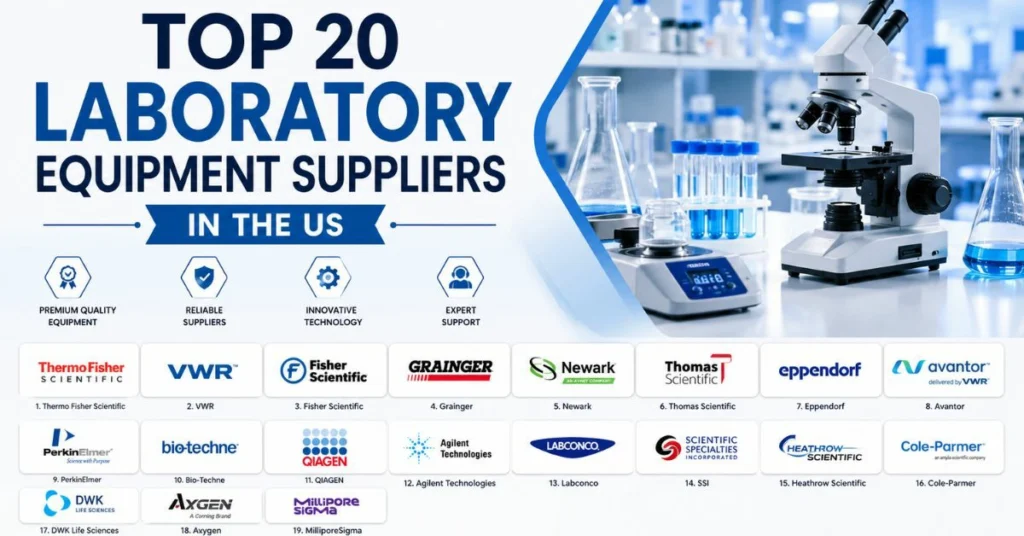
Laboratory Equipment Suppliers in the US play a critical role in supporting hospitals, diagnostic laboratories, research institutions, and healthcare providers with reliable products and advanced technologies. Choosing the right supplier can significantly impact operational efficiency, product quality, and patient outcomes, making careful evaluation essential. With numerous distributors serving the healthcare market, understanding their capabilities, specialties, and service networks helps organizations make informed purchasing decisions.
Physicians Email Lists also enable healthcare marketers and suppliers to connect with physicians, procurement teams, and key healthcare decision-makers for targeted outreach and business development. This guide highlights 15 leading medical supply distributors in the United States, their core offerings, strengths, and the factors that distinguish them in today’s competitive healthcare supply industry.
Why the Lab Equipment Market Keeps Growing
Demand for laboratory instruments has climbed steadily over the past several years, driven by expanding research budgets, an aging population that needs more diagnostic testing, and rapid growth in biotechnology and pharmaceutical development. Automation and artificial intelligence are also reshaping how labs operate, allowing technicians to process more samples with fewer manual steps and reducing the margin for human error. Cloud-connected instruments now let lab managers track calibration schedules, monitor equipment performance remotely, and integrate results directly into electronic health record systems. As hospitals, universities, and private research firms modernize their facilities, the suppliers that can offer both hardware and digital integration tend to pull ahead of competitors that only sell standalone instruments.
What Makes a Laboratory Equipment Supplier Stand Out
Before diving into the list, it helps to understand what separates a dependable supplier from the rest of the pack. Buyers across hospitals, diagnostic centers, pharmaceutical companies, and academic institutions generally look at a few common factors:
- Breadth of product line – Does the company offer end-to-end solutions, or does it specialize in a narrow category like balances, pipettes, or sequencing platforms?
- Reliability and calibration accuracy – Precision instruments need to perform consistently, especially in regulated or clinical environments.
- Technical support and service network – Downtime is costly, so responsive maintenance and training matter.
- Integration with lab software and automation – Many modern labs want equipment that connects with digital workflows and data systems.
- Regulatory compliance – Suppliers serving healthcare and pharmaceutical clients must meet FDA, OSHA, and ISO standards.
- Scalability – A supplier that can support a lab as it grows from a small research team to a multi-site operation saves procurement teams from having to switch vendors down the road.
Cost is naturally part of the equation too, but experienced lab managers tend to weigh total cost of ownership rather than sticker price alone. An instrument that’s slightly more expensive up front but requires less frequent calibration, fewer replacement parts, or less downtime can end up being the more economical choice over its working lifespan.
With those criteria in mind, here is a closer look at the suppliers that consistently rank among the most trusted names in the US laboratory equipment market.
The Top 20 Laboratory Equipment Suppliers in the US
1. Thermo Fisher Scientific
Headquartered in Waltham, Massachusetts, Thermo Fisher Scientific is widely regarded as the largest laboratory equipment and services company in the world. Its catalog spans mass spectrometry, chromatography, freezers, centrifuges, and basic consumables like pipette tips. Hospitals, biotech firms, pharmaceutical manufacturers, and academic labs all rely on Thermo Fisher for its broad, end-to-end product ecosystem and global distribution network.
2. Agilent Technologies
Agilent specializes in analytical chemistry and molecular diagnostics, with strong offerings in chromatography, mass spectrometry, and genomics tools. The company is especially popular in pharmaceutical research, food safety testing, environmental labs, and forensic science, where regulatory precision is non-negotiable.
3. Danaher Corporation
Danaher is a diversified life sciences and diagnostics conglomerate that owns several well-known laboratory brands, including Beckman Coulter and Leica Biosystems. Rather than operating as a single equipment line, Danaher’s strength lies in its portfolio approach, supporting research, diagnostics, and biopharma production through its family of companies.
4. Becton, Dickinson and Company (BD)
BD is a major name in clinical and diagnostic lab equipment, particularly in hospital and public health settings. Its products support infectious disease testing, immunology research, and specimen collection, making it a familiar supplier across clinical laboratories nationwide.
5. Mettler Toledo
Mettler Toledo is the industry standard-bearer for laboratory balances and precision weighing instruments. Its Fully Automatic Calibration Technology (FACT) helps labs maintain consistent, error-free measurements, which is why pharmaceutical R&D teams and industrial quality-control labs frequently choose the brand.
6. Illumina
Illumina leads the genomics and DNA sequencing space with its next-generation sequencing (NGS) platforms. Its technology underpins much of the world’s cancer research, genetic diagnostics, and personalized medicine work, making it a go-to supplier for labs focused on genomic analysis.
7. Bruker Corporation
Bruker specializes in molecular and materials analysis, with particular strength in NMR spectroscopy, mass spectrometry, and X-ray diffraction instruments. The company serves high-end research applications where advanced structural analysis is required.
8. Waters Corporation
Waters is known for chromatography and mass spectrometry systems used in pharmaceutical development, environmental testing, and food safety analysis. Its instruments are common in labs that need to identify and quantify complex chemical compounds.
9. PerkinElmer (Revvity)
PerkinElmer, now operating under the Revvity brand for parts of its business, provides analytical instrumentation, reagents, and diagnostic technologies. The company serves a wide range of sectors, including environmental analysis, food and beverage testing, and clinical diagnostics.
10. Avantor / VWR
Operating under the Avantor umbrella, VWR is one of the largest laboratory supply distributors in the country. Rather than manufacturing a single product category, VWR focuses on centralized procurement, offering a broad inventory of consumables, equipment, and lab furniture to biopharma, education, and government clients.
11. Bio-Rad Laboratories
Bio-Rad was established in 1952 in Berkeley, California, and produces tools and chemicals for clinical diagnostics and life sciences. In addition to having a substantial ownership stake in Sartorius, another important supplier on this list, the company is involved in blood transfusion testing, diabetes monitoring, and PCR-based research tools.
12. Beckman Coulter
A Danaher subsidiary, Beckman Coulter focuses on biomedical testing instruments used in clinical diagnostics and life sciences research. Its tools are widely used to support disease detection and laboratory automation in hospital and research settings.
13. Eppendorf
Eppendorf, founded in Hamburg in 1945, is known for liquid handling, cell handling, and sample handling equipment, including pipettes, centrifuges, and laboratory freezers. Its products are common fixtures in pharmaceutical, biotech, and clinical research labs across the US.
14. Corning Life Sciences
Corning supplies labware, cell culture products, and glassware used across academic, pharmaceutical, and biotech laboratories. Its long manufacturing history and reputation for durable glass and plastic labware make it a familiar name on lab benches nationwide.
15. Sartorius
Sartorius, headquartered in Göttingen, Germany, with a strong US presence, supplies both laboratory instruments and bioprocessing equipment. The company’s balances, pipettes, and filtration products are widely used in biopharmaceutical manufacturing and quality control.
16. MilliporeSigma (Merck KGaA)
MilliporeSigma, the US life sciences arm of Germany’s Merck KGaA, supplies lab chemicals, filtration systems, and reagents used across pharmaceutical development and academic research. It’s a frequent partner for labs that need reliable access to specialty chemicals and life science tools.
17. Kimble / DWK Life Sciences
Kimble is one of the most established names in laboratory glassware, producing beakers, flasks, and tubing used in chemistry labs, pharmaceutical facilities, and research centers where precision and durability matter.
18. Cole-Parmer (Antylia Scientific)
Founded in Chicago in 1955, Cole-Parmer manufactures and distributes lab and industrial equipment, including fluid handling products, pumps, and instrumentation. The company also offers calibration and repair services, making it a practical choice for labs that want ongoing equipment support.
19. Grainger
While better known as an industrial supply distributor, Grainger also serves laboratories that need PPE, safety equipment, storage solutions, and general lab supplies. Its nationwide distribution network makes it a convenient option for facilities that want to consolidate purchasing.
20. Thomas Scientific
Thomas Scientific is a long-standing, US-focused distributor offering a wide catalog of lab instruments, consumables, and safety products. It’s frequently used by smaller labs and institutions that want a single point of contact for routine laboratory needs.
Comparing the Leading Suppliers at a Glance
The table below highlights a handful of the most prominent suppliers side by side, based on headquarters location, core specialty, and typical customer base.
| Supplier | Headquarters | Core Specialty | Typical Customers |
| Thermo Fisher Scientific | Waltham, MA | Full-service lab instruments & consumables | Hospitals, biotech, pharma, academia |
| Agilent Technologies | Santa Clara, CA | Analytical chemistry & diagnostics | Pharma, food safety, forensic labs |
| Danaher Corporation | Washington, D.C. | Diversified diagnostics portfolio | Clinical labs, biopharma |
| Mettler Toledo | Columbus, OH | Precision weighing & balances | Pharma R&D, industrial QC |
| Avantor / VWR | Radnor, PA | Distribution & procurement | Biopharma, education, government |
| Bio-Rad Laboratories | Hercules, CA | Life sciences & clinical diagnostics | Hospitals, research labs |
Choosing the Right Supplier for Your Lab
There isn’t a single “best” supplier for every laboratory — the right choice depends on your lab’s size, specialty, and budget. A hospital diagnostics department may prioritize BD or Beckman Coulter for clinical testing reliability, while a genomics research lab is more likely to lean on Illumina. Smaller labs or academic institutions with tighter budgets often turn to distributors like VWR, Thomas Scientific, or Cole-Parmer, which offer broad catalogs and flexible purchasing rather than a single specialized product line.
It’s also worth considering how a supplier supports your lab after the sale. Calibration services, technical training, and responsive customer support can matter as much as the equipment itself, particularly for labs operating under strict regulatory or accreditation requirements. Facilities that run 24/7 diagnostic operations, for example, often can’t afford downtime while waiting for a replacement part, so a supplier’s service network and turnaround time on repairs should factor heavily into the decision.
Budget is another practical consideration. Large, full-service suppliers typically charge a premium for their breadth of offerings and global support infrastructure, while smaller or regional distributors may offer more competitive pricing on routine consumables and standard instruments. Many labs end up working with a mix of suppliers: a primary vendor for major capital equipment and one or two secondary vendors for consumables, replacement parts, or specialty items that aren’t part of the primary supplier’s catalog.
Frequently Asked Questions
Who Are the Top Laboratory Equipment Suppliers in the US?
Thermo Fisher Scientific is generally considered the largest by revenue, product breadth, and global reach, offering everything from basic consumables to advanced analytical instruments under one roof.
What’s the difference between a manufacturer and a distributor?
Manufacturers like Agilent, Illumina, and Mettler Toledo design and build their own instruments. Distributors like VWR and Thomas Scientific don’t necessarily manufacture equipment themselves; instead, they source products from multiple manufacturers and sell them through a centralized catalog, which can simplify procurement for labs that need a wide variety of items.
Do smaller labs need to work with the biggest suppliers?
Not necessarily. Smaller research labs, teaching institutions, and startups often find better value working with mid-sized suppliers or distributors that offer more flexible pricing and personalized service, reserving larger vendors for specialized, high-cost instruments.
How often should lab equipment be replaced or upgraded?
This varies by equipment type and usage intensity, but many labs review their instrumentation every three to seven years to account for calibration drift, changing regulatory standards, and advances in automation or software integration.
conclusion
The US laboratory equipment market includes both global giants and specialized manufacturers, each playing a distinct role in supporting research, diagnostics, and healthcare delivery. From full-service suppliers like Thermo Fisher and Agilent to specialists like Illumina and Mettler Toledo, the companies on this list represent the backbone of laboratories across the country.
For healthcare marketing teams working to reach the physicians, lab directors, and procurement professionals who make these purchasing decisions, having access to an accurate, up-to-date Physician Mailing List can be just as important as understanding the equipment landscape itself. Marketers can build more targeted, relevant campaigns to the healthcare and life sciences audiences they are trying to reach by getting the right outreach data and a clear picture of who supplies the industry.