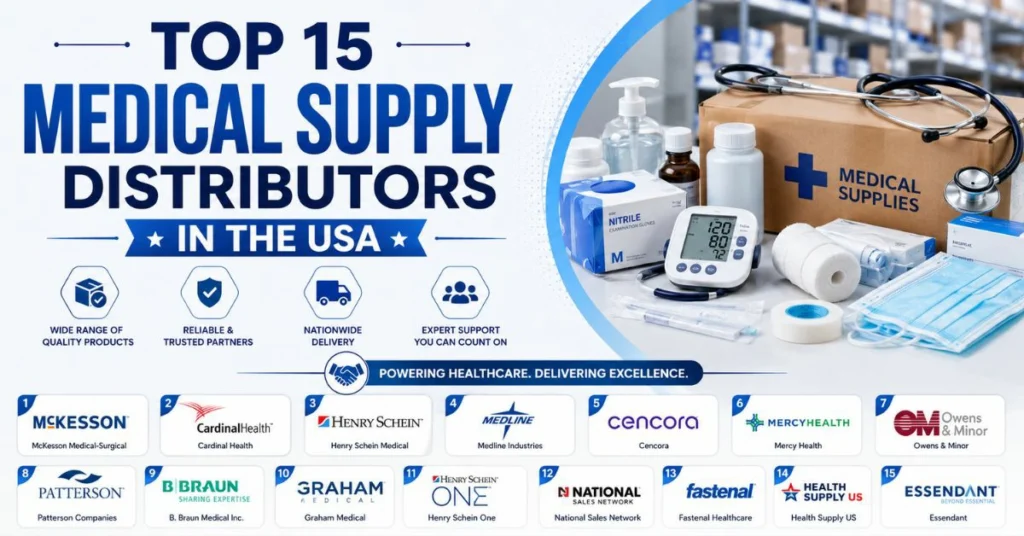
Medical Supply Distributors play a vital role in ensuring hospitals, clinics, pharmacies, and home healthcare providers receive the products they need to deliver quality patient care. Choosing the right distributor can be challenging, as hundreds of companies offer similar services across the United States. This guide highlights 15 of the most trusted medical supply distributors, comparing their strengths, product offerings, and ideal customer segments to simplify your decision-making process. A trustworthy Physicians Email List can help you get in touch with important purchasing and procurement decision-makers, whether you’re assessing suppliers or growing your healthcare network. This summary offers insightful information to help you find the ideal distribution partner for your company’s particular healthcare supply requirements, from national industry leaders to specialized regional suppliers.
Why Medical Supply Distributors Matter
Medical supply distributors are the connective tissue of American healthcare. They move everything from surgical gloves and wound care products to diagnostic equipment and pharmaceuticals from manufacturers to hospitals, clinics, nursing homes, and patients’ homes. Without them, the timely, safe delivery of supplies that clinicians depend on every single day simply wouldn’t happen.
The stakes are high. Distributors are expected to maintain strict regulatory compliance, manage complex cold-chain and inventory logistics, and respond quickly when demand spikes unexpectedly. As of February 2026, the FDA’s Quality Management System Regulation fully folded ISO 13485:2016 into federal device rules, meaning any distributor that repackages, relabels, or stores finished medical devices now has to prove they meet that international quality standard. That’s just one example of how much technical and regulatory weight sits behind the scenes of an industry many people never think twice about.
With that context in mind, let’s look at the companies leading this space.
Top 15 Medical Supply Distributors in the USA
1. McKesson Corporation
Headquartered in Irving, Texas, McKesson is one of the oldest and largest medical supply distributors in the country, tracing its roots back to 1833. Today it distributes over 300,000 products, ranging from personal protective equipment and diagnostic tools to diabetic supplies, wound care items, and pharmaceuticals. McKesson also offers private-label products and robust supply chain technology, including real-time inventory tools that let healthcare facilities track expenses, manage purchase orders, and approve invoices digitally. Its scale and reliability make it a go-to choice for hospitals, physician offices, surgery centers, and post-acute care facilities alike.
2. Cardinal Health
Founded in 1971 and dual-headquartered in Dublin, Ireland and Columbus, Ohio, Cardinal Health is both a manufacturer and distributor, supplying more than 75% of U.S. hospitals. The company operates in over 40 countries and supports more than 20,000 specialty care facilities. Cardinal Health’s Medical Distribution Solutions team focuses heavily on identifying supply chain bottlenecks before they become disruptions, which has made it a long-trusted partner for large health systems, ambulatory surgery centers, and physician offices.
3. Cencora (formerly AmerisourceBergen)
Headquartered in Pennsylvania, Cencora is responsible for distributing roughly 20% of all medical products sold across the United States, with logistics operations spanning 52 countries. Its offerings include infusion therapy supplies, surgical equipment, patient mobility products, and infection prevention tools, along with specialty logistics for biologics and complex medications. Cencora also provides data analytics, procurement consulting, and supply chain risk management, helping healthcare organizations plan ahead rather than just react to shortages.
4. Medline Industries
Medline is one of the largest privately held manufacturers and distributors of medical supplies in the country, headquartered in Northfield, Illinois. The company completed a $6.26 billion IPO in February 2026 and reported $28.4 billion in net sales for fiscal year 2025. Medline offers approximately 335,000 products, with roughly 190,000 of them Medline-branded, and operates 69 global distribution centers alongside 26 North American manufacturing sites. That vertical integration allows Medline to deliver next-day service to 95% of its U.S. customers, making it a strong choice for facilities that want consistency and competitive private-label pricing.
5. Henry Schein
Henry Schein is a global distributor with a particular strength in dental, medical, and animal health markets, headquartered in Melville, New York. Founded in 1932, the company reported $13.2 billion in 2025 sales and operates in 34 countries with a catalog of more than 300,000 branded and corporate-brand products. Henry Schein’s focus on smaller healthcare practices, independent clinics, and specialty providers sets it apart from the larger, hospital-focused distributors. Its practice management support and clinical integration tools have made it especially popular with physician offices and dental practices.
6. Owens & Minor
Owens & Minor, founded in 1882 and headquartered in Virginia, has built a strong reputation in acute care logistics and pandemic-readiness stockpiling. The company’s Patient Direct segment, which includes Byram Healthcare, provides direct-to-home delivery for patients managing chronic conditions like diabetes and ostomy care. Owens & Minor also offers proprietary supply chain consulting through its QSight technology, which has reportedly helped reduce hospital inventory waste by an estimated 22%. It’s best suited for Integrated Delivery Networks looking to outsource large portions of their supply chain.
7. Concordance Healthcare Solutions
Formed in 2016 through the merger of three regional distributors — Kreisers, MMS, and Seneca Medical — Concordance is now one of the largest independent healthcare distributors in the country. Built on more than 175 years of combined experience, Concordance serves the full continuum of care, from acute hospitals to home health and government facilities. What makes Concordance stand out is its independent spirit: rather than centralizing everything, the company has intentionally kept local customer service and regional decision-making intact, which appeals to facilities that want a more personalized distributor relationship.
8. NDC, Inc.
NDC has operated since 1953 as a business solutions provider for healthcare distributors and manufacturers rather than a direct-to-facility distributor itself. It serves over 450 manufacturers and 1,500 distributors nationwide, offering market insights, commercialization support, and supply chain and contract management solutions. NDC has expanded into homecare, infusion, and post-acute markets through acquisitions like Wolf Medical Supply and Preferred Medical, making it an influential behind-the-scenes player in how medical products reach the market.
9. Morris & Dickson
One of the oldest full-line pharmaceutical and medical supply distributors in the country, Morris & Dickson was founded in 1841 and is headquartered in Shreveport, Louisiana. The company has built its reputation on a long history of reliability and a “pharmacies and patients first” philosophy, making it a trusted secondary and primary distributor for independent pharmacies and healthcare facilities across the South.
10. Rochester Drug Cooperative (RDC)
Founded in 1905 and based in New York, RDC operates as a wholesale drug and healthcare supply distributor, serving primarily as a critical secondary distributor for Northeastern facilities. Many providers in the region use RDC as a hedge against supply chain disruptions from the larger national players, giving them a reliable backup source for both pharmaceuticals and medical supplies.
11. Smith Drug Company
Headquartered in South Carolina and founded in 1944, Smith Drug Company (a division of JM Smith Corporation) specializes in pharmaceutical distribution and medical equipment, with particular strength in serving independent pharmacies. The company has built a reputation for operational efficiency and reliable service, which has helped it remain a preferred partner among smaller, independently owned pharmacy networks.
12. Cardinal Health at-Home Solutions
While Cardinal Health itself ranks near the top of this list, its dedicated at-Home Solutions division deserves its own mention. This branch, which includes Edgepark for direct-to-patient mail order supplies and Velocare for rapid hospital-at-home logistics, has grown quickly alongside the broader shift toward home-based care. The home healthcare market was valued at $286 billion as of 2024, and demand is projected to surge as more patients manage chronic conditions outside traditional clinical settings.
13. Direct Supply
Direct Supply is a major distributor focused specifically on the senior living and long-term care market. The company supplies furniture, medical equipment, and technology solutions to nursing homes and assisted living facilities nationwide. Its specialization in this single, fast-growing sector allows it to offer deeper expertise and more tailored solutions than broader, general-purpose distributors.
14. MMS – A Medical Supply Company
Now part of Concordance Healthcare Solutions, MMS built its own strong legacy since its founding in 1970 in St. Louis. Historically, it served nursing homes, hospitals, physician practices, government facilities, home care, and hospice organizations, along with niche markets like school health programs. Its balanced presence across nearly every site of care made it a valuable regional distributor before joining the Concordance family.
15. Pipeline Medical
The newest name on this list, Pipeline Medical represents a more modern approach to medical supply distribution. Based in the U.S. and focused on fast, secure delivery, the company partners with top manufacturers to provide procurement solutions for complex healthcare organizations. While it doesn’t yet have the decades of history that companies like McKesson or Cardinal Health carry, Pipeline Medical has quickly earned recognition for high-volume distribution and tailored support, signaling where parts of the industry may be headed.
Comparing the Top Distributors at a Glance
| Distributor | Headquarters | Founded | Primary Focus |
| McKesson | Irving, TX | 1833 | Full-line medical-surgical & pharma |
| Cardinal Health | Dublin, IE / Columbus, OH | 1971 | Hospital & specialty distribution |
| Cencora (AmerisourceBergen) | Conshohocken, PA | 1985 | Pharma & specialty logistics |
| Medline Industries | Northfield, IL | 1966 | Manufacturer-distributor, private label |
| Henry Schein | Melville, NY | 1932 | Dental, physician & specialty practices |
| Owens & Minor | Mechanicsville, VA | 1882 | Acute care & direct-to-patient |
| Concordance Healthcare | Tiffin, OH (HQ) | 2016 (merger) | Independent, full continuum of care |
| NDC, Inc. | Various | 1953 | Distributor business solutions |
| Morris & Dickson | Shreveport, LA | 1841 | Pharmaceutical distribution |
| Rochester Drug Cooperative | Rochester, NY | 1905 | Regional secondary distribution |
| Smith Drug Company | Spartanburg, SC | 1944 | Independent pharmacy supply |
| Cardinal Health at-Home | Columbus, OH | N/A | Home healthcare & DME |
| Direct Supply | Milwaukee, WI | 1985 | Senior living & long-term care |
| MMS (part of Concordance) | St. Louis, MO | 1970 | Regional, multi-site care |
| Pipeline Medical | U.S.-based | Recent | Fast, tech-enabled procurement |
How to Choose the Right Distributor for Your Needs
Not every distributor on this list is the right fit for every organization, and that’s by design. A large hospital system negotiating enterprise-wide contracts has very different needs than a solo physician’s office ordering exam gloves and vaccines each month. A few things worth weighing:
Scale versus specialization. National distributors like McKesson, Cardinal Health, and Cencora offer breadth, deep logistics networks, and negotiating power on price. Smaller, regional, or specialty distributors like Direct Supply or Rochester Drug Cooperative often provide more personalized service and category-specific expertise.
Compliance and certification. With the FDA’s updated Quality Management System Regulation now in effect, any distributor handling device repackaging or relabeling needs to demonstrate ISO 13485 certification. It’s worth confirming this directly rather than assuming it’s a given.
Technology and integration. Many distributors now offer digital ordering platforms, inventory management dashboards, and even AI-supported customer service. If your organization relies on tight integration with electronic health records or automated reordering, ask about API compatibility upfront.
Site of care. While some distributors, such as Cardinal Health at-Home or Owens & Minor’s Patient Direct division, are focused on providing home-based and chronic care, others focus almost entirely on acute hospital care. Matching the distributor’s core strength to your setting matters more than brand recognition alone.
Pricing transparency and support. Reliable distributors provide clear quotes, volume discounts, and straightforward return or warranty policies rather than hidden fees that surface later. Just as important is responsive customer support — whether that’s a dedicated account manager for larger clients or simply a team that answers the phone quickly when a shipment is delayed. Problems with backorders, damaged goods, or last-minute demand spikes are inevitable in this industry, and how a distributor handles them often matters more than their catalog size.
Long-term stability over short-term savings. It can be tempting to choose the cheapest supplier available, but distributors that cut corners on pricing sometimes struggle with consistency down the line — missed deadlines, shifting terms, or discontinued product lines. A distributor with a long operating history and stable finances is generally a safer long-term partner, even if the upfront cost is slightly higher.
The Growing Role of E-Commerce and Direct-to-Patient Delivery
One trend worth watching across this entire list is the shift toward digital ordering and direct-to-consumer delivery models. Online medical supply sales have been expanding rapidly as more patients manage chronic conditions from home and expect the same convenience from healthcare products that they get from everyday online shopping. Distributors like Owens & Minor, through its Byram Healthcare division, and Cardinal Health, through Edgepark, have leaned into this shift by building dedicated direct-to-home divisions rather than treating home delivery as an afterthought.
This matters for anyone choosing a distributor today, not just for hospitals and clinics, but for the growing number of home health agencies, telehealth providers, and DME companies that need a partner comfortable shipping directly to individual patients rather than only to large facilities. Distributors that have invested early in this infrastructure tend to offer smoother tracking, more predictable delivery windows, and better support for recurring orders like diabetic testing supplies or ostomy care products.
Frequently Asked Questions
What is the largest medical supply distributor in the United States?
By overall sales volume, McKesson and Cardinal Health are typically considered the two largest, both distributing products to a majority of U.S. hospitals and healthcare facilities nationwide.
Are regional distributors worth considering over national ones?
Often, yes. Regional and independent distributors like Concordance Healthcare Solutions or Smith Drug Company tend to offer more personalized service, faster response times, and stronger local relationships, which can matter more than sheer product catalog size for smaller practices.
Do these distributors only serve hospitals?
No. Most of the companies on this list serve a wide range of settings, including physician offices, surgery centers, nursing homes, home health agencies, and increasingly, patients directly at home.
How often does this list change?
The industry has seen steady consolidation over the past decade, with mergers like the one that formed Concordance Healthcare Solutions. It’s worth periodically checking a distributor’s current ownership structure and service area, since acquisitions can shift both fairly quickly.
conclusion
The medical supply distribution industry in the United States is enormous, complex, and quietly essential to nearly every healthcare interaction that happens each day. From century-old names like McKesson and Morris & Dickson to newer, technology-driven entrants like Pipeline Medical, these 15 companies represent the backbone of how medical products actually reach the people who need them. If you’re evaluating potential partners, take the time to match a distributor’s specialty, scale, and service model to your organization’s actual needs rather than defaulting to the biggest name you recognize. And if outreach or partnership-building is part of your next step, pairing this research with an accurate Physician Mailing List can make it much easier to connect with the right people at the right facilities.