Skip to main content
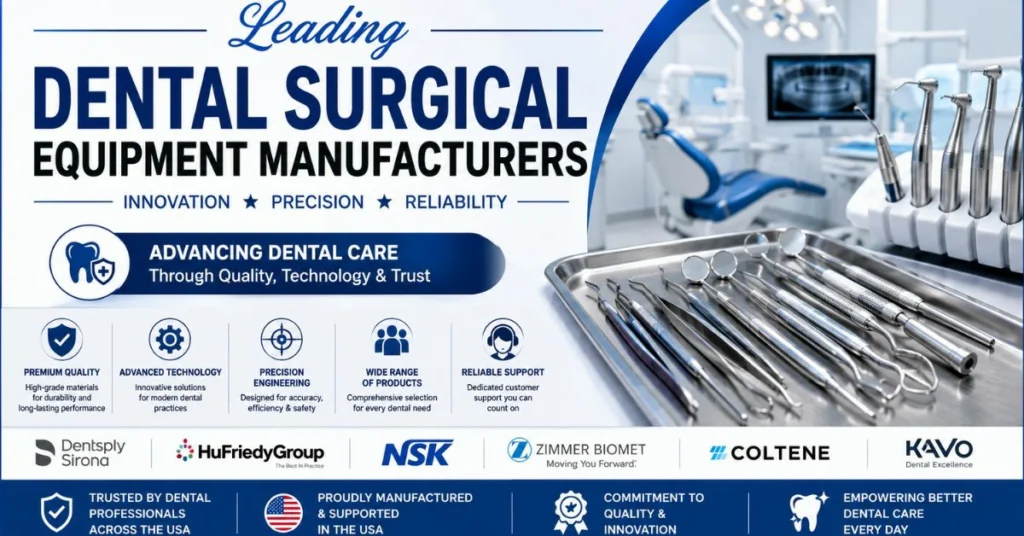
Dental Surgical Equipment Manufacturers play a critical role in advancing modern dentistry by developing the precision tools and technologies that dentists rely on every day. From implant systems and surgical instruments to digital imaging solutions, these companies help make dental procedures safer, faster, and more comfortable for patients.
Understanding the leading manufacturers gives valuable insight into the innovations shaping today’s dental care. Businesses that build Dentists Email Lists also monitor these trusted brands to better understand purchasing trends and connect with dental professionals. Whether you’re researching the industry, evaluating equipment suppliers, or simply curious about the technology behind your next dental procedure, this guide highlights the top manufacturers, their strengths, and the key factors that distinguish them in a competitive global market.
Why the Manufacturer Behind Your Dental Equipment Matters
It’s easy to assume that dental equipment is dental equipment. In reality, the brand and quality of the tools your dentist uses can directly affect your comfort, safety, and outcomes. Precision instruments reduce the risk of complications. Better sterilization systems lower infection risk. Advanced imaging technology means your dentist can catch problems earlier and plan treatment more accurately.
Dental practices don’t buy equipment lightly. Surgical tools, imaging systems, and chairs represent major long-term investments, and dentists typically stick with manufacturers they trust for years, sometimes decades. That loyalty is earned through consistent quality, strong after-sales support, and continuous innovation. Understanding which companies dominate this space gives you insight into what “good” dental care actually looks like from an equipment standpoint.
The Leading Dental Surgical Equipment Manufacturers
1. Dentsply Sirona
Founded in 1899 and headquartered in Pennsylvania, Dentsply Sirona is one of the most established global manufacturers of dental equipment and consumables. The company has built its reputation on a broad product portfolio spanning digital dental equipment, treatment instruments, and restorative materials. In recent years, Dentsply has pushed cloud-native intraoral scanning technology, which can improve standardization and data access across multiple practice locations when cybersecurity protections are strong.
For patients, this translates into more accurate digital impressions, meaning fewer uncomfortable physical mold-taking sessions and faster turnaround on crowns, aligners, or other restorative work.
2. Straumann Group
Straumann was founded in 1954 and is headquartered in Basel, Switzerland, and is widely regarded as the world’s leading oral implant company, focused on implant, restoration, and periodontal treatment solutions. The company has transformed from what one industry analysis called a simple “screw manufacturer” into a digital surgery leader, and now controls roughly 27% of the premium implant hardware market.
Straumann has also built one of the highest customer loyalty scores in the surgical equipment sector, and its acquisition of ClearCorrect has allowed it to bundle equipment more effectively with consumables. For patients considering dental implants, working with a practice that uses Straumann systems often means access to some of the most researched and clinically validated implant technology available today.
3. NSK
Founded in 1930 and headquartered in Kanuma, Japan, NSK specializes in high-performance rotary instruments and micromotor systems, playing a crucial role in dental surgical accuracy. The company is globally recognized for engineering excellence in dental handpieces and surgical micromotors, with products known for precision, durability, and ergonomic design that improve both surgical outcomes and clinical efficiency.
NSK’s handpieces are the tools your dentist uses for drilling, polishing, and shaping during restorative and surgical procedures. Precision here directly affects how comfortable and efficient your visit will be.
4. A-dec
Founded in 1964 and based in Newberg, Oregon, A-dec is the top choice for dental chairs and integrated delivery systems, known for ergonomic design and lasting quality that prioritizes clinician comfort and patient experience. The company offers a wide range of products, including dental chairs, delivery systems, lights, and cabinets, all designed with ergonomics and patient comfort in mind, while incorporating advanced technology to enhance clinical performance.
A-dec has also emphasized sustainability, earning ISO 14001 Environmental Management System certification for its environmentally responsible manufacturing practices. If you’ve ever noticed how comfortable a modern dental chair feels compared to older models, there’s a good chance A-dec engineering is behind that improvement.
5. Planmeca
Headquartered in Helsinki, Finland, Planmeca is the only company that has mastered core technologies across dental equipment manufacturing, imaging algorithms, and cloud-based software simultaneously, combining Scandinavian design with intelligent interaction and circular economy principles. The company has pushed AI-enabled imaging from a pilot feature into a default expectation across many clinics, releasing updated imaging software with built-in AI tools and expanded CBCT (cone beam computed tomography) offerings that can shorten implant planning time.
For patients, Planmeca’s imaging advances mean more accurate 3D scans of your jaw and teeth, which supports better treatment planning for implants, orthodontics, and complex extractions.
6. KaVo Kerr
KaVo Kerr invests roughly 19% of its annual revenue into research and development, and has co-established a “Future Dental Center” partnership that has developed innovations like self-disinfecting dental handpieces and self-healing resin materials. The company’s integrated treatment approach has helped reduce the average treatment time for full-mouth reconstruction significantly while also cutting medical waste.
This kind of innovation matters for patients undergoing longer or more complex procedures, where reduced treatment time and lower infection risk make a real difference in comfort and recovery.
7. Henry Schein
Henry Schein is a leading global distributor of health care products, including dental equipment and supplies, offering a vast array of products designed for all aspects of dental care, from diagnostics to treatments and patient care. While not a manufacturer in the traditional sense, Henry Schein’s scale and distribution network make it a critical link between manufacturers and the dental practices that serve patients every day, including equipment financing, leasing, and repair services that keep practices running smoothly.
8. Integra (Miltex)
Integra is a leading provider of medical equipment globally, offering quality dental instruments under its Miltex brand, known for developing precise instruments through consultation with industry leaders during the manufacturing process. Established in 1989, the company’s instruments are recognized for being durable and razor-sharp, delivering outstanding accuracy for dentists across both small and medium-sized practices.
How These Manufacturers Compare
| Manufacturer | Headquarters | Core Specialty | Notable Strength |
| Dentsply Sirona | Pennsylvania, USA | Digital dentistry, consumables | Cloud-based intraoral scanning |
| Straumann Group | Basel, Switzerland | Dental implants | Market-leading implant hardware share |
| NSK | Kanuma, Japan | Rotary instruments, handpieces | Precision surgical micromotors |
| A-dec | Oregon, USA | Dental chairs, delivery systems | Ergonomic design, sustainability |
| Planmeca | Helsinki, Finland | Imaging, CAD/CAM software | AI-enabled diagnostic imaging |
| KaVo Kerr | Global | Instruments, equipment, software | R&D investment, treatment efficiency |
| Henry Schein | New York, USA | Distribution, equipment financing | Broad product access and service network |
| Integra (Miltex) | New Jersey, USA | Surgical hand instruments | Precision-crafted, durable tools |
The Trends Shaping Dental Equipment in 2026
A few themes come up repeatedly across the leading manufacturers this year.
AI-assisted imaging and diagnostics are no longer experimental. AI-enabled imaging has moved from a pilot feature to a default expectation in many clinics, meaning your dentist can often catch issues like bone loss, cavities, or misalignment earlier and with greater precision than before.
Digital treatment planning continues to expand, particularly around implants and orthodontics. Manufacturers are investing heavily in software that connects imaging, design, and manufacturing into a single workflow, cutting down the number of visits patients need for complex procedures.
Sustainability and compliance are increasingly part of how manufacturers differentiate themselves, from environmentally responsible manufacturing to strict adherence to international safety standards like ISO 13485 and FDA regulations.
Consolidation and service quality matter more than ever. Ownership changes and acquisitions across the industry create both opportunities and risks, with execution and service consistency becoming key differentiators as companies integrate new capabilities.
What This Means If You’re Choosing a Dental Practice
If you’re evaluating a new dentist or oral surgeon, it’s reasonable to ask what equipment and technology they use, particularly for anything surgical like implants, extractions, or bone grafting. Practices that invest in equipment from established manufacturers like Straumann, Dentsply Sirona, or Planmeca are generally signaling a commitment to precision, patient safety, and staying current with clinical best practices.
That said, equipment brand alone shouldn’t be your only consideration. A skilled clinician with well-maintained, mid-tier equipment can often outperform a less experienced provider using top-of-the-line tools. Look at the full picture: the dentist’s training and experience, patient reviews, sterilization practices, and yes, the equipment they use.
Frequently Asked Questions
Does the brand of dental equipment affect the cost of my treatment? It can. Practices using premium equipment from leading manufacturers may have higher overhead costs, which can sometimes be reflected in treatment pricing. However, better equipment often means fewer complications and faster recovery, which can offset costs in the long run.
Are newer dental technologies actually safer? Generally, yes. Advances like digital imaging reduce radiation exposure compared to older X-ray methods, and AI-assisted diagnostics help catch problems earlier. Precision instruments also reduce tissue trauma during procedures.
How often do dental practices update their equipment? This varies widely, but many practices upgrade major equipment like imaging systems and chairs every 7 to 10 years, while smaller instruments and handpieces may be replaced or serviced more frequently.
Should I ask my dentist about their equipment manufacturers? It’s a fair question, especially before surgical procedures like implants. Most dentists are happy to discuss the technology they use, and it can help you feel more informed about your care.
Conclusion
The dental industry’s leading manufacturers, from Dentsply Sirona and Straumann to NSK, A-dec, and Planmeca, are pushing the boundaries of what’s possible in patient care through precision engineering, digital imaging, and AI-assisted diagnostics. As a patient, understanding this landscape gives you a better sense of what quality dental care looks like behind the scenes.
For dental practices and industry professionals looking to connect with decision-makers in this space, resources like a well-maintained Dentists Mailing List can be a valuable tool for reaching the right audience with relevant products, services, or educational content. As equipment technology continues to evolve, staying informed, whether you’re a patient or an industry professional, remains one of the best ways to make confident decisions about dental care.