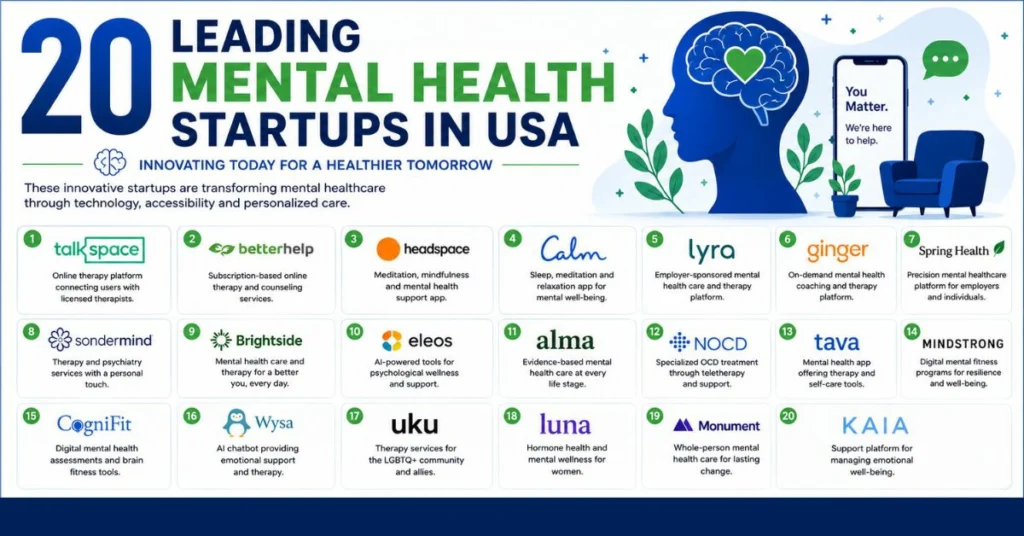
Mental Health Startups are transforming the way people across the United States access therapy, psychiatry, counseling, and emotional wellness services through innovative digital solutions. By combining telehealth, artificial intelligence, and data-driven care, these companies are reducing barriers related to cost, long wait times, and limited provider availability while making mental health support more convenient and personalized.
Their technology also helps healthcare professionals improve patient engagement, treatment outcomes, and ongoing care management. For organizations focused on outreach, recruitment, or partnerships, a Psychologist Email List provides an effective way to connect with qualified mental health professionals supporting these platforms. This guide explores 20 leading mental health startups, highlights their unique strengths, examines emerging industry trends, and explains how innovation continues to reshape the future of behavioral healthcare in America.
Why Mental Health Startups Are Growing So Fast
A few forces are driving this boom:
- Rising demand. More people are openly seeking help for anxiety, depression, burnout, and other conditions than in previous decades.
- Provider shortages. Many parts of the country don’t have enough licensed therapists or psychiatrists, especially outside major cities.
- Employer interest. Companies increasingly offer mental health benefits, creating a new B2B market for these startups.
- Insurance shifts. More insurers now cover teletherapy, making digital-first care financially realistic for a broader group of people.
- Technology maturity. Video calling, secure messaging, and AI-assisted tools have made remote care genuinely usable at scale.
With that context in mind, here are 20 startups worth knowing.
20 Leading Mental Health Startups in the USA
1. BetterHelp
One of the most recognized names in online therapy, BetterHelp connects users with licensed counselors through messaging, phone, and video sessions on a subscription basis.
2. Talkspace
Talkspace offers text-based and live therapy sessions and has built partnerships with insurers and employers to widen access to virtual mental health care.
3. Lyra Health
Lyra focuses on the employer benefits market, giving companies a way to offer their workforce access to vetted therapists, coaches, and psychiatric providers.
4. Spring Health
Spring Health uses a data-driven “precision mental health” model, matching employees to the right level of care based on an initial assessment.
5. Cerebral
Cerebral built a subscription model combining therapy and medication management, aiming to make ongoing psychiatric care more affordable and convenient.
6. Headspace Health (formerly Ginger + Headspace)
After merging with Ginger, Headspace Health blends meditation and mindfulness content with on-demand coaching and clinical care.
7. Calm
Best known for its meditation and sleep app, Calm has expanded into broader mental wellness content, including programs aimed at stress reduction and emotional resilience.
8. Two Chairs
Two Chairs pairs an in-depth intake process with a matching algorithm to connect clients with therapists suited to their specific needs, blending in-person and virtual care.
9. Brightside Health
Brightside specializes in evidence-based treatment for depression and anxiety, combining psychiatric medication management with therapy delivered virtually.
10. Alma
Alma operates more like an infrastructure company for therapists, helping independent clinicians manage insurance billing, scheduling, and practice logistics while giving clients an easier way to find in-network providers.
11. SonderMind
SonderMind focuses on connecting patients with therapists who accept their insurance, while also giving providers tools to manage caseloads and billing.
12. Path
Path is built around simplifying insurance-based access to therapy, aiming to reduce the friction patients feel when trying to use their benefits for mental health care.
13. Rula
Rula focuses on insurance-covered mental health care, working directly with health plans to reduce out-of-pocket costs for patients seeking therapy or psychiatry.
14. Grow Therapy
Grow Therapy supports independent therapists with the administrative backbone (credentialing, billing, scheduling) needed to accept insurance, while helping patients find in-network providers faster.
15. Charlie Health
Charlie Health targets a more intensive tier of care, offering virtual intensive outpatient programs for teens and young adults dealing with serious mental health challenges.
16. Equip Health
Equip provides virtual, evidence-based treatment specifically for eating disorders, pairing patients with a full care team that includes therapists, dietitians, and physicians.
17. Included Health
Included Health combines mental and physical health navigation, helping employees and health plan members find the right specialists, including mental health providers, more efficiently.
18. Big Health
Big Health builds digital therapeutic programs — software-based, clinically designed tools — targeting conditions like insomnia and anxiety without requiring a live provider for every session.
19. Woebot Health
Woebot Health uses an AI-driven conversational agent to deliver structured mental health support, often positioned as a complement to traditional therapy rather than a replacement.
20. Mindstrong
Mindstrong has worked at the intersection of technology and serious mental illness care, exploring how digital signals and structured programs can support people with more complex psychiatric needs.
Comparing the Startups at a Glance
| Startup | Primary Focus | Care Model | Best Suited For |
| BetterHelp | General therapy | Subscription, messaging/video | Individuals seeking flexible online counseling |
| Talkspace | General therapy | Messaging + live sessions | Insurance-covered or employer-sponsored therapy |
| Lyra Health | Employer benefits | Network of vetted providers | Companies offering workforce mental health benefits |
| Spring Health | Precision matching | Assessment-driven referrals | Employers wanting data-backed care matching |
| Cerebral | Therapy + medication | Subscription care | Patients needing combined therapy and psychiatry |
| Headspace Health | Wellness + coaching | App content + coaching/clinical | Users wanting mindfulness plus clinical support |
| Calm | Wellness content | Self-guided app | Stress reduction and sleep support |
| Two Chairs | Matched therapy | In-person + virtual | Clients wanting a tailored therapist match |
| Brightside Health | Depression & anxiety | Virtual therapy + medication | Evidence-based treatment seekers |
| Alma | Practice infrastructure | Provider-facing platform | Therapists managing insurance and billing |
| SonderMind | Insurance-based therapy | Provider matching | Patients wanting in-network therapists |
| Path | Insurance simplification | Referral platform | Reducing friction in using insurance benefits |
| Rula | Insurance-covered care | Therapy + psychiatry | Cost-conscious patients with health plans |
| Grow Therapy | Practice support | Provider-facing platform | Independent therapists accepting insurance |
| Charlie Health | Intensive outpatient care | Virtual IOP | Teens/young adults with serious needs |
| Equip Health | Eating disorder care | Multi-disciplinary team | Patients needing specialized ED treatment |
| Included Health | Care navigation | Guided referrals | Employees needing help finding the right provider |
| Big Health | Digital therapeutics | Software-based programs | Conditions like insomnia and anxiety |
| Woebot Health | AI-assisted support | Conversational app | Supplementing traditional therapy |
| Mindstrong | Serious mental illness | Technology-supported care | Complex psychiatric care needs |
What Sets the Strongest Players Apart
Looking across this list, a few patterns emerge among the startups gaining the most traction:
- Insurance integration. Companies like Rula, SonderMind, Path, and Grow Therapy are winning users by reducing the cost barrier, which remains one of the biggest reasons people avoid seeking care.
- Specialization. General “therapy on demand” is becoming a crowded space, so startups like Equip Health and Charlie Health are finding traction by focusing on specific, underserved conditions.
- Employer partnerships. Lyra Health and Spring Health show how the B2B benefits channel can scale mental health access faster than direct-to-consumer marketing alone.
- Blending human and digital care. Woebot Health and Big Health suggest that software-only tools work best as a complement to human providers rather than a full replacement, at least for now.
Challenges the Industry Still Faces
Despite rapid growth, mental health startups face real hurdles:
- Provider retention. Many platforms rely on large networks of licensed clinicians, and burnout among providers can affect service quality and availability.
- Regulatory scrutiny. Prescribing controlled substances virtually, data privacy, and state-by-state licensing rules all create compliance complexity.
- Care continuity. Some patients report friction when switching therapists within a platform or transitioning between different intensity levels of care.
- Differentiation. With so many similar-sounding platforms, standing out on quality (not just price or convenience) is an ongoing challenge.
Who Benefits From Following This Space
Beyond patients looking for care, several groups have a stake in tracking these companies:
- Employers evaluating which benefit to add to their health plans.
- Investors watching where funding and consolidation are headed next.
- Healthcare vendors building integrations, from EHR systems to billing tools.
- Teams in charge of marketing and sales are attempting to connect with the executives, administrators, and clinicians who decide what to buy from these businesses.
Conclusion
The mental health startup landscape in the United States has moved well beyond a handful of therapy apps into a diverse ecosystem covering employer benefits, psychiatric staffing, specialized treatment programs, and independent practice support. Each of the 20 companies profiled here approaches the same underlying goal, expanding access to care, from a different angle, whether that means matching patients with therapists, streamlining insurance credentialing, or building infrastructure for hospitals and health systems. For organizations that want to reach the clinicians behind these platforms directly, whether for recruiting, partnership outreach, or marketing purposes, a targeted Psychologists Mailing List offers a practical way to connect with licensed professionals working across this fast-changing industry.