Skip to main content
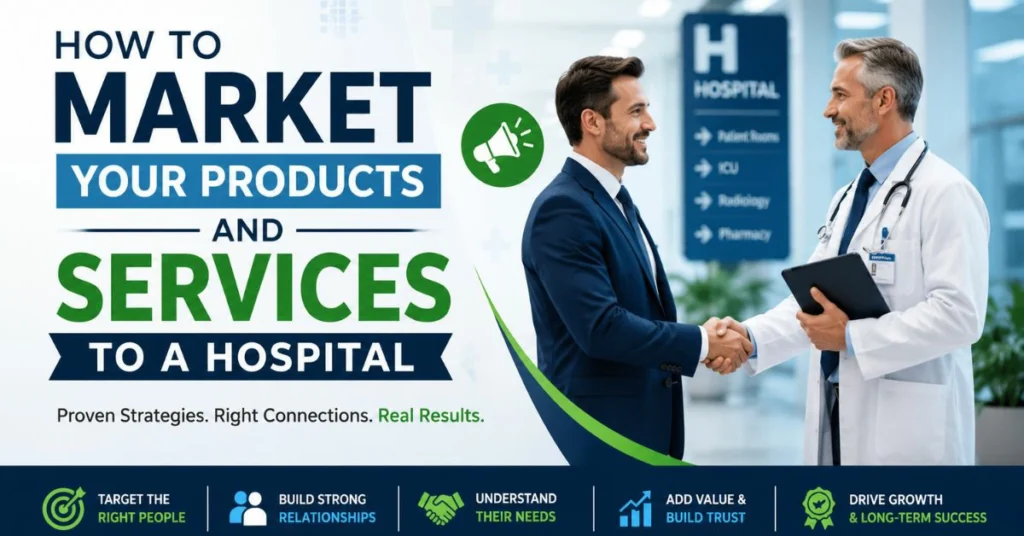
How to Market Your Products and Services to a Hospital starts with understanding who influences purchasing decisions within complex healthcare organizations. Hospitals rely on executive leaders to evaluate vendors, approve budgets, and select solutions that improve patient care and operational efficiency. Reaching these decision-makers requires accurate data, personalized messaging, and a targeted outreach strategy rather than broad marketing campaigns.
A Hospital Executives Email List helps connect your business with CEOs, CFOs, COOs, CMOs, and other senior leaders responsible for strategic investments. Whether you offer healthcare technology, medical devices, consulting, pharmaceutical products, or professional services, having verified executive contacts can increase response rates, shorten sales cycles, and improve lead quality. This guide explains why executive email lists matter, how to use them effectively, and the best practices for achieving better B2B healthcare marketing results.
1. What Is a Hospital Executives Email List?
A Hospital Executives Email List is a curated database of verified contact information for senior leaders working within hospitals and health systems. This typically includes names, job titles, direct email addresses, phone numbers, and organizational details for roles such as Chief Executive Officers, Chief Financial Officers, Chief Operating Officers, Chief Medical Officers, Chief Nursing Officers, and other C-suite or VP-level administrators.
Unlike general healthcare contact databases that might include a broad mix of clinicians, administrative staff, and support personnel, an executive-focused list narrows the field specifically to people who influence or approve high-level purchasing, partnership, and operational decisions.
For marketers selling products or services that require budget approval, procurement sign-off, or strategic buy-in — think software platforms, capital equipment, consulting services, or large-scale vendor contracts — having direct access to this tier of decision-makers is often the difference between a stalled pipeline and a closed deal.
2. Why Hospital Leadership Contacts Are Hard to Reach
Hospital executives are some of the most difficult professionals to contact directly. There are a few reasons for this:
- Gatekeeping structures. Executive assistants, front-desk staff, and general info@ inboxes are designed to filter out unsolicited outreach before it ever reaches a decision-maker.
- High demand on their time. Hospital leaders juggle clinical oversight, regulatory compliance, staffing, budgets, and community relations — leaving little room for unsolicited sales conversations.
- Frequent turnover and restructuring. Healthcare organizations regularly go through leadership changes, mergers, and department reorganizations, which makes publicly available contact information go stale quickly.
- Limited public listings. Many hospitals don’t publish direct executive emails on their websites, relying instead on generic contact forms.
This is precisely why purpose-built executive contact databases exist — they solve a real, persistent problem for B2B marketers trying to reach this audience efficiently.
3. Who’s Included in This Type of List
A well-constructed list typically spans multiple layers of hospital leadership, including:
- Chief Executive Officers (CEOs)
- Chief Financial Officers (CFOs)
- Chief Operating Officers (COOs)
- Chief Medical Officers (CMOs)
- Chief Nursing Officers (CNOs)
- Chief Information Officers (CIOs)
- Chief Technology Officers (CTOs)
- Vice Presidents of Operations, Finance, and Clinical Services
- Directors of Procurement and Supply Chain
- Practice Administrators and Hospital Administrators
Depending on your product or service, you may only need one or two of these roles — for example, a CIO or CTO list makes sense if you’re selling health IT infrastructure, while a CFO-focused list is more relevant for financial software or revenue cycle management tools.
4. Key Benefits for B2B Marketers
Investing in accurate executive contact data offers several concrete advantages:
Faster sales cycles. Reaching decision-makers directly, rather than working through multiple layers of staff, can shorten the time between first contact and a signed contract.
Higher-quality leads. Instead of casting a wide net across an entire hospital’s staff directory, you’re targeting the people with actual purchasing authority.
Better campaign personalization. With accurate job titles and departments, you can tailor messaging to speak directly to a CFO’s budget concerns or a CMO’s clinical priorities.
Improved marketing ROI. Fewer wasted sends to irrelevant contacts generally translates to better open rates, click-through rates, and conversion rates.
Multi-channel outreach support. Many lists include phone numbers and mailing addresses alongside email, enabling coordinated email, direct mail, and call campaigns.
5. How These Lists Are Typically Built or Sourced
Reputable data providers assemble hospital executive contact information from a combination of sources, such as:
- Public hospital and health system websites
- Professional licensing boards and association memberships
- Industry conferences, speaker rosters, and published panels
- Business filings and press releases announcing new leadership
- Opt-in professional networking platforms
- Direct research and phone verification by data teams
The strongest providers don’t just scrape data once and leave it — they run ongoing verification cycles, since executive turnover in healthcare can be significant year over year.
6. Data Accuracy and Verification Standards
Not all contact databases are created equal. Before purchasing or licensing a list, it’s worth asking a few questions:
- How frequently is the data refreshed (monthly, quarterly, annually)?
- What percentage of emails are verified as deliverable at the time of purchase?
- Is there a guarantee or replacement policy for bounced or outdated contacts?
- Are job titles and departments manually confirmed, or pulled automatically from public sources?
A list that hasn’t been updated in over a year is likely to have a meaningful bounce rate, which can hurt your sender reputation and email deliverability across future campaigns — not just the one using the outdated data.
7. Compliance Considerations (HIPAA, CAN-SPAM, GDPR)
Marketing to healthcare executives means operating in a heavily regulated space, so compliance should never be an afterthought.
HIPAA governs the privacy of patient health information — it does not typically restrict B2B marketing to hospital administrators using publicly available business contact details, but marketers should still be careful never to include or reference patient data in any outreach.
CAN-SPAM Act requirements apply to commercial emails sent within the U.S. This means every email needs a clear sender identity, a truthful subject line, a physical mailing address, and a functioning unsubscribe mechanism that’s honored promptly.
GDPR and similar regional privacy laws apply if you’re contacting executives in the UK, EU, or other regulated jurisdictions, requiring a lawful basis for processing personal data and clear opt-out options.
Working with a data provider that documents how their information was collected — and that supports opt-out requests — reduces legal risk and helps protect your brand’s reputation.
8. Segmentation Strategies for Better Targeting
Once you have a list, segmentation is what turns raw contact data into an effective campaign. Consider slicing your list by:
- Job title/role — CFOs need different messaging than CMOs or CIOs.
- Hospital size — a 900-bed academic medical center has different needs than a 40-bed rural facility.
- Geographic region — useful for compliance with state-level regulations or region-specific promotions.
- Hospital type — nonprofit, for-profit, academic, government/VA, or specialty hospitals often have different procurement processes.
- Technology maturity — organizations already using certain EHR or software platforms may respond differently to a new solution pitch.
Smaller, well-segmented campaigns almost always outperform a single blast to an entire undifferentiated list.
9. Crafting Messaging That Resonates With Executives
Hospital executives are busy, data-driven, and skeptical of generic sales pitches. A few principles for writing effective outreach:
- Lead with a specific outcome, not a feature list — executives care about cost savings, patient outcomes, staff efficiency, and regulatory compliance.
- Keep subject lines short and specific. Vague, hype-driven subject lines are more likely to be ignored or flagged as spam.
- Reference relevant industry trends or benchmarks to show you understand their operating environment.
- Make the next step easy — a short call, a one-page case study, or a brief demo request works better than asking for a long meeting upfront.
- Avoid clinical jargon overreach unless your team has genuine domain expertise to back it up.
10. Measuring Campaign Performance and ROI
To understand whether your outreach to hospital executives is working, track metrics beyond just open rates:
| Metric | What It Tells You |
| Deliverability Rate | How much of your list is reaching inboxes rather than bouncing |
| Open Rate | Whether subject lines and sender names are compelling |
| Click-Through Rate | Whether your message content is driving engagement |
| Reply Rate | A strong signal of genuine executive interest |
| Meeting/Demo Conversion Rate | How effectively your outreach turns into real sales conversations |
| Cost Per Qualified Lead | Whether the list and campaign are cost-efficient overall |
| Pipeline Influence | How many closed deals can be traced back to this contact channel |
Reviewing these numbers after each campaign helps you refine segmentation, messaging, and even which data provider is delivering the best long-term value.
11. Common Mistakes Marketers Make
Even with a strong list in hand, campaigns can underperform due to avoidable errors:
- Sending generic, one-size-fits-all messaging instead of role-specific content.
- Ignoring list hygiene — not removing bounced or unsubscribed contacts between sends.
- Overloading executives with frequency — too many emails in a short window can trigger spam complaints.
- Failing to warm up a new sending domain, which can hurt deliverability across an entire campaign.
- Not aligning sales and marketing so that a positive reply doesn’t fall through the cracks.
- Using outdated data without verifying titles or checking for organizational changes.
12. Choosing a Data Provider
When evaluating vendors for executive contact data, look for:
- Transparent sourcing and update methodology
- Sample data you can review before purchase
- Clear compliance documentation
- Reasonable replacement or refresh policies for invalid contacts
- Positive reviews or case studies from similar B2B healthcare marketers
- Flexible list segmentation options (by title, region, hospital size, etc.)
Take time to test a smaller sample segment before committing to a large-scale purchase — this lets you validate deliverability and response rates before scaling spend.
Conclusion
A well-maintained, accurately verified list of hospital leadership contacts can meaningfully improve how efficiently you reach the people who actually make purchasing decisions. Rather than relying on generic outreach that gets filtered out by gatekeepers, a targeted Hospital Executives Mailing List allows your team to focus time and budget on conversations that are far more likely to convert. As with any B2B data strategy, success depends on combining accurate, compliant data with thoughtful segmentation and messaging — not just the list itself. Done right, this approach can turn a historically difficult audience into one of your most reliable channels for sustainable growth.