Skip to main content
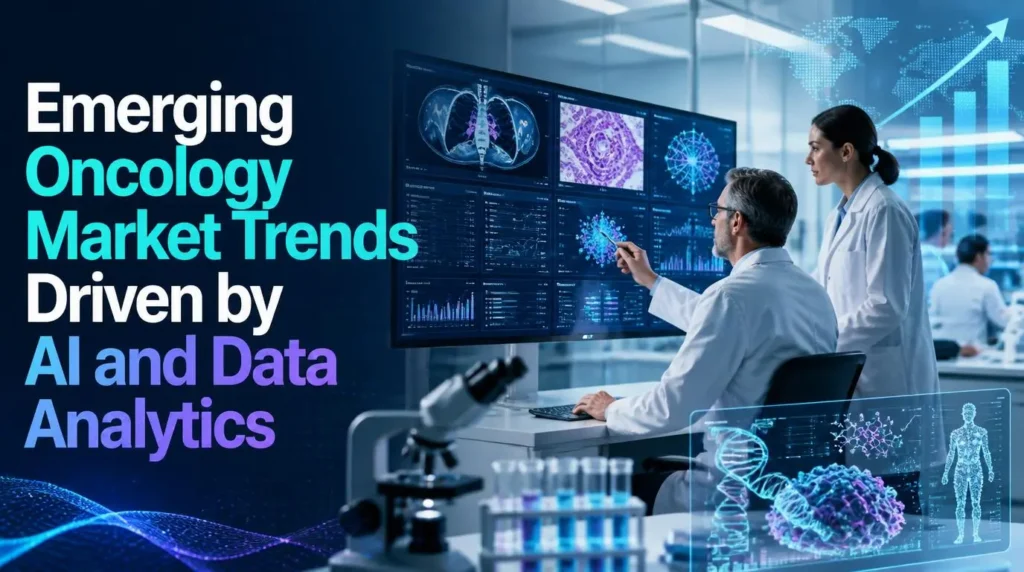
Oncology market trends are being reshaped by rapid advancements in artificial intelligence (AI), data analytics, and precision medicine, transforming the way cancer is detected, treated, and managed. As healthcare innovation accelerates, organizations using an Oncologist Mailing List can better connect with oncology professionals and stay informed about the latest developments influencing patient care, clinical decision-making, and the future of cancer treatment.
This article explores the key market trends shaping oncology today, the role AI and data analytics play in each, and what these shifts may mean for patients, providers, and the broader healthcare ecosystem in the coming years. It also touches on why accurate, specialist-focused outreach — supported by tools like a well-maintained Oncologist Mailing List — is becoming an increasingly important part of how new research, tools, and treatment options reach the clinicians who use them.
The Oncology Market Is Expanding Rapidly
The global oncology market has grown substantially over the past decade, fueled by rising cancer incidence, an aging population, and continuous innovation in treatment options. Cancer remains one of the leading causes of death worldwide, which has placed sustained pressure on healthcare systems to find faster, more accurate, and more affordable ways to detect and treat the disease.
This growth has attracted significant investment from pharmaceutical companies, technology firms, diagnostic labs, and healthcare startups alike. Many of these organizations are turning to AI-driven tools and advanced analytics platforms to gain a competitive edge, improve patient outcomes, and streamline the drug development pipeline. As a result, oncology has become one of the most closely watched sectors within the broader healthcare and life sciences industry.
Market expansion isn’t just about new drugs entering the pipeline. It also reflects a broader shift toward value-based care, where outcomes and efficiency matter as much as innovation itself. AI and data analytics are increasingly seen as tools that can help the industry meet both goals simultaneously — improving patient results while controlling costs.
Geographic expansion is another notable trend. While North America and Europe continue to lead in oncology research and technology adoption, emerging markets across Asia-Pacific and Latin America are seeing faster growth rates as healthcare infrastructure improves and access to diagnostic and treatment technologies widens. This global expansion is creating new opportunities for collaboration, data sharing, and cross-border research, all of which benefit from stronger analytics capabilities to manage and interpret information at scale.
At the same time, the oncology market is becoming more specialized. Rather than treating cancer as a single broad category, the industry increasingly recognizes it as hundreds of distinct diseases, each with its own biological drivers, treatment pathways, and patient populations. This specialization has fueled demand for more granular data and more sophisticated analytical tools capable of making sense of increasingly complex clinical and molecular information.
AI-Powered Diagnostics Are Changing Early Detection
One of the most visible applications of AI in oncology is diagnostic imaging. Traditional methods of reviewing mammograms, CT scans, MRIs, and pathology slides rely heavily on the expertise and availability of trained specialists. While human expertise remains essential, AI-powered image analysis tools are increasingly being used to support radiologists and pathologists by flagging areas of concern, prioritizing urgent cases, and reducing the likelihood of missed abnormalities.
Machine learning models trained on large datasets of medical images can identify patterns that may be difficult for the human eye to detect consistently, especially in early-stage cancers where visual signs can be subtle. This doesn’t replace the clinician’s judgment, but it does provide an additional layer of support that can improve consistency and potentially catch cases earlier.
Earlier detection matters significantly in oncology, where treatment outcomes are often closely tied to the stage at which cancer is diagnosed. As AI diagnostic tools continue to mature and gain regulatory approval, they are expected to become a standard part of screening programs across multiple cancer types, including breast, lung, skin, and colorectal cancers.
Beyond imaging, AI is also being applied to genomic and molecular data, helping identify biomarkers associated with specific cancer types or subtypes. This is paving the way for more precise diagnostic categorization, which in turn supports more tailored treatment decisions.
Pathology is another area experiencing rapid change. Digital pathology platforms, combined with AI-based image analysis, allow pathologists to review tissue samples with computational support that can highlight suspicious cell patterns or quantify biomarkers more consistently than manual review alone. This can be especially valuable in high-volume labs, where consistent, fatigue-free analysis helps maintain diagnostic accuracy across large caseloads.
Liquid biopsy technology, which analyzes circulating tumor DNA in blood samples, is also benefiting from advances in AI and data analytics. These tests can potentially detect cancer signals earlier and less invasively than traditional tissue biopsies, and machine learning models are helping researchers interpret the complex genetic signals these tests generate with greater accuracy.
How Advanced Analytics Supports Precision and Personalized Care
Precision medicine — the idea of tailoring treatment to an individual patient’s genetic profile, lifestyle, and disease characteristics — has long been a goal in oncology. Data analytics is what makes this approach practical at scale.
By analyzing large volumes of clinical, genomic, and molecular data, healthcare providers can better understand which treatments are likely to be most effective for a given patient. This shifts oncology away from a one-size-fits-all approach and toward therapies that are matched more closely to individual tumor biology.
Data analytics platforms can also help identify patterns across patient populations that might otherwise go unnoticed. For example, analyzing outcomes data across thousands of patients with a similar cancer type and genetic profile can reveal which treatment combinations tend to produce better results, informing future clinical decision-making.
This data-driven approach also supports the growing use of companion diagnostics — tests that help determine whether a specific therapy is likely to work for a particular patient before treatment begins. As more targeted therapies come to market, the ability to match the right patient to the right drug through data analysis becomes increasingly important, both clinically and economically.
Tumor boards — the multidisciplinary teams that review complex cancer cases and recommend treatment plans — are also beginning to incorporate AI-assisted decision support tools. These tools can synthesize information from imaging, pathology, genomics, and treatment guidelines into a single view, helping specialists arrive at consensus recommendations more efficiently while still relying on human expertise for the final decision. This is particularly valuable for complex or rare cancer cases, where individual clinicians may not have encountered similar cases before but a data-driven system can surface relevant precedents from a much broader pool of clinical experience.
AI Is Accelerating Drug Discovery and Clinical Trials
Developing a new cancer drug traditionally takes many years and substantial financial investment, with a high rate of failure along the way. AI is beginning to change this equation by helping researchers identify promising drug candidates faster and with greater precision.
Machine learning models can analyze vast chemical and biological datasets to predict how certain compounds might behave in the body, which can help narrow down the list of candidates worth pursuing in laboratory and clinical testing. This doesn’t eliminate the need for rigorous testing, but it can reduce the time and resources spent on candidates unlikely to succeed.
AI is also playing a growing role in clinical trial design and recruitment. Identifying eligible patients for oncology trials has historically been a slow and resource-intensive process. Predictive analytics tools can now help match patients to relevant trials more efficiently by analyzing electronic health records, genomic data, and other clinical information, potentially shortening recruitment timelines and improving trial diversity.
Additionally, AI-driven analytics can help monitor ongoing trials in real time, flagging safety signals or efficacy trends earlier than traditional methods might allow. This has the potential to make the overall drug development process not only faster but also safer for participants.
Predictive Analytics Is Improving Patient Outcomes
Beyond diagnosis and drug development, predictive analytics is increasingly being used to support ongoing patient care. Hospitals and cancer treatment centers are using data models to anticipate complications, predict which patients may be at higher risk of hospital readmission, and identify early warning signs of disease progression.
This kind of forward-looking insight allows care teams to intervene proactively rather than reactively. For example, predictive models might flag a patient who is likely to experience severe side effects from a particular treatment regimen, prompting closer monitoring or a dosage adjustment before complications arise.
Predictive analytics also supports better resource allocation within healthcare systems. By forecasting patient volumes, treatment demands, and potential complications, hospitals can plan staffing and equipment needs more effectively, which can translate into shorter wait times and more consistent quality of care for patients.
For patients themselves, this trend often translates into a more responsive and individualized care experience, where potential issues are addressed earlier and treatment plans can be adjusted based on real-time data rather than relying solely on periodic check-ins.
Real-World Data and Real-World Evidence Are Gaining Influence
Clinical trials remain the gold standard for evaluating new treatments, but they only capture a snapshot of how a therapy performs under controlled conditions with a specific patient population. Real-world data (RWD) and real-world evidence (RWE) — information gathered from everyday clinical practice, insurance claims, patient registries, and electronic health records — are increasingly being used to complement trial data.
Analyzing real-world data allows researchers and healthcare providers to understand how treatments perform across broader, more diverse patient populations, including those who might not have qualified for clinical trials due to age, comorbidities, or other factors. This provides a more complete picture of a treatment’s effectiveness and safety profile over time.
Regulatory agencies have also shown growing openness to incorporating real-world evidence into approval and post-market surveillance decisions. This shift reflects a broader recognition that data generated outside of traditional trial settings can offer valuable insights, particularly for rare cancers or specific patient subgroups where large-scale trials may not be feasible.
For the oncology market as a whole, this trend underscores the growing importance of data infrastructure — the systems and standards needed to collect, store, and analyze health data consistently and securely across different care settings.
Telehealth and Remote Monitoring Are Extending Oncology Care
The expansion of telehealth services, accelerated in recent years, has had a lasting impact on how oncology care is delivered. Remote consultations, virtual follow-up appointments, and digital symptom tracking tools are helping extend access to cancer care, particularly for patients in rural or underserved areas who may otherwise face long travel times to specialized treatment centers.
Wearable devices and remote monitoring tools are also playing an increasing role, allowing care teams to track patient vitals, activity levels, and symptom patterns between in-person visits. When combined with data analytics, this continuous stream of information can help detect concerning changes earlier, reducing the need for emergency interventions and supporting more proactive care management.
While telehealth cannot fully replace in-person oncology care, particularly for procedures like imaging, biopsies, or infusion therapy, it has become a valuable complement to traditional care models. This hybrid approach is likely to remain a lasting feature of the oncology landscape, supported by ongoing advances in remote monitoring technology and data integration.
Challenges Facing AI and Data Adoption in Oncology
Despite the promise of AI and data analytics, their adoption across oncology is not without challenges. Data privacy and security remain top concerns, given the sensitive nature of health information. Healthcare organizations must navigate strict regulatory requirements to ensure patient data is collected, stored, and used responsibly.
Interoperability is another significant hurdle. Health data is often stored across multiple systems that don’t always communicate well with one another, making it difficult to build the comprehensive datasets needed for effective AI models and analytics platforms. Efforts to standardize data formats and improve system integration are ongoing but remain a work in progress across much of the healthcare industry.
There are also questions around trust and transparency. Clinicians and patients alike need confidence that AI-driven recommendations are accurate, unbiased, and explainable. Ensuring that AI models are trained on diverse, representative datasets is essential to avoiding disparities in care recommendations across different patient populations.
Finally, integrating new technologies into existing clinical workflows takes time, training, and investment. Even the most promising AI tools require buy-in from healthcare providers and adequate infrastructure to be used effectively in day-to-day practice.
Cost is another practical barrier, particularly for smaller hospitals and clinics that may lack the capital to invest in advanced AI systems or the specialized staff needed to maintain them. This has led to growing interest in cloud-based and subscription-style analytics platforms, which can lower the barrier to entry by reducing the need for large upfront infrastructure investments. Partnerships between technology vendors and healthcare systems are also becoming more common as a way to share both the costs and the risks associated with adopting new tools.
Regulatory clarity continues to evolve as well. Because AI tools in healthcare can directly influence diagnostic and treatment decisions, regulatory bodies are working to establish clear frameworks for evaluating their safety, effectiveness, and ongoing performance monitoring after deployment. This regulatory maturation is a necessary step for broader, more confident adoption across the oncology field.
Frequently Asked Questions About AI in Oncology
Is AI replacing oncologists?
No. AI tools are designed to support, not replace, oncologists and other cancer care specialists. These tools can help analyze images, flag potential risks, and surface relevant data, but the final diagnostic and treatment decisions remain in the hands of trained clinicians who understand the full context of a patient’s health and preferences.
How accurate are AI-based cancer diagnostic tools?
Accuracy varies by tool and application, and most AI diagnostic technologies undergo extensive validation and regulatory review before clinical use. In many studies, AI-assisted image analysis has shown the ability to match or complement specialist-level accuracy for certain tasks, though performance can vary across different cancer types, imaging modalities, and patient populations.
Will AI make cancer treatment more expensive or more affordable?
This depends on how the technology is implemented. In some cases, AI and data analytics can reduce costs by improving diagnostic efficiency, reducing unnecessary procedures, and helping match patients to effective treatments more quickly. In other cases, the upfront cost of developing and integrating new technologies may take time to translate into broader cost savings across the healthcare system.
How is patient data protected when used in AI and analytics systems?
Healthcare organizations are required to follow strict data privacy regulations when collecting, storing, and analyzing patient information. Data used to train and operate AI systems is typically de-identified or anonymized, and access is generally restricted to authorized personnel and systems that meet regulatory security standards.
What role does data analytics play in clinical trials?
Data analytics helps researchers identify eligible patients more efficiently, monitor trial safety and progress in real time, and analyze results with greater precision. This can help shorten trial timelines and improve the overall quality of the evidence generated, which benefits both current participants and future patients.
What This Means for Healthcare Marketers and Outreach
As AI and data analytics reshape oncology, the specialists driving these changes — oncologists, hematologist-oncologists, and related cancer care professionals — are also becoming a more targeted audience for pharmaceutical companies, diagnostic firms, medical device manufacturers, and health technology providers. Reaching this audience effectively requires accurate, up-to-date contact information, which is where a well-maintained Oncologist Mailing List becomes a practical tool for organizations looking to share relevant research, product updates, or educational content with this specialized group.
Because oncology is such a fast-moving field, timely communication matters. Whether the goal is promoting a new diagnostic tool, sharing clinical trial opportunities, or introducing a data analytics platform designed for cancer care, having a reliable way to reach oncology professionals directly can support more meaningful engagement than broader, less targeted outreach methods.
For organizations navigating this space, working with a verified and regularly updated Oncologist email list can help ensure outreach efforts reach the right specialists, at the right time, with information that is genuinely relevant to their practice.
Looking Ahead: The Future of AI and Analytics in Oncology
The role of AI and data analytics in oncology is expected to continue expanding in the coming years. Advances in areas like natural language processing may further streamline clinical documentation, freeing up more time for direct patient care. Continued growth in genomic sequencing and molecular profiling is likely to deepen the shift toward personalized treatment approaches.
Collaboration between technology companies, healthcare providers, and regulatory bodies will play a key role in shaping how quickly and responsibly these tools are adopted. As data infrastructure improves and interoperability challenges are addressed, the potential for AI to support earlier detection, more precise treatment, and better patient outcomes will likely become even more pronounced.
For patients, this evolution may translate into more personalized care experiences, shorter diagnostic timelines, and treatment plans informed by increasingly sophisticated data analysis. For the broader oncology market, it signals a continued shift toward technology-enabled, data-driven care as a standard rather than an exception.
Investment trends also point toward continued momentum. Venture capital and pharmaceutical funding directed toward AI-focused oncology startups has grown steadily, reflecting confidence that these technologies will play an increasingly central role in cancer care over the next decade. Strategic partnerships between established healthcare institutions and emerging technology companies are likely to accelerate the pace at which promising tools move from research settings into everyday clinical practice.
Workforce considerations will also shape how quickly these trends take hold. Training the next generation of oncologists, radiologists, and pathologists to work alongside AI tools — rather than viewing them as separate or competing systems — will be an important part of ensuring these technologies deliver on their potential. Educational institutions and professional societies are already beginning to incorporate data literacy and AI-related training into oncology education, recognizing that familiarity with these tools will likely become a standard part of clinical practice in the years ahead.
Conclusion
Oncology Market Trends are increasingly shaped by artificial intelligence and data analytics, transforming how cancer is diagnosed, treated, and monitored across healthcare systems worldwide. From AI-powered imaging and predictive analytics to real-world evidence and precision medicine, these innovations are helping clinicians make faster, more informed decisions while offering patients more personalized, responsive care throughout their treatment journey.
As this fast-evolving field continues to grow, organizations aiming to connect with the specialists behind these advances can benefit from a verified Oncologist email list, allowing for direct, relevant outreach to oncology professionals. Staying informed and connected to this audience will remain essential for anyone looking to engage meaningfully with the future of cancer care.