Skip to main content

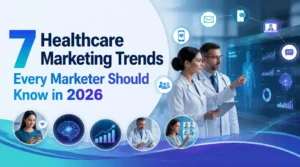
Healthcare Marketing Trends are evolving rapidly as digital strategies, changing consumer expectations, artificial intelligence, and shifting marketing priorities reshape the healthcare industry. Organizations are increasingly expected to deliver more personalized and measurable campaigns while working within tighter budgets and greater accountability. As healthcare marketers respond to these changes, resources such as a Medical and Healthcare Facilities Email List may be used alongside industry research to identify and communicate with relevant administrators, executives, and decision-makers across hospitals, clinics, and healthcare systems.
A Medical and Healthcare Facilities Email List can support targeted outreach as organizations explore the marketing developments influencing the healthcare sector in 2026. This guide examines seven notable trends that are shaping how healthcare organizations approach branding, digital engagement, content, technology, and audience communication. Whether you work for a healthcare provider, manage campaigns for healthcare clients, or simply want to understand how the industry is adapting to digital change, this overview presents the key developments in a clear and neutral way. Healthcare marketing also involves unique considerations, including privacy requirements, complex patient decision-making processes, and the sensitive nature of health information, making it important for organizations to balance innovation with responsible and relevant communication.
1. AI-Powered Personalization Takes Center Stage
Artificial intelligence has moved from an experimental tool to a foundational part of healthcare marketing strategy in 2026. Healthcare organizations increasingly rely on artificial intelligence to deliver precise, personalized patient experiences at scale. This includes everything from AI-driven content recommendations to symptom-checker tools and adaptive content delivery systems that tailor messaging based on a patient’s specific needs and browsing behavior.
AI is reshaping healthcare marketing through personalization, automation, and predictive analytics, enabling more tailored patient communication and real-time campaign optimization. These capabilities allow healthcare marketers to move beyond generic messaging and instead deliver content that feels relevant to each patient’s specific health concerns, stage in their care journey, or demographic profile.
However, this shift toward AI-driven personalization comes with important caveats. Successful AI implementation in healthcare marketing depends on carefully balancing innovation with data ethics and regulatory compliance. Marketers working in this space need to ensure that any AI tools used for personalization comply with HIPAA and other applicable privacy regulations, since healthcare data carries far more sensitivity than typical consumer marketing data.
2. Trust-Based, Educational Content Replaces Promotional Messaging
A significant shift is underway in how healthcare organizations approach content strategy. Rather than relying primarily on promotional messaging, healthcare companies are increasingly focused on producing authoritative, educational content, ranging from explainer videos to condition-specific articles. This shift toward education-first content is being driven by several factors, including growing concerns about health misinformation, changes in how search engines rank content, and increasing patient demand for transparency.
When executed well, this kind of educational content marketing builds credibility with patients and attracts high-intent traffic to healthcare websites. Rather than simply advertising services, healthcare organizations are finding that answering patients’ genuine questions, addressing common misconceptions, and providing clear, accessible health information builds a stronger foundation of trust.
This trend extends into social media as well, where short-form video content featuring real physicians and healthcare staff has become an effective way to humanize healthcare brands. Content that busts common medical myths, shares everyday clinical experiences, or simply shows the personality behind a practice tends to resonate more strongly with audiences than traditional advertising, helping practices build the kind of trust that ultimately encourages patients to book appointments when they need serious care.
3. Connected TV Advertising Continues to Grow
Television advertising in healthcare is undergoing a significant transformation as budgets shift away from traditional linear TV toward connected TV, often referred to as CTV. Healthcare and pharmaceutical digital ad spending is projected to reach billions of dollars in 2026, with digital channels expected to represent the vast majority of all healthcare ad budgets within the next year.
Linear television’s share of healthcare advertising spend is declining significantly, while a majority of pharmaceutical marketers plan to increase their investment in connected TV advertising. This shift is driven largely by the advantages that programmatic CTV offers over traditional broadcast advertising. Programmatic CTV provides precise audience targeting, real-time campaign optimization, and measurable reach at the household level, capabilities that traditional linear television simply cannot match.
For healthcare marketers, this shift means rethinking how video advertising budgets are allocated. Rather than purchasing broad, untargeted airtime, organizations are increasingly able to target specific patient populations based on health-related interests, demographic data, and viewing behavior, all while gaining clearer visibility into how those ad dollars translate into actual patient engagement.
4. Marketing Accountability Shifts Toward Measurable Business Outcomes
Perhaps one of the most significant cultural shifts happening within healthcare marketing departments in 2026 involves how success is measured. Healthcare marketing is now expected to demonstrate clear accountability for revenue rather than simply generating responses or engagement metrics. This represents a meaningful departure from previous years, when marketing success was often measured primarily through impressions, clicks, or general brand awareness.
Rising operational costs, supply chain disruptions, shifting patient behavior, and tightening financial expectations have forced healthcare organizations to completely rethink what effective marketing looks like. Healthcare organizations can no longer rely solely on search-heavy media budgets or disconnected marketing technology systems to drive sustainable growth.
Marketing teams that cannot clearly connect their spending to measurable business impact risk losing both budget and organizational influence. This pressure has led many healthcare marketing departments to invest more heavily in attribution tools, integrated data systems, and systematic testing frameworks that can more clearly demonstrate how marketing activities translate into actual patient volume and revenue growth.
5. Omnichannel Strategy Moves Beyond Simple Presence
Being present across multiple marketing channels is no longer considered sufficient on its own. Omnichannel planning in 2026 is increasingly focused on orchestrating a coherent, connected story across every patient touchpoint, rather than simply maintaining a presence across various platforms. This includes coordinating messaging across digital advertising, social media, email, and even the moments that influence conversations between healthcare providers and patients directly.
Interoperability and measurement have moved to the center of healthcare marketing strategy, as organizations demand faster insights, more accountable spending, and clearer visibility into what is actually driving patient outcomes. This means healthcare marketers are increasingly focused on breaking down data silos between different marketing platforms and ensuring that insights from one channel can inform strategy across all others.
Direct-to-consumer strategies are also evolving as part of this broader omnichannel shift. These strategies are expanding into more direct patient engagement approaches shaped by personalization, intent-driven targeting, and real-time optimization. Rather than treating each marketing channel as a separate effort, successful healthcare organizations are building integrated systems that create a seamless, consistent patient experience regardless of where that patient first encounters the brand.
6. Data Privacy Remains a Central Marketing Concern
As healthcare marketing becomes more data-driven and personalized, data privacy has become an increasingly central concern shaping strategy decisions. Marketers in 2026 must speak directly to patient needs while respecting privacy and staying aligned with evolving digital behavior patterns. This balancing act between personalization and privacy protection has become one of the defining tensions of modern healthcare marketing.
By focusing on education, thoughtful patient experience design, and ethical use of marketing tools, healthcare marketers can connect with patients meaningfully while staying aligned with current privacy expectations. This means healthcare organizations must be especially careful about how they collect, store, and use patient data for marketing purposes, ensuring compliance with HIPAA and other applicable regulations while still delivering the kind of personalized experiences patients increasingly expect.
The tension between personalization and privacy is likely to remain a defining challenge throughout 2026, as healthcare marketers work to build trust with patients who are increasingly aware of how their personal health data is being used, while also leveraging that same data to create more relevant, effective marketing campaigns.
7. Voice Search and Local SEO Gain Importance
As more consumers use smart speakers and voice assistants to search for healthcare providers and information, optimizing for voice search has become an increasingly important part of healthcare marketing strategy. Optimizing content for voice search helps healthcare providers appear in spoken queries, which are becoming increasingly common as smart devices become more prevalent in everyday life.
This trend ties closely into the broader importance of local search engine optimization for healthcare organizations. Since most patients search for healthcare providers within a specific geographic area, ensuring that a practice’s online presence is optimized for local search queries, including accurate business listings, consistent contact information across platforms, and location-specific content, remains a foundational element of effective healthcare marketing.
Video content also plays a growing role in this local visibility strategy. Short, informative videos that answer common patient questions or showcase a practice’s approach to care can help improve both search visibility and patient trust simultaneously, particularly when that content is optimized for the conversational, question-based phrasing that voice search queries typically use.
How These Trends Work Together
While each of these seven trends represents a distinct shift in healthcare marketing strategy, they are deeply interconnected in practice. AI-powered personalization depends on robust data infrastructure, which in turn raises the privacy considerations discussed above. Omnichannel orchestration requires the kind of measurement and attribution capabilities that support the broader push toward accountability-driven marketing. Educational content strategies benefit from the same audience insights that inform connected TV targeting and voice search optimization.
Healthcare organizations that succeed in this environment tend to treat these trends not as separate initiatives but as interconnected pieces of a broader marketing strategy built around trust, data, and measurable outcomes. Marketing teams that can connect these different elements into a cohesive strategy are generally better positioned to demonstrate clear value to organizational leadership, particularly as budget scrutiny within healthcare organizations continues to intensify.
For organizations and agencies working to reach healthcare decision-makers with relevant marketing insights, tools, or services, resources such as a Medical and Healthcare Facilities Email List can support outreach efforts aimed at administrators and marketing leaders navigating these interconnected trends across hospitals, clinics, and health systems.
Challenges Healthcare Marketers Should Anticipate
Alongside these opportunities, healthcare marketers should be prepared for several ongoing challenges in 2026. Rising operational costs and tightening budgets mean marketing teams are under more pressure than ever to justify spending with clear, measurable results. Patients are increasingly price-sensitive as well, often treating healthcare decisions more like discretionary purchases, comparing costs, and sometimes delaying care, which changes how marketing messages need to be framed.
The growing number of AI-powered marketing tools and vendors also creates its own challenge. Not every AI solution on the market is designed with the specific regulatory and ethical nuances of healthcare in mind, meaning marketers need to carefully vet new technology partners before adopting them into their workflows. Choosing tools built specifically for healthcare’s unique compliance requirements, rather than generic marketing platforms retrofitted for the industry, is likely to remain an important consideration throughout the year.
Finally, as competition for patient attention increases across digital channels, healthcare organizations that fail to invest in trust-building, educational content risk being overshadowed by competitors who prioritize transparency and patient education over traditional promotional messaging.
Frequently Asked Questions
Why is AI becoming so central to healthcare marketing in 2026?
AI allows healthcare organizations to deliver more personalized patient experiences at scale, optimize campaigns in real time, and analyze large amounts of patient behavior data more efficiently than manual processes allow, though it must be implemented carefully to maintain regulatory compliance.
What is driving the shift from linear TV to connected TV in healthcare advertising?
Connected TV offers more precise audience targeting, real-time optimization, and measurable household-level reach, advantages that traditional linear television advertising cannot provide, making it an increasingly attractive option for healthcare and pharmaceutical marketers.
How is marketing accountability changing in healthcare organizations?
Marketing departments are increasingly expected to demonstrate clear, measurable connections between their spending and actual business outcomes, such as patient volume and revenue growth, rather than relying on general engagement or awareness metrics alone.
Why has educational content become more important than promotional messaging?
Growing concerns about health misinformation, evolving search engine algorithms, and increasing patient demand for transparency have all contributed to healthcare organizations shifting toward authoritative, educational content that builds trust rather than relying primarily on direct promotion.
How does data privacy affect healthcare marketing personalization efforts?
Healthcare marketers must carefully balance the benefits of personalized, data-driven marketing with strict privacy regulations like HIPAA, ensuring that patient data used for marketing purposes is collected, stored, and applied in ways that remain compliant and ethically sound.
Conclusion
Healthcare Marketing Trends in 2026 reflect an industry under real pressure to prove measurable value while navigating strict privacy requirements and rapidly evolving technology. From AI-driven personalization and connected TV growth to educational content and omnichannel orchestration, healthcare marketers are being asked to build smarter, more accountable strategies than ever before.
Marketers and organizations working to reach healthcare decision-makers throughout this shift often rely on tools like a Medical and Healthcare Facilities Mailing List to support outreach alongside these broader strategic changes. As patient expectations, technology, and regulatory requirements continue evolving together, healthcare marketers who stay adaptable and data-informed will be best positioned for sustained success.