Skip to main content
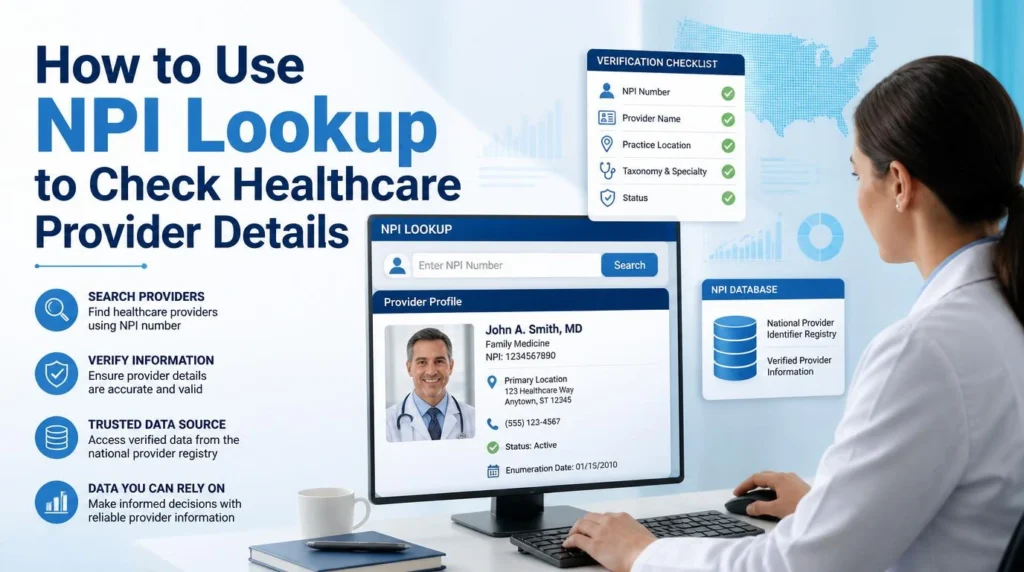
An NPI Lookup is a useful way to verify important information about healthcare providers in the United States. Whether someone needs to confirm a physician’s professional details, check a medical practice’s registered location, or validate provider information before handling an insurance claim, the National Provider Identifier (NPI) serves as an important reference point. Although NPIs are widely used throughout the healthcare industry, many patients, businesses, and even healthcare professionals may not know how to search or interpret the information associated with an NPI. Learning how the NPI system works can help reduce errors and support more reliable processes involving billing, credentialing, provider verification, and healthcare research.
NPI Matching is another important part of accurately connecting provider information with the correct healthcare professional or organization. This guide explains what an NPI represents, why the identifier is used, how to search the official NPI Registry, and how to understand the information displayed within a provider record. Whether you are a patient confirming a healthcare professional’s details, a business validating provider information, or simply interested in how identification works within the U.S. healthcare system, this step-by-step overview will help you understand the process and use NPI information more effectively.
What Is an NPI, and Why Does It Exist?
An NPI, or National Provider Identifier, is a unique 10-digit number assigned to healthcare providers and organizations in the United States. It was created under the Health Insurance Portability and Accountability Act, commonly known as HIPAA, to establish a single, standardized identifier that could be used across electronic healthcare transactions such as claims, referrals, and billing records.
Before the NPI system existed, providers often had multiple identification numbers depending on which insurance company or government program they were dealing with. This created inefficiencies and inconsistencies across the healthcare system. The introduction of a single national identifier simplified administrative processes and made it easier for payers, providers, and regulators to track healthcare transactions accurately.
Since May 2007, covered healthcare providers, health plans, and clearinghouses that conduct standard electronic transactions have been required to use an NPI. Importantly, an NPI does not expire when a provider changes jobs, moves to a new address, or switches specialties. This permanence is part of what makes the NPI such a reliable identifier for tracking a specific provider or organization over time, even as other details about their practice change.
The Two Types of NPIs
Understanding NPI records requires knowing that there are two distinct categories of identifiers, often referred to as Type 1 and Type 2.
Type 1 NPIs are assigned to individual healthcare providers, meaning the people who directly render care or bill for services as individuals. This includes physicians, dentists, nurse practitioners, physician assistants, chiropractors, pharmacists, physical therapists, audiologists, and many other licensed healthcare professionals.
Type 2 NPIs are assigned to healthcare organizations rather than individual people. This includes hospitals, group practices, clinics, laboratories, home health agencies, and other incorporated healthcare entities. A single hospital system might have one Type 2 NPI for the organization overall, while each physician working within that system also holds their own individual Type 1 NPI.
Knowing which type of NPI you are looking for can help streamline your search, since the official registry allows you to filter searches specifically for individuals or organizations.
Where to Perform an Official NPI Lookup
The authoritative source for NPI information is the NPI Registry Public Search, maintained by the Centers for Medicare and Medicaid Services, commonly referred to as CMS. This registry draws directly from the National Plan and Provider Enumeration System, or NPPES, which is the government system responsible for issuing and managing NPIs.
The official registry is a free, publicly accessible tool that allows anyone to search for provider information without needing to create an account. While a number of third-party websites also offer NPI lookup tools, often layering in additional features like NPI Matching or bulk search capabilities, the official CMS registry remains the most authoritative and up-to-date source for verifying core provider details.
It is worth noting that the NPI Registry has certain usage limitations. As of recent updates, the registry limits the number of queries that can be completed within a given hour, and individual searches are capped at returning a limited number of results, meaning very broad searches may need to be narrowed down using more specific criteria.
Step-by-Step: How to Search the NPI Registry
Performing a basic NPI lookup is a straightforward process, though understanding a few best practices can help you find accurate results more efficiently.
Step 1: Decide whether you are searching for an individual or an organization. The registry typically separates search fields for individual providers and organizational entities. Choosing the correct category up front will narrow your results and reduce irrelevant matches.
Step 2: Enter the information you already have. If you know the provider’s full name, enter both first and last names. If you are searching for a clinic or hospital, enter the organization’s name as accurately as possible. If you happen to already have the 10-digit NPI number itself, from an insurance card, prescription, or billing statement, entering that number directly will return the fastest and most precise result.
Step 3: Add location details if the name is common. Searching for a common name like “John Smith” or a frequently used practice name without additional filters can return an overwhelming number of results. Adding a city, state, or ZIP code helps narrow the search considerably.
Step 4: Review the search results carefully. Because many providers share similar names, it is important to review key identifying details, such as practice address, specialty, and entity type, before assuming you have found the correct record. This is where NPI Matching becomes particularly useful, especially for organizations processing large volumes of provider data, since matching algorithms can cross-reference multiple data points at once to confirm that a name, address, and specialty all correspond to the same individual or organization.
Step 5: Open the full provider record for complete details. Clicking into an individual result will display the provider’s complete public NPI record, including their NPI number, entity type, taxonomy classification, practice address, and the date their record was last updated.
Understanding What Each Field in an NPI Record Means
Once you locate a provider’s record, it can help to understand what each piece of displayed information actually represents.
NPI Number. This is the unique 10-digit identifier assigned to the provider or organization. It remains fixed for the life of the provider’s career or the organization’s operation, regardless of address changes, name changes, or employment shifts.
Entity Type. This field indicates whether the record belongs to an individual (Type 1) or an organization (Type 2).
Provider Name. For individuals, this includes the legal name registered with NPPES. For organizations, this reflects the registered business or facility name.
Taxonomy Code and Specialty. Taxonomy codes classify a provider’s specific area of practice, such as internal medicine, pediatrics, physical therapy, or clinical laboratory services. This classification system allows insurers, referral networks, and researchers to categorize providers consistently.
Practice Address. This shows the registered practice location associated with the NPI. Larger organizations or providers who work across multiple locations may have several addresses listed.
Status. This indicates whether the NPI is currently active or has been deactivated. Deactivation can occur for a variety of administrative reasons and does not necessarily indicate anything negative about the provider.
Last Updated Date. This shows when the record was most recently modified in the NPPES system, which can be a helpful indicator of how current the displayed information is likely to be.
It is important to understand one key limitation of the NPI Registry: the presence of an active NPI does not, by itself, confirm that a provider is currently licensed, board-certified, or enrolled with a specific insurance payer. The NPI Registry reflects enumeration status within the federal system, not real-time licensing or credentialing status. For decisions that depend on verifying active licensure or payer enrollment, additional resources such as state licensing boards or payer-specific enrollment tools should be consulted.
What Is NPI Matching, and Why Does It Matter?
While a basic NPI lookup works well for verifying a single provider, many healthcare organizations, billing companies, and data management teams need to verify large volumes of provider records at once. This is where NPI Matching becomes especially valuable.
NPI Matching refers to the process of cross-referencing provider data, such as names, addresses, specialties, and existing identifiers, against the official NPPES database to confirm accuracy and consistency at scale. Rather than manually searching for each provider one at a time, matching tools and processes can automatically compare large datasets against the national registry to identify discrepancies, outdated information, or duplicate records.
This process is particularly important for insurance companies maintaining provider directories, healthcare technology platforms managing credentialing workflows, and billing departments trying to ensure claims are submitted under accurate and current provider information. Inaccurate provider data can lead to claim denials, compliance issues, and directory errors that create confusion for patients trying to find in-network care.
For everyday consumers, understanding the basic concept behind NPI Matching can still be useful, particularly when verifying that a provider’s listed information across multiple sources, such as an insurance directory, a hospital website, and the official NPI Registry, is consistent. Discrepancies between these sources can sometimes indicate outdated directory listings, which is a common issue across the healthcare industry.
Common Reasons People Use NPI Lookup
There are several everyday scenarios where checking an NPI can be genuinely useful.
Verifying a provider before an appointment. Patients sometimes use NPI lookup to confirm a provider’s specialty or practice address before scheduling care, particularly when working with an unfamiliar clinic or specialist.
Confirming information on a bill or insurance claim. If a medical bill or explanation of benefits references an unfamiliar provider name, looking up the associated NPI can help clarify who actually provided a given service.
Researching a healthcare business. Consumers or small business partners sometimes use NPI lookup to confirm that a healthcare organization is legitimately registered and to review basic details about its structure.
Supporting credentialing and compliance processes. Healthcare administrators, billing specialists, and credentialing teams frequently use NPI lookup, along with broader NPI Matching processes, to verify provider information before adding someone to an insurance network or updating internal records.
Fraud prevention and identity verification. Because NPIs are tied to specific, verified individuals and organizations, checking a provider’s NPI record can serve as one useful data point when trying to confirm that a healthcare business or individual is operating under a legitimate, registered identity.
Tips for Getting Accurate Search Results
A few practical habits can make NPI searches more efficient and reliable.
Start with the most specific information available. If you already know the provider’s NPI number, use it directly rather than searching by name, since this will return an exact match instantly.
When searching by name, add a state or city whenever possible. Common names can return dozens or even hundreds of results without additional filters, making it harder to identify the correct record.
Pay attention to entity type before reviewing results. Searching for an individual under the organization category, or vice versa, will not return the results you are looking for.
Cross-check multiple details before assuming a match is correct. Especially for common names, comparing practice address, taxonomy, and entity type together provides much stronger confirmation than relying on name alone. This is essentially the same principle that underlies more advanced NPI Matching processes used by larger organizations.
Remember that the registry reflects publicly available enumeration data, not real-time licensing or insurance network status. If your goal is to confirm whether a provider currently accepts a specific insurance plan, contacting the insurer directly or checking their provider directory will generally provide more relevant information.
Limitations to Keep in Mind
While the NPI Registry is a valuable and freely accessible tool, it does have some limitations worth understanding.
The registry only displays information that providers or organizations have chosen to make public as part of their NPPES enrollment. Some fields, such as certain contact details, may not be visible depending on the provider’s privacy preferences at the time of registration.
Additionally, because providers are responsible for updating their own NPPES records, some information may lag behind real-world changes. A provider who has recently relocated or changed specialties may not have updated their record immediately, meaning the displayed address or taxonomy code might not reflect their most current situation.
Finally, the presence of an active NPI does not guarantee that a provider is currently practicing, licensed in good standing, or accepting new patients. It simply confirms that they hold a valid, active identifier within the federal enumeration system. For decisions that depend on more specific verification, such as confirming active licensure, insurance network participation, or Medicare enrollment status, additional resources beyond the basic NPI lookup should be consulted.
Frequently Asked Questions
Is NPI lookup free to use?
Yes. The official NPI Registry maintained by CMS is completely free and does not require account creation or payment to search.
Can I look up an NPI without knowing the provider’s name?
Yes, if you already have the 10-digit NPI number, you can search directly using that number, which will return the fastest and most precise match.
Does an NPI expire?
No. Once assigned, an NPI remains fixed for the life of the provider’s career or the operation of an organization, regardless of job changes, relocations, or specialty changes.
What is the difference between a Type 1 and Type 2 NPI?
A Type 1 NPI is assigned to an individual healthcare provider, while a Type 2 NPI is assigned to a healthcare organization, such as a clinic, hospital, or group practice.
How does NPI Matching differ from a basic NPI lookup?
A basic NPI lookup typically involves searching for a single provider one at a time, while NPI Matching refers to a broader process of cross-referencing large sets of provider data against the official registry to verify accuracy, identify duplicates, and confirm consistency across multiple records at once.
Conclusion
Understanding how to use NPI lookup effectively gives consumers and healthcare organizations alike a practical tool for verifying provider information directly from an authoritative federal source. By knowing the difference between individual and organizational records, understanding what each field in a provider’s profile represents, and recognizing the role that processes like NPI Matching play in confirming accuracy at scale, users can approach healthcare provider verification with far more confidence.
While the NPI Registry has certain limitations, particularly around real-time licensing and insurance enrollment status, it remains one of the most reliable starting points for confirming basic provider and organizational details. Whether you are a patient double-checking a provider before an appointment or an administrator managing large volumes of provider data, taking the time to understand how NPI lookup and NPI Matching work can make the entire verification process considerably smoother and more accurate.