Skip to main content
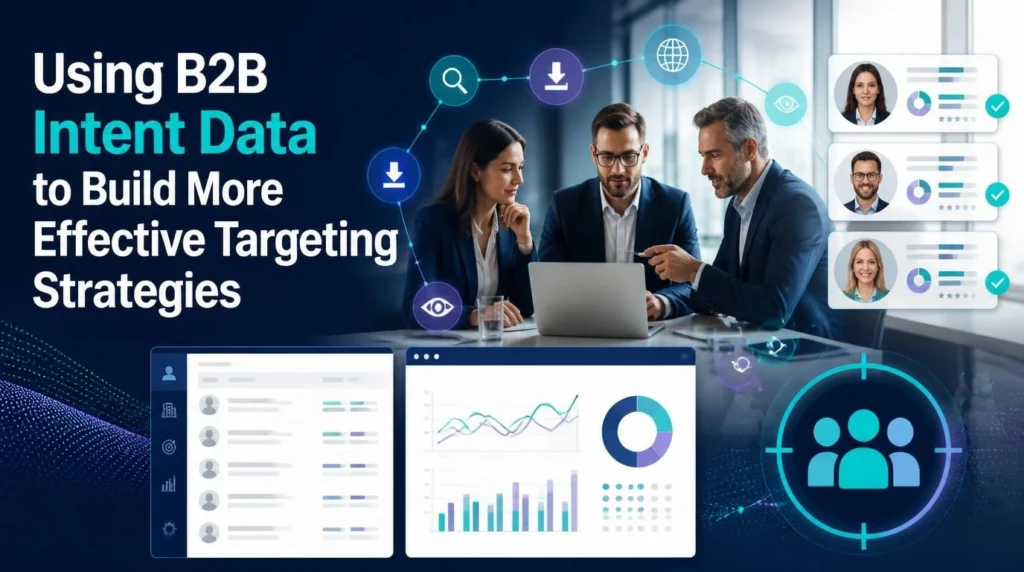
A B2B Healthcare Email List can help businesses identify professional audiences, but knowing who a company is does not always reveal who is ready to buy. B2B Intent Data adds another layer by showing signals that may indicate a business is actively researching a product, service, or solution.
Traditional B2B targeting often relies on firmographic information such as company size, industry, location, and revenue. While these details remain useful, intent signals can help marketers understand what potential buyers are currently interested in and where they may be in their purchasing journey.
What Is B2B Intent Data?
B2B Intent Data refers to information that indicates a company’s potential interest in a particular product, service, topic, or business solution.
Businesses and their employees leave digital signals while researching solutions online. They may read articles, visit product pages, compare vendors, download resources, attend webinars, search for specific topics, or repeatedly interact with content related to a particular business need.
These activities can provide clues about potential purchase interest.
For example, imagine a healthcare organization repeatedly researching patient engagement software, healthcare CRM platforms, and digital communication solutions. Its basic firmographic profile may tell a marketer that the organization belongs to the healthcare sector and has a certain number of employees.
Intent information may provide an additional insight: the organization could currently be researching solutions in a particular category.
This distinction makes intent data valuable for modern B2B marketing.
Why Firmographics Alone May Not Be Enough
Firmographic information is commonly used to define an ideal customer profile. Marketers may filter companies based on:
- Industry
- Company size
- Annual revenue
- Geographic location
- Number of employees
- Business model
- Department
- Growth stage
These characteristics help determine whether a company potentially fits a target market.
However, a company can match an ideal customer profile without having any immediate interest in purchasing.
For instance, a software company may target healthcare organizations with more than 500 employees. A large healthcare organization may fit that description perfectly but have no plans to purchase the software during the current year.
Another organization with only 300 employees might currently be researching similar software and preparing to evaluate vendors.
Firmographics can identify who could be a good customer. Intent signals can help indicate who may be actively exploring a relevant solution.
Using both types of information can create a more complete targeting strategy.
How B2B Intent Data Works
Intent data generally comes from digital behaviors and research activities. Depending on the provider and methodology, signals may be collected from sources such as websites, content platforms, search activity, business networks, publisher environments, and other digital interactions.
A business may demonstrate potential intent through behaviors such as:
- Repeated visits to relevant content
- Searches around specific business problems
- Downloads of industry resources
- Product or solution comparisons
- Increased engagement with a particular topic
- Visits to pricing or product pages
- Webinar registrations
- Research into competing solutions
- Multiple interactions with related content
A single activity does not necessarily mean that a company is ready to purchase. Intent should therefore be interpreted as a collection of signals rather than an automatic buying indicator.
Types of B2B Intent Data
Intent data can generally be understood through different sources and levels of access.
First-Party Intent Data
First-party intent information comes from interactions with a company’s own digital properties.
Examples include:
- Website visits
- Product-page views
- Content downloads
- Demo requests
- Webinar registrations
- Email engagement
- Pricing-page activity
- Repeat visits
Because this information comes directly from the company’s own channels, it can provide valuable context about known prospects and customers.
Third-Party Intent Data
Third-party intent data is obtained from external sources and can provide information about research behavior occurring beyond a company’s own website.
This can help marketers discover organizations that may be researching relevant subjects before they directly interact with the business.
However, companies should evaluate the source, methodology, accuracy, freshness, and permitted use of third-party data before incorporating it into their marketing activities.
Product or Solution Intent
Some intent signals relate closely to a specific product category or solution.
For example, a business repeatedly researching customer relationship management software may demonstrate stronger category-level interest than an organization that only reads a general article about sales.
The closer the observed behavior is to a specific business need, the more useful the signal may be for prioritization.
Intent Data and the B2B Buying Journey
B2B purchases often involve multiple stages. A company may initially recognize a problem, research possible solutions, compare alternatives, evaluate vendors, and eventually make a purchase decision.
Intent signals can help marketers understand where an organization may be within this broader process.
Awareness
At the awareness stage, a potential buyer may research general problems or industry trends.
For instance, a healthcare provider may read resources focused on enhancing patient communication and engagement.
Research
At the research stage, the organization may begin exploring different approaches and technologies.
Searches may become more specific as the organization tries to understand available solutions.
Evaluation
During evaluation, potential buyers may compare providers, features, pricing, implementation requirements, and customer experiences.
Decision
At the decision stage, prospects may demonstrate stronger commercial interest through activities such as requesting demonstrations, reviewing pricing information, or communicating directly with vendors.
Intent data can help marketers prioritize their communication based on these behavioral signals.
Combining Intent Data With Firmographics
Intent data should not necessarily replace firmographic targeting. The two approaches can work together.
Firmographics help define the businesses that a company wants to reach. Intent signals can then help prioritize which of those businesses may deserve more immediate attention.
Consider a company selling healthcare software.
Its firmographic criteria might include:
- U.S.-based healthcare organizations
- 200+ employees
- Multiple locations
- Specific healthcare segments
Intent signals could then be used to identify organizations within that audience that are researching healthcare software, digital transformation, patient communication, or related solutions.
This creates a layered targeting approach.
Instead of contacting every organization that meets the basic profile, marketers can focus more attention on accounts showing relevant research behavior.
Benefits of Using B2B Intent Data
When interpreted carefully, intent data can support several areas of B2B marketing.
Better Account Prioritization
Sales teams often have limited time and cannot give the same level of attention to every potential account.
Intent signals can help marketers identify organizations that may warrant additional research or timely outreach.
More Relevant Messaging
Understanding what a company appears to be researching can help marketers develop content around relevant challenges.
Instead of sending generic information, businesses can create communications that address a prospect’s likely area of interest.
Improved Campaign Timing
Timing can influence the effectiveness of B2B campaigns.
A prospect that is actively researching a relevant solution may be more receptive to educational content than an organization with no visible interest.
Intent signals can therefore contribute to better campaign timing.
More Efficient Lead Nurturing
Not every prospect requires the same communication sequence.
Organizations showing early-stage research activity may benefit from educational resources, while accounts demonstrating stronger commercial signals may be suitable for product-focused content.
Better Sales and Marketing Alignment
Marketing teams can use intent insights to provide sales teams with additional context about target accounts.
Sales representatives can then conduct their own research before deciding whether and how to approach an account.
A Practical B2B Intent Targeting Framework
Businesses can develop a structured process for incorporating intent data into their marketing strategy.
Step 1: Define the Ideal Customer Profile
Start by identifying the organizations that are genuinely relevant to the business.
Consider industry, company size, geography, revenue range, business model, technology environment, and other meaningful criteria.
Step 2: Identify Relevant Topics
Determine the subjects that potential customers are likely to research before making a purchase.
These topics should connect closely with the company’s products, services, and customer problems.
Step 3: Establish Intent Signals
Decide which behaviors should be considered meaningful.
For example, repeated research around a product category may carry more weight than a single visit to a general blog article.
Step 4: Create Account Segments
Organize target companies into groups according to their profile and observed activity.
Possible categories include:
- High-fit, high-intent accounts
- High-fit, low-intent accounts
- Lower-fit, high-intent accounts
- Existing customers showing expansion interest
Step 5: Match Content to Intent
Develop content that corresponds to the likely needs of each group.
Educational guides can work well for early research, while product comparisons, case studies, demonstrations, and pricing information may be more appropriate for later-stage prospects.
Step 6: Coordinate With Sales
Marketing and sales teams should establish clear criteria for when an account should receive additional attention.
Intent data should support human judgment rather than completely replace it.
Example of Intent-Based B2B Targeting
Suppose a company provides cybersecurity software to healthcare organizations.
If the business relies only on firmographic criteria, it may identify hospitals, clinics, and healthcare networks according to factors such as company size and geographic location.
Now add intent signals.
If several organizations within the target market are actively researching healthcare cybersecurity, compliance challenges, data protection, and security platforms, those accounts may receive a higher priority for relevant campaigns.
The marketing team could provide educational resources about healthcare security risks, implementation considerations, and solution comparisons.
The sales team could then conduct additional account research before deciding whether direct outreach is appropriate.
This approach creates a more informed targeting process.
Intent Data Can Improve Audience Segmentation
Audience segmentation becomes more useful when behavioral information is added to basic company characteristics.
For example, a B2B healthcare campaign could organize accounts using combinations such as:
| Targeting Dimension | Example Segments | Potential Marketing Approach |
| Industry | Hospitals, clinics, laboratories | Industry-specific content |
| Company size | Small, mid-market, enterprise | Different solution and pricing messages |
| Location | State, region, national | Geographic campaigns |
| Job role | Executives, IT leaders, procurement | Role-specific messaging |
| Intent level | Low, moderate, high | Different nurturing priorities |
| Research topic | Software, equipment, services | Topic-focused content |
This type of segmentation allows marketers to move beyond a simple list of companies and develop a more contextual view of potential buyers.
Using Intent Data for Content Marketing
Intent information can also influence content strategy.
If target accounts frequently research a particular subject, that topic may represent an opportunity for educational content.
For example, a healthcare technology company may discover strong interest around electronic health records, data integration, patient engagement, or cybersecurity.
Instead of creating generic content, the company can develop resources addressing these subjects directly.
Potential content formats include:
- Educational blog posts
- Industry reports
- White papers
- Case studies
- Comparison guides
- Webinars
- Research summaries
- Product explainers
- Frequently asked questions
The goal should be to provide useful information rather than simply using intent signals as a reason for aggressive sales messaging.
Personalization Without Overreaching
Intent data can support personalization, but businesses should use it carefully.
A marketer may know that an organization appears interested in a particular topic. That does not necessarily mean the marketer should explicitly tell the recipient that their online behavior has been tracked.
A better approach is often to use the insight internally to select relevant content.
For example, rather than saying, “We noticed your company has been researching cybersecurity software,” a business could provide a useful resource about evaluating cybersecurity solutions.
This creates relevance without making communication feel intrusive.
Common Mistakes When Using Intent Data
Intent data can be valuable, but poor implementation may reduce its effectiveness.
Treating Every Signal as Buying Intent
A person may research a subject for education, academic work, competitive analysis, or general interest.
Therefore, one activity should not automatically be interpreted as purchase readiness.
Ignoring Data Quality
Outdated or inaccurate information can result in poor account prioritization.
Businesses should assess the reliability and freshness of their data sources.
Using Too Many Signals
More data does not always mean better targeting. Excessive signals can make a strategy complicated and difficult to interpret.
Companies should focus on indicators that have a meaningful connection to their buying process.
Replacing Human Research
Intent data should provide additional context rather than eliminate account research.
Sales and marketing teams still need to understand the organization’s business situation, needs, and decision-making structure.
Sending Generic Messages
Using sophisticated intent information but sending the same message to everyone defeats much of its value.
Content and outreach should reflect the relevant audience segment whenever possible.
Measuring the Performance of Intent-Based Targeting
Businesses should track whether intent-based targeting is producing meaningful improvements.
Useful performance indicators can include:
- Account engagement
- Website activity
- Content downloads
- Email engagement
- Marketing-qualified leads
- Sales-qualified opportunities
- Meeting rates
- Conversion rates
- Pipeline contribution
- Customer acquisition cost
It is also useful to compare intent-based campaigns with traditional targeting approaches.
For example, a company could evaluate whether accounts prioritized using intent signals generate more meaningful engagement or sales opportunities than accounts selected using firmographics alone.
Data Privacy and Responsible Use
Businesses should consider applicable privacy, data protection, and marketing communication requirements when collecting, purchasing, analyzing, or using B2B data.
Intent information should be handled responsibly, with appropriate controls around data access, retention, transparency, and permitted use.
Companies should also evaluate their data providers carefully. Important questions may include:
- Where does the data originate?
- How frequently is it updated?
- What methodology is used to identify intent?
- How is company identity matched?
- What geographic markets are covered?
- What limitations apply to the data?
- What compliance information is provided?
Responsible data practices help businesses reduce unnecessary risk while building more sustainable marketing programs.
How Intent Data Supports Account-Based Marketing
Account-based marketing focuses marketing and sales resources on specific organizations rather than broad audiences.
Intent data can strengthen an ABM strategy by helping teams determine which target accounts may currently be researching relevant topics.
For example, a company could maintain a list of 500 high-fit accounts based on firmographic criteria. Intent signals could then help identify a smaller group showing increased activity around the company’s solution category.
Marketing could prioritize those accounts for personalized content, while sales could perform additional research before initiating outreach.
This approach can help businesses make their account-based marketing efforts more targeted, organized, and easier to manage.
The Future of B2B Targeting
B2B marketing is increasingly moving toward approaches that combine company characteristics, behavioral information, content engagement, and buyer context.
Firmographics will continue to have an important role because marketers need to understand which organizations fit their ideal customer profile.
However, knowing that a company is a good potential customer is different from knowing that it may currently be researching a relevant solution.
That is where intent data can provide additional value.
The strongest strategies are likely to combine multiple information sources rather than depend on one data point. Companies can use firmographics to define their audience, intent signals to prioritize accounts, content engagement to understand interests, and sales research to validate opportunities.
Conclusion
Effective B2B targeting requires more than identifying companies that match a predefined profile. Firmographic information provides an important foundation, but it does not always reveal whether a potential customer is actively researching a solution.
B2B Intent Data can add behavioral context by highlighting research activity and potential areas of interest. When combined with firmographics, audience segmentation, relevant content, and human account research, it can help businesses prioritize opportunities and create more meaningful marketing experiences.
For healthcare marketers, this approach can be especially useful when working with specialized professional audiences. A B2B Healthcare Mailing List can provide access to a defined business audience, while intent signals can help determine which segments may be more relevant for a particular campaign.
Ultimately, intent data should not be treated as a guaranteed indicator of purchase. It works best as one component of a broader strategy focused on accurate data, useful content, responsible communication, and a clear understanding of the B2B buyer journey.