Skip to main content

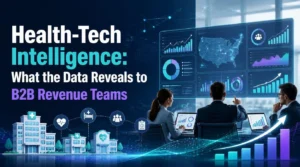
The usefulness of a B2B Healthcare Email List depends heavily on the quality of the insight that guides how it is used. Selling into hospitals, clinics, payers, and digital-health companies has never been simple, and the buying process keeps getting longer and more complicated. Health-Tech Intelligence is the practice of collecting, analyzing, and applying data about the healthcare technology market so that revenue teams know who to approach, when to approach them, and what to say.
For anyone curious about how the health-tech products and services they encounter get to market, this guide explains what the data shows and why it matters to the companies that build and sell these tools.
What Is Health-Tech Intelligence?
Health-Tech Intelligence combines market research, buyer behavior analysis, account-level data, and industry trend monitoring into one decision-making framework. It answers practical questions:
- Which healthcare organizations are investing in new technology this year?
- Who inside those organizations influences purchasing decisions?
- What problems are they trying to solve?
- Which messages and channels are most likely to earn a reply?
Unlike general business intelligence, it accounts for the unique features of healthcare: heavy regulation, long procurement cycles, clinical and administrative stakeholders with different priorities, and strict privacy requirements.
Why Healthcare Sales Is Different
Anyone who has waited weeks for a referral or an insurance approval has seen how deliberate healthcare can be. That caution carries over into how organizations buy technology.
Many decision-makers. A single software purchase may involve a chief medical officer, a chief information officer, a compliance lead, a finance director, and frontline clinicians. Each has different concerns.
Long timelines. Contracts that would close in weeks in other industries can take many months in healthcare, because of security reviews, pilot programs, and committee approvals.
High stakes. Technology that touches patient care or patient data must meet rigorous standards, so buyers research thoroughly before engaging a vendor.
Constant change. Reimbursement models, interoperability rules, and cybersecurity threats keep shifting, which changes what buyers prioritize from one year to the next.
These conditions are why guesswork performs poorly. Revenue teams that rely on instinct tend to waste effort on poorly matched accounts, while teams that use data can focus on organizations that are genuinely ready to buy.
What the Data Reveals to B2B Revenue Teams
1. Buying Committees Are Larger Than They Appear
One of the clearest patterns in B2B research across industries is that purchase decisions are made by groups, not individuals. In healthcare, the group often includes people from clinical, technical, financial, and legal functions. When a sales team builds a relationship with just one person, deals often grind to a halt once a hidden decision-maker voices a concern.
Intelligence tools help map these committees early, so sales and marketing can prepare content for each role instead of sending the same message to everyone.
2. Timing Signals Matter
Data can reveal moments when an organization is more likely to evaluate new solutions. Common signals include:
- Leadership changes, such as a new chief information officer
- Announcements of expansion, mergers, or new facilities
- Job postings that point to a new initiative, such as a data analytics or telehealth role
- Regulatory deadlines that force process changes
- Public funding rounds or grant awards
A team that reaches out soon after a relevant signal is far more likely to start a meaningful conversation than one that contacts accounts at random.
3. Segmentation Beats Volume
Early digital marketing often rewarded sheer volume: send more messages to more people. Healthcare buyers, who receive large numbers of vendor emails, have become skilled at ignoring anything generic. The data consistently favors targeted outreach, where the message reflects the recipient’s role, organization type, and current challenges.
For example, a message to a rural hospital administrator about staffing efficiency will land differently than one to a venture-backed digital-health startup about scaling compliance. Segmentation turns one broad campaign into several relevant ones.
4. Content Engagement Reveals Intent
When prospects download a white paper, attend a webinar, or revisit a pricing page, they leave behavioral traces. Analyzing these signals helps revenue teams distinguish casual browsers from serious evaluators. Topics that attract repeated attention, such as interoperability, patient engagement, or data security, also indicate which problems matter most right now.
5. Data Quality Is a Hidden Differentiator
Healthcare organizations change constantly. Staff move into new positions, teams get reorganized, and hospitals or clinics combine with other organizations. Contact data goes stale quickly, which leads to bounced emails, wasted spend, and damaged sender reputation. Maintaining accurate, regularly verified records is one of the least glamorous but most valuable parts of any intelligence program.
Key Data Types and How Teams Use Them
The table below summarizes the main categories of information that feed Health-Tech Intelligence and what revenue teams typically do with each.
| Data Category | What It Shows | How Revenue Teams Use It |
| Firmographic data | Organization size, type, location, and specialty | Build target account lists and prioritize by fit |
| Technographic data | Software and systems already in use | Identify integration needs and replacement opportunities |
| Contact and role data | Titles, departments, and decision-making influence | Map buying committees and personalize outreach |
| Intent and engagement data | The content people read and the subjects they look into | Identify buyers who are actively evaluating and choose the right moment to follow up |
| Trigger events | Leadership changes, funding, expansion, regulation | Reach out when need is highest |
| Market and competitor data | Industry shifts, price points, and rival offerings | Refine how you position your product and fine-tune your messaging |
Used together, these data types give a fuller picture than any single source can.
How Revenue Teams Can Put Intelligence Into Practice
Collecting data is only the beginning. The following steps help turn information into results.
Define the ideal customer profile. Begin by pinpointing the types, sizes, and specialties of healthcare organizations that gain the most from what you offer. Use existing customer data to see what your best accounts have in common.
Build and maintain a quality contact foundation. A reliable database of decision-makers, supported by consistent verification, gives every campaign a stronger starting point. Quality matters more than quantity: a smaller, accurate set of contacts will usually outperform a large, outdated one.
Align sales and marketing. When both teams work from the same account data and definitions, handoffs become smoother and buyers receive consistent messaging. Shared metrics, such as engaged accounts and pipeline contribution, replace competing goals.
Personalize with purpose. Personalization should reflect real insight, such as a recent organizational change or a known challenge in the recipient’s specialty, rather than just a first name in a greeting.
Respect privacy and compliance. Outreach must follow applicable laws, including anti-spam and data protection rules such as CAN-SPAM and GDPR where relevant. Ethical sourcing of business contact information and clear opt-out options protect both the sender and the recipient. B2B outreach should rely on professional contact details and should never involve patient information.
Measure and refine. Track open rates, reply rates, meetings booked, and pipeline influenced. Review results regularly and adjust segments, messaging, and timing based on what the numbers show.
Common Mistakes to Avoid
Even well-resourced teams run into predictable problems:
- Relying on a single data source. Each source has gaps, so combining several yields more reliable insight.
- Ignoring non-clinical buyers. Finance, IT, and compliance leaders often hold veto power.
- Treating all accounts equally. Without prioritization, effort gets spread thin.
- Neglecting data hygiene. Outdated records quietly erode every campaign metric.
- Chasing short-term results. Healthcare cycles are long, and patient, consistent engagement tends to pay off more than aggressive pressure.
What This Means for Consumers
Although this topic centers on business strategy, it ultimately affects the people who use healthcare services. When vendors understand their buyers well, they can design products that fit real clinical and operational needs, from scheduling tools to remote monitoring platforms to data-security systems. Better alignment between what hospitals need and what technology companies offer can lead to smoother experiences for patients, such as shorter waits, clearer communication, and more convenient access to care.
It also helps explain why new health technologies roll out gradually. Behind each deployment lies months of evaluation, stakeholder alignment, and compliance review, all of which are shaped by the kind of intelligence described here.
Looking Ahead
Several trends are likely to shape how this field develops:
- Greater use of automation and AI to process large volumes of market signals faster.
- Stronger emphasis on privacy and consent, as regulation continues to evolve.
- Deeper integration between sales, marketing, and customer success data, giving a continuous view of the account relationship.
- Growing demand for evidence, as buyers expect vendors to demonstrate measurable outcomes before committing.
Teams that invest in clean data, thoughtful segmentation, and ethical practices will be better positioned to adapt as these changes unfold.
Frequently Asked Questions
What is Health-Tech Intelligence in simple terms?
It is the use of market, account, and behavioral data to help health-technology companies understand and reach the right healthcare buyers at the right time.
Why do B2B revenue teams need it?
Healthcare purchasing is complex, with many stakeholders and long timelines. Data helps teams prioritize accounts, tailor messages, and avoid wasted effort.
Is quantity or quality of contacts more important?
Quality wins. Contacts that are correct, regularly checked, and properly segmented tend to drive stronger engagement than a bigger but out-of-date database.
How often should contact data be updated?
Regularly. Because roles and organizations change frequently, many teams verify records on a recurring schedule, often quarterly or more often for priority accounts.
Does this involve patient data?
No. B2B intelligence concerns organizations and professional contacts, not patient records, which are protected by separate and strict regulations.
Conclusion
The health-tech market rewards teams that replace assumptions with evidence. The data shows that buying committees are broad, timing is critical, segmentation outperforms volume, and accuracy underpins every successful campaign. By building a disciplined approach to Health-Tech Intelligence, revenue teams can focus on the right accounts, speak to real needs, and earn trust in a field where trust matters enormously.
A dependable B2B Healthcare Mailing List, kept current and used responsibly, is one practical foundation for this work. Paired with strong segmentation, relevant content, and respect for privacy rules, it helps turn raw information into genuine conversations. Ultimately, the organizations that listen closely to what the data says are the ones best placed to deliver technology that improves healthcare for everyone.