Skip to main content

Healthcare organizations are adopting new approaches to reach patients, healthcare professionals, and business audiences. A Nurses Email List can be one useful resource for organizations seeking to communicate with relevant nursing professionals as part of broader healthcare outreach and lead generation efforts.
Healthcare lead generation has changed significantly as audiences increasingly research services, compare providers, consume educational content, and interact with businesses through digital channels. Instead of relying on a single marketing channel, organizations are combining content, search, social media, email, automation, and data-driven targeting to build relationships with potential prospects.
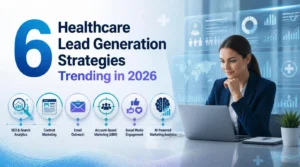
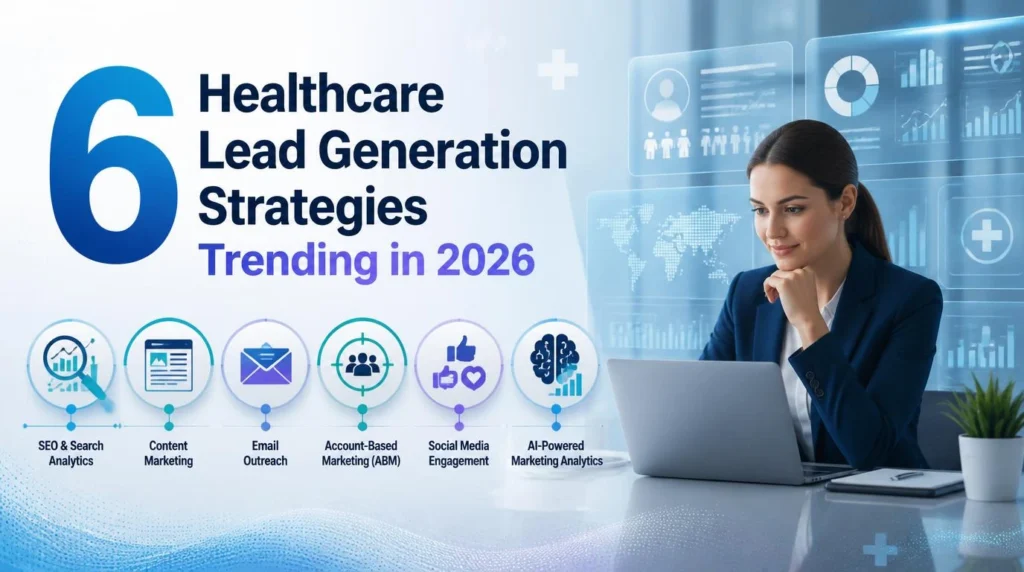
This article examines six healthcare lead generation strategies trending in 2026 and explains how organizations can use them responsibly and effectively.
What Is Healthcare Lead Generation?
Healthcare lead generation is the process of attracting and identifying potential customers, clients, patients, or business prospects who may have an interest in a healthcare-related product or service.
Depending on the organization, a lead could be:
- A patient interested in a healthcare service
- A hospital representative researching technology
- A healthcare marketer looking for a solution
- A medical recruiter searching for professionals
- A pharmaceutical company evaluating marketing services
- A healthcare provider researching business products
- A decision-maker evaluating healthcare software
The appropriate lead-generation strategy depends on the audience, buying journey, industry regulations, and business objective.
For B2B healthcare organizations, lead generation often involves reaching decision-makers through educational content, search engines, professional networks, email campaigns, webinars, industry events, and targeted advertising.
1. Healthcare Content Marketing and Educational Resources
Content marketing continues to be an important healthcare lead-generation strategy because many audiences conduct research before contacting a company.
Rather than immediately promoting a product, organizations can create useful resources that answer questions their target audiences are already asking.
Examples include:
- Healthcare industry guides
- Research reports
- Educational articles
- Industry statistics
- Healthcare trend reports
- Case studies
- White papers
- Comparison guides
- Expert interviews
- Webinars
For example, a healthcare technology company could publish an article explaining how hospitals can improve patient data management. A medical marketing company could create a guide explaining how healthcare organizations can identify relevant professional audiences.
The goal is to provide useful information while creating opportunities for interested readers to take the next step.
Why Content Marketing Can Generate Leads
Good content can attract visitors through search engines and other channels. Once visitors find relevant information, organizations can offer additional resources, newsletter subscriptions, consultations, product demonstrations, or other appropriate calls to action.
The most effective content typically addresses a specific problem instead of focusing exclusively on the company.
Creating Better Healthcare Content
Healthcare content should be:
- Accurate
- Clear
- Relevant
- Easy to understand
- Supported by credible information
- Updated when necessary
- Appropriate for the intended audience
Organizations should also avoid exaggerated health claims and unsupported promises.
2. Search Engine Optimization for Healthcare Audiences
Search engine optimization remains a valuable way to generate qualified organic traffic.
People use search engines to research healthcare providers, technologies, services, products, and industry information. Businesses that create useful pages around relevant search queries can increase their visibility among people already researching a particular topic.
Healthcare SEO can include:
- Keyword research
- Search-intent analysis
- On-page optimization
- Technical SEO
- Internal linking
- Structured content
- Industry-focused landing pages
- Helpful FAQs
- Digital PR and relevant backlinks
Focus on Search Intent
One of the most important considerations in healthcare SEO is understanding why someone is searching.
For example, searches can be divided into several categories:
| Search Intent | Example | Suitable Content |
| Informational | Healthcare lead generation strategies | Blog or guide |
| Commercial | Best healthcare marketing services | Comparison or service page |
| Transactional | Healthcare email database provider | Product/service page |
| Navigational | Company healthcare solutions | Brand page |
| Research | Healthcare marketing trends 2026 | Industry report |
Matching content with search intent can help organizations attract visitors who are more likely to engage with the page.
Healthcare SEO Requires Trust
Healthcare-related content can influence important decisions. Businesses should therefore prioritize accuracy, transparency, author expertise, and reliable information.
SEO should not be treated simply as inserting keywords into an article. The page should provide genuine value to the person searching.
3. Account-Based Marketing and Targeted Outreach
Account-based marketing, commonly called ABM, is becoming increasingly relevant for B2B healthcare organizations.
Instead of attempting to reach a broad audience, ABM focuses marketing efforts on specific companies or groups of high-value accounts.
For example, a healthcare software company might identify:
- Hospital networks
- Medical groups
- Pharmaceutical companies
- Healthcare technology companies
- Medical device manufacturers
- Healthcare service providers
The organization can then develop content and campaigns specifically relevant to those accounts.
Why ABM Works for Healthcare
Healthcare purchasing decisions can involve multiple stakeholders. A hospital technology purchase, for example, might involve executives, IT professionals, clinical leaders, procurement teams, and finance departments.
ABM allows marketers to consider the needs of different decision-makers instead of communicating with everyone using the same message.
Combining ABM With Professional Data
Accurate business contact data can support account-based campaigns by helping marketers identify relevant professional audiences.
For example, an organization targeting hospital nursing leadership could develop a campaign specifically addressing challenges faced by nursing teams.
The important consideration is data quality and responsible use. Organizations should ensure their outreach follows applicable privacy, email marketing, and data protection requirements.
4. Personalized Email Marketing
Email marketing remains an important channel for healthcare lead generation, particularly in B2B environments.
However, generic mass messaging can make campaigns less relevant. Personalization allows organizations to create communications based on factors such as industry, professional role, interests, company type, or previous interactions.
For example, a healthcare technology company might create separate campaigns for:
- Hospital administrators
- Nurses
- Physicians
- Healthcare marketers
- Medical recruiters
- Pharmaceutical professionals
- Healthcare IT teams
Each audience can receive information that is more closely aligned with its professional interests.
What Makes Healthcare Email Campaigns Effective?
A strong campaign generally includes:
Relevant targeting:
Messages should be sent to audiences for whom the content is genuinely relevant.
Clear subject lines:
The subject should accurately represent the email content.
Useful information:
The email should provide a reason for the recipient to read or engage.
Simple calls to action:
Recipients should understand what they can do next.
Mobile-friendly design:
Emails should work across different devices.
Responsible data practices:
Organizations should follow applicable email marketing and privacy regulations.
Personalization Beyond First Names
Personalization does not have to mean simply adding a recipient’s name.
Organizations can personalize communications based on:
- Professional role
- Industry
- Organization type
- Geographic market
- Previous content engagement
- Business needs
- Product interest
For example, a campaign targeting hospital decision-makers could focus on operational efficiency, while a campaign targeting healthcare marketers might emphasize audience targeting and campaign performance.
5. Social Media and Professional Community Engagement
Social media continues to influence how healthcare audiences discover information and organizations.
Different platforms serve different purposes. Professional networks can be useful for B2B healthcare marketing, while other platforms may be more suitable for educational content, community engagement, or brand awareness.
Healthcare organizations can use social channels to distribute:
- Blog articles
- Research findings
- Industry reports
- Webinars
- Expert commentary
- Case studies
- Educational videos
- Company announcements
LinkedIn for B2B Healthcare Lead Generation
Professional networking platforms can be particularly valuable for B2B healthcare organizations.
Companies can use professional social media to:
- Share industry insights
- Build professional relationships
- Promote educational resources
- Engage with industry discussions
- Connect with decision-makers
- Support thought leadership
The emphasis should be on useful communication rather than constant promotional messaging.
Building Healthcare Communities
Healthcare professionals often participate in specialized communities, associations, professional networks, and industry events.
Organizations can use these environments to understand audience concerns and contribute useful information.
A company that consistently provides valuable insights may build greater recognition and credibility over time.
6. AI-Powered Lead Generation and Marketing Automation
Artificial intelligence is becoming increasingly integrated into marketing workflows.
Healthcare marketers can use AI-assisted tools for tasks such as:
- Content research
- Audience segmentation
- Lead scoring
- Email personalization
- Customer-service automation
- Data analysis
- Campaign optimization
- Predictive analytics
AI can help marketers process large amounts of information and identify patterns that might otherwise require significant manual effort.
AI Lead Scoring
Lead scoring is one area where automation can be useful.
A company might assign different scores based on actions such as:
- Visiting a pricing page
- Downloading a report
- Attending a webinar
- Requesting information
- Opening multiple relevant emails
- Returning to the website
Marketing teams can use these signals to prioritize prospects who demonstrate stronger engagement.
However, automated scores should not automatically be treated as proof that someone is ready to purchase. Human review and appropriate context remain important.
AI Chatbots
AI-powered chat tools can also help answer common questions and guide website visitors toward relevant resources.
For example, a chatbot could help visitors:
- Find a relevant service.
- Access an educational resource.
- Understand product features.
- Request additional information.
- Connect with a sales representative.
For healthcare organizations, automated systems should be designed carefully to avoid providing inappropriate medical advice or creating misleading impressions about their capabilities.
Why Healthcare Lead Generation Is Becoming More Targeted
Healthcare is a broad industry containing thousands of professional roles, organizations, specialties, and business categories.
A message designed for a hospital executive may not be relevant to a nurse, physician, pharmaceutical marketer, or medical technology professional.
This is why audience segmentation is increasingly important.
Instead of creating one campaign for the entire healthcare industry, marketers can divide audiences according to relevant characteristics.
Possible segmentation criteria include:
- Professional role
- Medical specialty
- Organization type
- Company size
- Geographic market
- Business need
- Purchasing stage
- Previous engagement
More precise targeting can make campaigns more relevant while reducing unnecessary communication.
Combining Multiple Lead Generation Channels
The six strategies above are most effective when they work together.
For example, a healthcare company could:
- Publish an educational healthcare guide.
- Optimize it for relevant search queries.
- Promote the guide through professional social media.
- Offer a downloadable report.
- Capture qualified business leads through a form.
- Send relevant follow-up emails.
- Use marketing automation to prioritize engaged prospects.
- Have the sales team follow up with qualified leads.
This creates a connected customer journey rather than relying on a single marketing channel.
Measuring Healthcare Lead Generation Performance
Generating traffic is not the only goal of lead generation. Organizations need to understand whether marketing activities are contributing to meaningful business outcomes.
Important metrics can include:
Website Traffic
Measures the number of visitors reaching a website or specific landing page.
Conversion Rate
Shows the percentage of visitors who complete a desired action, such as submitting a form or requesting information.
Cost Per Lead
Measures the average amount spent to generate each lead.
Lead Quality
Not all leads have the same business value. Organizations should evaluate whether generated leads match their intended audience.
Engagement Rate
Email and social campaigns can be evaluated through appropriate engagement metrics.
Sales Conversion
Ultimately, organizations should understand how many marketing-generated leads progress toward actual business opportunities.
Return on Investment
ROI helps determine whether marketing spending is producing sufficient business value.
Common Healthcare Lead Generation Mistakes
Even well-planned campaigns can perform poorly when basic principles are overlooked.
Targeting Everyone
A broad healthcare audience may contain people with completely different needs. More focused segmentation can improve relevance.
Creating Content Without Search Intent
Publishing articles without understanding what the audience is searching for can result in limited organic visibility.
Using Excessive Promotional Language
Healthcare audiences often respond better to useful information than aggressive sales messaging.
Ignoring Data Quality
Outdated or inaccurate contact information can reduce campaign effectiveness and waste marketing resources.
Neglecting Compliance
Healthcare marketers should understand the privacy, email marketing, advertising, and data-protection requirements relevant to their campaigns and markets.
Measuring Only Traffic
High website traffic does not necessarily mean successful lead generation. Organizations should also measure conversions, lead quality, pipeline contribution, and business outcomes.
The Future of Healthcare Lead Generation
Healthcare lead generation is likely to become increasingly data-driven and personalized.
Artificial intelligence may help organizations analyze audience behavior and automate certain marketing activities. Search engines may continue emphasizing useful, trustworthy content. Professional networks may remain important for B2B healthcare relationships.
At the same time, consumers and professionals are likely to become more selective about the information they engage with.
This means healthcare marketers will need to focus on:
- Relevance
- Accuracy
- Transparency
- Personalization
- Data quality
- Useful content
- Responsible outreach
- Measurable results
The organizations that combine technology with a strong understanding of their audiences may be better positioned to generate meaningful leads.
Conclusion
The six healthcare lead generation strategies trending in 2026 include educational content marketing, healthcare SEO, account-based marketing, personalized email campaigns, professional social engagement, and AI-powered marketing automation. Rather than depending on one channel, organizations can combine these approaches to create a more connected and relevant customer journey.
Healthcare marketers should also prioritize accurate audience targeting, useful content, responsible communication, and compliance with applicable regulations. When professional data is needed for targeted outreach, a reliable Nurses Mailing List can help organizations connect with relevant nursing audiences for appropriate B2B communication and industry initiatives. Ultimately, successful healthcare lead generation is less about reaching the largest possible audience and more about reaching the right audience with the right information at the right stage of their decision-making process.