Skip to main content

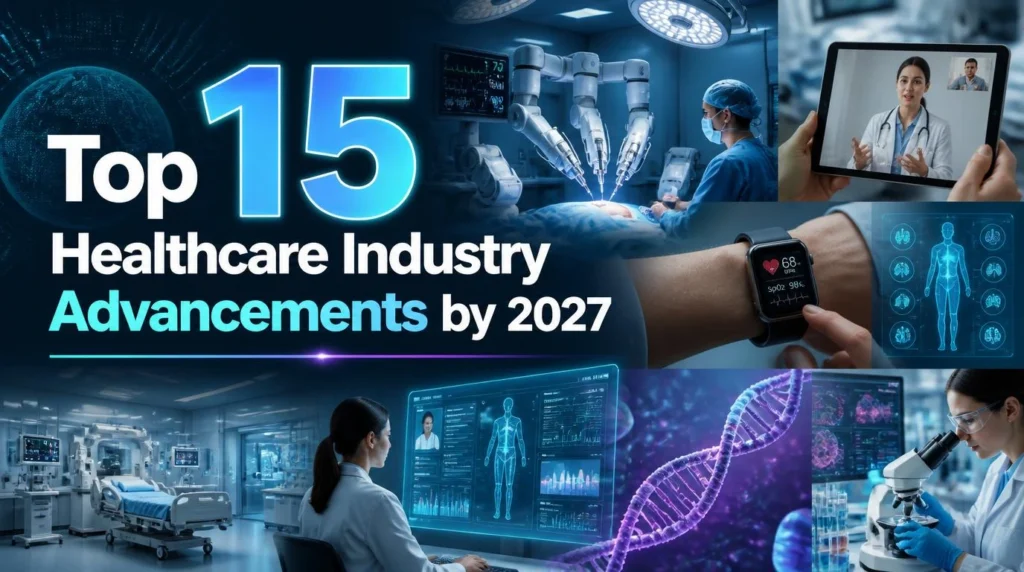
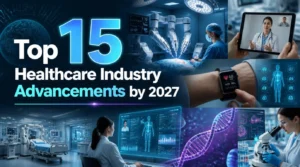
Healthcare is entering a period of significant transformation, with new technologies, treatment approaches, and digital systems changing how patients receive care. From artificial intelligence and remote monitoring to personalized medicine and robotic procedures, these developments are expected to influence healthcare delivery by 2027. For organizations studying these changes, a Nurses Email List can also support research and communication with nursing professionals involved in modern healthcare environments.
This article explores 15 important healthcare industry advancements expected to shape the sector by 2027, focusing on how they may affect patients, healthcare professionals, hospitals, and the broader healthcare ecosystem.
1. Artificial Intelligence in Healthcare
Artificial intelligence is expected to become increasingly integrated into healthcare workflows. AI systems can analyze large amounts of medical information, identify patterns, and assist healthcare professionals with certain clinical and administrative tasks.
One important application is medical image analysis. AI-powered systems can examine X-rays, CT scans, MRIs, and other diagnostic images to identify potential abnormalities that may require further examination.
AI may also support:
- Clinical decision support
- Medical documentation
- Patient risk assessment
- Drug discovery
- Appointment scheduling
- Healthcare administration
- Predictive analytics
AI is generally expected to function as a support tool rather than a complete replacement for healthcare professionals. Human judgment, patient history, clinical experience, and ethical considerations will remain important components of medical decision-making.
2. Remote Patient Monitoring
Remote patient monitoring is becoming increasingly relevant as healthcare moves beyond traditional hospital and clinic settings.
Connected devices can collect information such as heart rate, blood pressure, glucose levels, oxygen saturation, and other health indicators. Depending on the technology and clinical program, this information can be transmitted to healthcare teams for monitoring.
Remote monitoring can be particularly useful for patients managing chronic conditions. Instead of relying exclusively on periodic appointments, healthcare providers may have access to more frequent information about a patient’s condition.
By 2027, improvements in wearable technology, connectivity, data analytics, and healthcare platforms could make remote monitoring more practical for a wider range of patients.
3. Telehealth and Virtual Care
Telehealth has changed how patients interact with healthcare providers. Video consultations, remote follow-ups, digital prescriptions, and virtual healthcare platforms can reduce the need for certain in-person appointments.
Virtual care may be particularly useful for:
- Follow-up consultations
- Medication discussions
- Mental health services
- Chronic disease management
- Routine consultations
- Specialist consultations
- Post-treatment monitoring
Telehealth is not appropriate for every medical situation. Physical examinations, emergency treatment, laboratory testing, and certain procedures may still require in-person care.
Nevertheless, the combination of virtual and physical healthcare could become a more established part of healthcare delivery by 2027.
4. Personalized Medicine
Personalized medicine aims to move healthcare toward treatments and prevention strategies that consider individual patient characteristics.
Genetic information, lifestyle factors, medical history, environmental exposure, and other data can contribute to a more individualized understanding of disease.
For example, genetic information may help healthcare professionals understand why certain patients respond differently to particular medications.
Personalized medicine could contribute to:
- More targeted treatments
- Improved disease-risk assessment
- Better medication selection
- Earlier identification of certain conditions
- More individualized treatment plans
As genomic technologies become more accessible, personalized healthcare may continue expanding into additional medical specialties.
5. Wearable Health Technology
Smartwatches, fitness trackers, connected sensors, and specialized medical wearables are creating new ways to collect health-related information.
Some devices can monitor metrics such as:
- Heart rate
- Physical activity
- Sleep patterns
- Blood oxygen levels
- Body temperature
- Heart rhythm
- Other physiological measurements
The growing availability of these devices may give individuals more visibility into certain aspects of their health.
At the same time, consumer-generated health data needs to be interpreted carefully. A device reading does not necessarily represent a medical diagnosis, and abnormal readings may require professional evaluation.
6. Robotic-Assisted Surgery
Robotic-assisted surgery is another area expected to continue developing through 2027.
These systems can provide surgeons with specialized instruments, magnified views, and greater control during certain minimally invasive procedures. The technology can be used in several surgical specialties, depending on the system and clinical application.
Potential benefits may include:
- Smaller surgical incisions
- Greater precision
- Improved visualization
- Reduced tissue disruption
- Potentially shorter recovery periods for certain procedures
Robotic systems do not independently replace surgeons. Qualified medical professionals remain responsible for planning and performing procedures and making clinical decisions.
As technology improves, robotic-assisted approaches may become available for a broader range of procedures.
7. Digital Health Records and Interoperability
Electronic health records have already become a major part of modern healthcare. The next stage involves improving how information moves between different healthcare systems.
Interoperability allows authorized healthcare providers and systems to exchange relevant patient information more efficiently.
Better interoperability can help reduce problems associated with fragmented records. When information is available across appropriate care settings, healthcare professionals may have a more complete understanding of a patient’s medical history.
Future improvements could focus on:
- Standardized data exchange
- Secure information sharing
- Patient-controlled health information
- Automated data integration
- Better coordination between providers
Privacy and cybersecurity will remain critical as more healthcare information becomes digitally accessible.
8. Advanced Drug Discovery
Developing new medicines traditionally requires substantial research, testing, time, and investment. Artificial intelligence, machine learning, computational biology, and advanced laboratory techniques are changing aspects of this process.
Technology can help researchers analyze biological information and identify potential drug candidates more efficiently.
AI-supported drug discovery may help researchers:
- Identify potential biological targets.
- Analyze molecular structures.
- Predict interactions between compounds and biological targets.
- Prioritize promising candidates.
- Support experimental research.
Technology does not eliminate the need for clinical trials and regulatory evaluation. New treatments must still demonstrate appropriate safety and effectiveness before widespread use.
9. 3D Printing in Healthcare
3D printing has applications across several areas of medicine.
Healthcare organizations and researchers can use 3D printing to create anatomical models, customized medical devices, prosthetics, and certain surgical planning tools.
For example, a 3D model based on patient imaging can help clinicians visualize complex anatomy before a procedure.
Future applications could include increasingly customized medical products and continued research into bioprinting.
Although 3D printing has significant potential, widespread clinical adoption depends on factors such as material safety, regulatory requirements, manufacturing standards, cost, and clinical evidence.
10. Advanced Nursing Technology
Nursing is one of the healthcare areas most directly affected by technological change. Nurses increasingly work with electronic records, remote monitoring platforms, medication management systems, digital communication tools, and connected medical devices.
Technology may help nurses spend less time on repetitive administrative tasks and more time on patient-centered activities.
Potential developments include:
- AI-assisted documentation
- Smart patient monitoring
- Digital medication management
- Automated alerts
- Remote nursing support
- Virtual nursing programs
- Predictive patient-risk systems
The role of nurses is likely to remain essential because technology cannot replace communication, empathy, clinical observation, and hands-on patient care.
Healthcare organizations researching nursing trends may also use structured professional data to understand the nursing workforce and identify relevant professional audiences.
11. Digital Mental Healthcare
Digital mental healthcare is expanding through teletherapy, virtual consultations, mobile applications, online support programs, and digital behavioral-health platforms.
These technologies can make certain mental health services more accessible to individuals who face geographic, mobility, scheduling, or other barriers.
Digital tools may support:
- Therapy sessions
- Mental health assessments
- Behavioral interventions
- Patient education
- Appointment management
- Follow-up communication
However, digital mental healthcare must be implemented responsibly. Privacy, clinical oversight, data protection, and appropriate escalation procedures are important considerations.
12. Precision Diagnostics
Diagnostic technologies are becoming more sophisticated, allowing healthcare professionals to detect certain diseases earlier and characterize them more precisely.
Advancements in molecular diagnostics, imaging, genetic testing, laboratory automation, and data analysis could improve the identification of specific diseases and conditions.
Earlier and more accurate diagnosis can potentially help healthcare providers determine appropriate treatment strategies sooner.
Precision diagnostics may become particularly important in areas such as oncology, infectious diseases, rare diseases, and genetic disorders.
However, diagnostic technologies must be evaluated for accuracy and clinical usefulness before being widely adopted.
13. Internet of Medical Things
The Internet of Medical Things, often called IoMT, refers to connected medical devices and systems that collect, transmit, and exchange health-related information.
Examples can include:
- Connected patient monitors
- Smart infusion systems
- Wearable devices
- Connected diagnostic equipment
- Remote monitoring devices
- Hospital asset-tracking systems
IoMT can help healthcare organizations gather information in real time and potentially improve operational visibility.
However, greater connectivity also creates cybersecurity challenges. Healthcare organizations need strong authentication, encryption, monitoring, access controls, and data-management practices to protect sensitive information.
14. Regenerative Medicine
Regenerative medicine focuses on approaches designed to repair, replace, or regenerate damaged cells, tissues, or organs.
Stem-cell research, tissue engineering, gene-based approaches, and related technologies are contributing to this rapidly developing field.
Potential applications include research into treatments for:
- Tissue damage
- Certain degenerative diseases
- Organ damage
- Neurological conditions
- Musculoskeletal injuries
Regenerative medicine remains an evolving area, and many applications require additional research and clinical validation.
By 2027, continued scientific progress could provide a stronger foundation for selected regenerative therapies.
15. Healthcare Data Analytics
Healthcare generates enormous amounts of information from electronic records, medical devices, laboratory systems, insurance claims, clinical studies, and other sources.
Advanced analytics can help organizations identify patterns within this information.
Healthcare data analytics may support:
| Healthcare Area | Potential Application |
| Patient care | Identifying health risks and supporting clinical decisions |
| Hospitals | Improving resource allocation |
| Nursing | Monitoring patient conditions and workloads |
| Research | Identifying trends and potential research opportunities |
| Public health | Tracking disease patterns |
| Operations | Improving scheduling and resource utilization |
| Marketing | Understanding healthcare professional audiences |
| Population health | Identifying trends across patient groups |
When used responsibly, analytics can help healthcare organizations make more informed decisions. However, data quality, privacy, security, and appropriate interpretation are essential.
How These Advancements Could Affect Consumers
Healthcare innovation is not only about technology. The most important question is how these developments affect patients and consumers.
One potential change is greater convenience. Telehealth and remote monitoring may allow people to interact with healthcare professionals without visiting a facility for every appointment.
Another potential benefit is personalization. Data from genetic testing, medical records, wearables, and diagnostic technologies may help healthcare professionals develop more individualized approaches.
Consumers may also become more involved in managing their health. Digital applications and wearable devices can provide information about activity, sleep, heart rate, and other measurements.
At the same time, consumers should consider the limitations of digital health technologies. Not every device provides medically validated information, and automated recommendations should not automatically be treated as professional medical advice.
The Growing Role of Healthcare Professionals
Technology may change healthcare workflows, but healthcare professionals will continue to play a central role.
Doctors, nurses, pharmacists, technicians, therapists, and other professionals will need to understand how to use new digital tools while maintaining patient-centered care.
For nurses in particular, technology may create new responsibilities involving remote patient monitoring, digital documentation, clinical data interpretation, virtual care, and technology-assisted patient management.
This means healthcare education may increasingly include digital literacy, data interpretation, cybersecurity awareness, and technology-supported clinical workflows.
Challenges Associated With Healthcare Innovation
Despite the potential benefits, healthcare advancements also create challenges.
Data Privacy
Healthcare information is highly sensitive. Organizations must protect patient information against unauthorized access, misuse, and breaches.
Cybersecurity
Connected devices and digital healthcare platforms can create additional cybersecurity risks. Healthcare providers need appropriate security controls to protect systems and information.
Cost
Advanced technologies can be expensive to develop, purchase, implement, and maintain. Cost may influence how quickly certain innovations become accessible.
Digital Access
Not every consumer has reliable internet access, modern devices, or the technical skills required to use digital healthcare services.
Regulation
Healthcare technologies must comply with applicable laws and regulatory requirements. Regulatory evaluation can influence how quickly new technologies reach patients.
Human Oversight
Automation should support healthcare professionals rather than eliminate appropriate human oversight. Clinical decisions often require context that automated systems may not fully understand.
What Healthcare Could Look Like by 2027
By 2027, healthcare may become more connected, data-driven, personalized, and digitally integrated.
A patient could potentially use a wearable device to collect health information, participate in a virtual consultation, receive laboratory results through a digital platform, and have relevant information securely shared with authorized healthcare professionals.
At the hospital level, AI could assist with administrative processes, predictive analytics could support resource planning, and connected devices could provide real-time information about patients.
However, healthcare will not become entirely automated. Human interaction will continue to be fundamental to diagnosis, treatment, nursing, patient education, and emotional support.
The most successful healthcare technologies will likely be those that solve practical problems while fitting naturally into existing clinical workflows.
Conclusion
The next several years could bring substantial changes to healthcare through artificial intelligence, telehealth, remote monitoring, personalized medicine, robotics, digital records, advanced diagnostics, healthcare analytics, and other emerging technologies. These 15 healthcare industry advancements represent important areas to watch as the sector continues evolving toward more connected and personalized care.
For healthcare organizations, staying informed about technological developments and maintaining meaningful communication with healthcare professionals will become increasingly important. A reliable Nurses Mailing List can support organizations that need to connect with nursing professionals for relevant B2B communication, research, education, or healthcare industry initiatives. Ultimately, the value of these advancements will depend not only on technological progress but also on accessibility, security, clinical evidence, responsible implementation, and the continued importance of people in healthcare.