Skip to main content

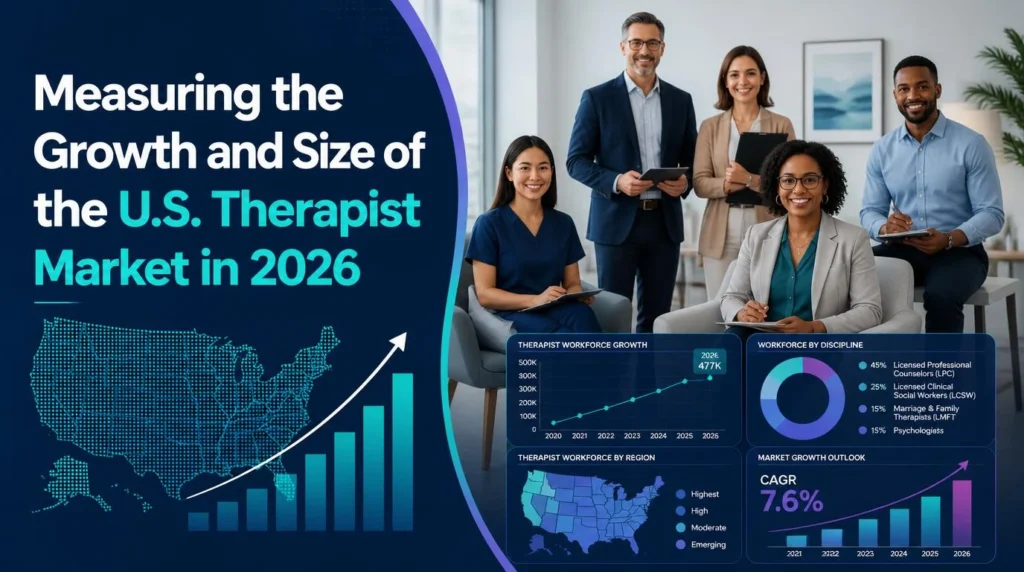
The U.S. therapist market continues to evolve as individuals, families, and communities seek professional support for mental health, emotional well-being, and relationship challenges. For organizations serving this sector, a reliable Therapist Email List can help identify relevant professionals and support business communication, market research, and professional outreach.
Understanding the size of the therapist market requires more than counting practitioners. It involves examining employment statistics, professional categories, demand for therapy services, workplace settings, technological developments, and future workforce projections. In 2026, these factors provide valuable insights into the direction of the American therapy industry.
This article explores the available workforce data, major growth drivers, market segments, and business opportunities associated with the U.S. therapist market.
1. Understanding the U.S. Therapist Market
The U.S. therapist market includes professionals who provide psychological support, counseling, behavioral health services, relationship guidance, and other forms of therapeutic care. The market covers several occupations, each with distinct responsibilities, qualifications, and licensing requirements.
Common professional categories include:
- Mental health counselors
- Marriage and family therapists
- Clinical and counseling psychologists
- Substance abuse counselors
- Behavioral disorder counselors
- Rehabilitation counselors
- Other licensed therapeutic professionals
These categories do not represent one uniform workforce. Their educational requirements, scope of practice, employment environments, and service populations can differ considerably.
For example, marriage and family therapists generally focus on relationship dynamics and family systems, while mental health counselors may address emotional difficulties, behavioral concerns, and other mental health needs. Clinical and counseling psychologists may provide psychological assessment and specialized treatment, depending on their qualifications and licensing.
Consequently, estimating the total market requires clearly defining which professional groups are included. Combining different occupational categories without checking for overlapping definitions can produce misleading totals.
2. How Large Is the Therapist Workforce in 2026?
A useful way to evaluate the therapist market is to examine employment statistics from the U.S. Bureau of Labor Statistics (BLS). The latest figures available in its occupational outlook profiles provide a foundation for understanding workforce size and future employment trends.
The following figures use 2025 employment estimates and projections for 2035 published in the BLS occupational profiles available in 2026. They are not a single count of every therapist in the United States.
| Professional category | Employment in 2025 | Projected employment in 2035 | Projected growth |
| Substance abuse, behavioral disorder, and mental health counselors | 533,400 | 631,400 | 18% |
| Marriage and family therapists | 76,300 | 86,600 | 14% |
| Clinical and counseling psychologists | 81,300 | 90,900 | 12% |
Source: U.S. Bureau of Labor Statistics occupational outlook and employment projection data. Figures represent separate occupational categories, not the complete therapist market.
These figures illustrate that several mental health-related occupations employ substantial numbers of professionals and are expected to expand over the coming decade.
However, they should not be interpreted as a comprehensive count of all therapists. Certain practitioners are categorized under other occupational groups, while some deliver therapy-related care within wider healthcare services.
The available data therefore suggest that the therapist workforce is significant and growing, but an exact overall market total depends on the definition and measurement method used.
3. Factors Contributing to Market Growth
Several developments are influencing the demand for therapy services across the United States. Their impact varies by location, specialty, population, and service delivery model.
Greater attention to mental well-being
Public conversations about emotional health have encouraged more people to learn about available support options. Schools, workplaces, healthcare organizations, and community groups increasingly discuss stress management, emotional resilience, and access to professional care.
Greater awareness does not automatically translate into an appointment for every person who needs assistance. Cost, insurance coverage, practitioner availability, and personal circumstances can still affect whether individuals receive services.
Nevertheless, growing recognition of mental health needs is one factor supporting demand for qualified professionals.
Ongoing need for behavioral health services
Professionals specializing in mental health and substance use support individuals experiencing various emotional, behavioral, and psychological difficulties. According to the BLS, employment growth in this occupational group is expected to be supported by continued demand for treatment related to mental health conditions and substance use.
Demand can also differ by age group and community. Some areas may require additional services for young people, while others may need greater access to addiction treatment, family support, or community-based care.
These differences create opportunities for providers that can respond to specific local needs.
Relationship and family support
Marriage and family therapists work with individuals, couples, and families to address challenges involving relationships and family dynamics. Their services may be delivered through private practices, outpatient facilities, community organizations, and other care settings.
The BLS projects employment in this occupation to grow by 14% from 2025 to 2035. It identifies integrated care and collaboration among specialists as factors contributing to employment growth.
This outlook indicates that relationship-focused therapy remains an important part of the wider behavioral health landscape.
4. The Role of Different Therapy Specialties
The U.S. therapist market is made up of professionals serving different needs. Understanding these distinctions is essential when evaluating workforce statistics or researching potential customers in the industry.
Mental health counselors: These professionals support clients dealing with emotional, psychological, and behavioral concerns within their licensed scope of practice. Their work may include counseling, treatment planning, and collaboration with other healthcare providers.
Marriage and family therapists: These practitioners focus on relationship patterns, family interactions, and challenges affecting couples or family units. Their services can be relevant to individuals as well as groups.
Clinical and counseling psychologists: Depending on their qualifications and state licensing, these specialists can conduct psychological evaluations, provide therapeutic care, and deliver other advanced psychological services.
Substance abuse counselors: These practitioners assist individuals addressing substance-related concerns and recovery goals. Their work can take place in outpatient programs, residential facilities, hospitals, and community services.
Rehabilitation counselors: These professionals help people manage personal, social, or employment-related challenges associated with disabilities and other barriers.
Each segment has different workforce characteristics and service requirements. Businesses conducting market research should therefore define their target specialty before estimating audience size or planning outreach.
5. Where Do U.S. Therapists Work?
Therapists work across a broad range of professional environments. Their employment settings influence the types of services they provide, the populations they serve, and the organizations with which they collaborate.
Private practices
Independent practices are an important part of the therapy landscape. Practitioners may operate their own offices, work in group practices, or share facilities with other healthcare professionals.
Business needs can include appointment management, billing services, practice software, professional training, office supplies, and marketing support.
Hospitals and outpatient facilities
Hospitals and outpatient centers may employ therapists as part of multidisciplinary care teams. These environments can support collaboration among mental health professionals, physicians, social workers, and other healthcare staff.
Organizations serving these facilities may research their staffing needs, service offerings, and operational requirements before developing business proposals.
Community-based organizations
Community health centers, nonprofit organizations, and social service providers may offer counseling and behavioral health programs to specific populations.
Their priorities can include service accessibility, program funding, referral coordination, and community outreach.
Schools and educational institutions
Some therapists and related professionals work with children, adolescents, families, and educational communities. The exact role depends on the practitioner’s credentials and the institution’s service structure.
Educational settings may require collaboration among families, school staff, and external care providers.
Telehealth and hybrid practices
Digital platforms allow some practitioners to conduct sessions remotely. Others combine in-person appointments with virtual consultations.
The expansion of remote service delivery has increased the importance of secure communication systems, scheduling tools, digital records, and privacy-conscious technology. However, practitioners must comply with applicable licensing rules and other requirements governing the locations where they and their clients are based.
6. How Technology Is Changing the Therapy Market
Technology is influencing how therapy services are delivered and how practices manage their daily operations.
Telehealth platforms can help eligible clients connect with practitioners without traveling to a physical office. Scheduling systems can reduce administrative work, while electronic records and billing software can help practices organize information and manage workflows.
Other tools may support appointment reminders, secure document sharing, reporting, and practice administration.
The use of technology varies considerably among professionals and organizations across the therapy sector. Some practitioners operate digitally focused practices, while others prefer traditional in-person services or have limited resources for new systems.
For businesses developing products for therapists, this creates a need to understand the specific requirements of different practice types instead of assuming that every professional has the same technology priorities.
Privacy and security also remain important. Solutions handling sensitive client information should be evaluated carefully for compliance with applicable laws, professional obligations, and organizational policies.
7. Regional Differences Across the United States
The therapist workforce is not distributed evenly throughout the country. Population size, local healthcare infrastructure, insurance arrangements, education opportunities, and the availability of licensed practitioners can influence regional differences.
Large metropolitan areas may offer a wide variety of specialized services, but competition among practices can also be substantial. Rural and underserved communities may experience different challenges, including fewer nearby providers and longer travel distances.
State-level research can help businesses understand these differences. Useful factors include:
- The number of practitioners in a defined occupation
- Local employment and projected workforce growth
- The number and type of healthcare facilities
- Urban and rural population characteristics
- Professional licensing requirements
- Access to behavioral health services
- The availability of telehealth infrastructure
Reviewing these measures alongside national statistics provides a clearer understanding of differences between regions and local markets. However, employment totals should not be treated as a direct measurement of unmet patient demand, because workforce availability and service utilization are different measures.
For market research, comparing states and metropolitan areas can help identify where particular products, services, or professional resources may be relevant.
8. Business Opportunities in the Therapist Industry
The expanding behavioral health workforce creates potential opportunities for organizations that provide products and services to therapy professionals. These opportunities depend on genuine customer needs, available budgets, and the ability to demonstrate practical value.
Practice management software
Therapists and group practices may need tools for scheduling, billing, client communication, and administrative organization. Vendors can research practice size and operating models to understand which features are most useful.
Training and continuing education
Professional development providers may offer courses, workshops, and educational resources relevant to practitioners’ specialties and licensing requirements.
Content should accurately reflect applicable professional standards and avoid promising that a course automatically satisfies licensing requirements without verification.
Office equipment and supplies
Physical practices may require furniture, office equipment, printed materials, and other operational supplies. Requirements can vary according to office size, client population, and service model.
Marketing and website services
Private practices may seek support with website development, local search visibility, appointment inquiries, and professional branding. Ethical marketing should prioritize accurate descriptions of services, transparent information, and protection of client confidentiality.
Healthcare data and research services
Market research companies may help organizations understand the distribution of therapy professionals, compare regional opportunities, and segment professional audiences.
When evaluating contact databases, businesses should consider data freshness, source transparency, professional relevance, permitted use, and compliance with applicable privacy and marketing rules.
9. Researching the U.S. Therapist Market: A Practical Approach
A structured research process helps businesses make better decisions and avoid relying on unsupported estimates.
Step 1: Define the professional group. Decide whether the research covers mental health counselors, marriage and family therapists, psychologists, substance abuse counselors, or several clearly defined categories.
Step 2: Select reliable sources. Use government employment statistics, licensing board information, professional associations, and credible industry research. Review when the information was released and understand how each statistic is defined before using it.
Step 3: Establish geographic boundaries. Determine whether the study covers the entire United States, selected states, metropolitan areas, or rural communities.
Step 4: Examine workplace settings. Compare solo and group practices separately from hospitals, outpatient facilities, nonprofit agencies, and other types of healthcare employers. These groups can have different purchasing requirements.
Step 5: Identify business needs. Interview prospective customers or review credible industry research to understand operational challenges and potential demand for relevant solutions.
Step 6: Validate contact information. If professional outreach is part of the research, verify that contact records are accurate, current, and appropriate for the intended purpose.
Step 7: Review findings regularly. Workforce estimates, regulations, technology requirements, and business priorities change over time. Reassessing the research helps prevent outdated assumptions from shaping marketing decisions.
10. The Role of Professional Contact Data
Professional contact data can support market research and business-to-business communication when used responsibly. For example, a software provider serving private practices may need to distinguish independent therapists from administrators at larger behavioral health organizations.
An effective contact database should prioritize relevant, reliable information rather than simply maximizing the number of records.It should help users understand whether the records match their intended professional audience.
Important evaluation criteria include:
- Accuracy: Are names, professional roles, and contact details correct?
- Data freshness: How regularly are contact details checked, corrected, and brought up to date?
- Segmentation: Can users identify relevant specialties, locations, and practice types?
- Transparency: Is the data source and permitted use clearly explained?
- Regulatory compliance: Does the planned communication follow relevant privacy laws and the rules governing email marketing and telemarketing?
- Relevance: Does the database match the organization’s actual business purpose?
A database should never be assumed to contain every practicing therapist or to guarantee a response from its contacts. It is a research and communication resource, not a substitute for market validation.
Organizations should also avoid sending unsolicited messages that disregard consent requirements, opt-out requests, or professional expectations. Clear identification, relevant messaging, and responsible data handling help support more appropriate business communication.
11. Challenges in Measuring Market Size
Although employment statistics provide useful information, several limitations make it difficult to calculate one definitive size for the U.S. therapist market.
Different occupational definitions: The word “therapist” can refer to multiple professions. Counting only one category may understate the broader workforce, while combining categories without checking definitions may lead to inaccurate totals.
Employment versus professional counts: Employment estimates generally measure jobs or occupational employment under defined statistical methods. They do not necessarily equal the number of unique licensed professionals, because some practitioners may hold multiple jobs or work part time.
Self-employment: Independent practitioners can be difficult to compare directly with employees working in larger organizations, depending on the dataset and measurement method.
Changing service models: Telehealth and hybrid care can change how services are delivered, but they do not necessarily create additional practitioners.
Data publication schedules: Government statistics are released periodically rather than in real time. As a result, the latest available employment figures in 2026 may describe an earlier reference year.
For these reasons, a credible market assessment should state the year, source, occupational definition, and measurement limitations. Forecasts should also be presented as projections rather than guaranteed outcomes.
12. What the Therapist Market May Look Like Beyond 2026
Future developments will depend on several interconnected factors, including demand for behavioral healthcare, workforce availability, education and training capacity, reimbursement policies, and the adoption of technology.
The BLS projects 18% employment growth for substance abuse, behavioral disorder, and mental health counselors from 2025 to 2035, compared with 14% for marriage and family therapists and 12% for clinical and counseling psychologists. These projections indicate differing growth expectations across selected occupations rather than one growth rate for the entire therapist market.
Organizations should monitor these trends alongside local workforce data and actual customer needs. A growing occupation may create opportunities for training, technology, administration, and professional services, but the commercial potential of each opportunity requires separate evaluation.
Businesses that use reliable evidence, define their audiences carefully, and adapt to changing requirements will be better positioned to understand the sector.
Conclusion
Measuring the growth and size of the U.S. therapist market in 2026 requires a careful review of occupational statistics, professional specialties, workplace settings, regional differences, and future employment projections. Available federal data indicate continued growth across several mental health-related occupations, although no single figure captures every professional who may be described as a therapist.
For businesses serving this sector, accurate research provides a stronger foundation for identifying relevant customers, understanding professional needs, and developing useful products or services. A well-maintained Therapist Mailing List may support targeted professional outreach when the contact information is accurate, the intended use is permitted, and applicable privacy and marketing requirements are followed.
Ultimately, a meaningful assessment of the therapist market depends on clear definitions, trustworthy data, and regular updates. These practices help businesses distinguish broad workforce trends from specific opportunities and make better-informed decisions in the evolving U.S. therapy industry.