Skip to main content

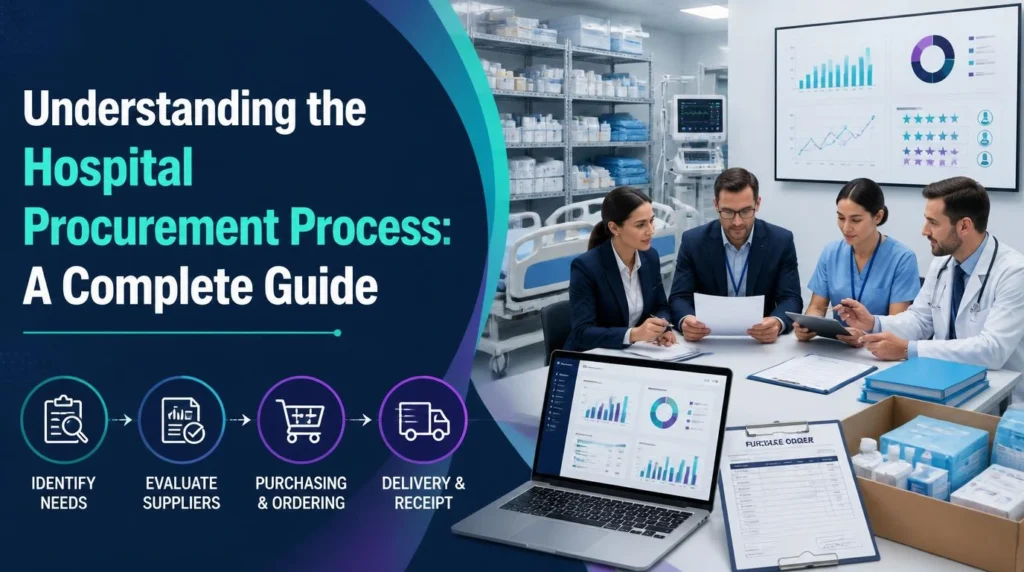
A well-organized hospital procurement process helps healthcare organizations obtain medical equipment, supplies, technology, pharmaceuticals, and essential services while balancing quality, cost, availability, and compliance. For healthcare vendors, marketers, and organizations working with hospital decision-makers, understanding this process can make communication more relevant and efficient.
A Dentists Email List can also support businesses that provide dental equipment, clinical supplies, software, laboratory services, and other healthcare solutions when they need to identify relevant dental professionals and organizations for B2B outreach.
What Is Hospital Procurement?
Hospital procurement refers to the systematic process hospitals use to identify their needs, evaluate suppliers, purchase products or services, and manage vendor relationships. Unlike ordinary purchasing, healthcare procurement often involves multiple stakeholders, regulatory requirements, quality checks, budget limitations, and patient-safety considerations.
The process can cover everything from everyday consumables such as gloves and syringes to sophisticated imaging equipment, surgical devices, information systems, maintenance services, and facility-management solutions.
Because procurement decisions can directly influence healthcare operations, hospitals typically use structured procedures rather than making purchasing decisions based solely on price.
Why Is Procurement Important for Hospitals?
Procurement plays an important role in maintaining operational efficiency and supporting patient care. Hospitals need access to the right products at the right time while ensuring that purchases meet internal and external requirements.
Effective procurement can help hospitals:
- Control operational expenses
- Maintain adequate inventory levels
- Reduce supply shortages
- Evaluate product quality
- Improve supplier accountability
- Support regulatory compliance
- Standardize frequently purchased products
- Reduce unnecessary purchasing
- Improve budgeting and forecasting
- Maintain continuity of clinical operations
Poor procurement practices can create delays, increase costs, contribute to inventory problems, and make it harder for clinical teams to access necessary resources.
Who Is Involved in Hospital Procurement?
Hospital procurement is rarely handled by one person. Depending on the organization and the type of purchase, several departments may participate.
Procurement and Purchasing Teams
Procurement professionals typically coordinate supplier research, quotations, negotiations, purchase orders, contracts, and supplier performance.
Clinical Professionals
Doctors, nurses, dentists, surgeons, pharmacists, and other healthcare professionals may provide input when products directly affect clinical workflows or patient care.
Finance Departments
Finance teams evaluate budgets, payment terms, total costs, and the financial implications of major purchases.
IT Teams
Technology-related purchases often require IT involvement to assess cybersecurity, integrations, infrastructure, data management, and technical compatibility.
Hospital Administrators
Administrators may review larger purchases based on strategic priorities, operational requirements, and organizational budgets.
Legal and Compliance Teams
Contracts, privacy requirements, regulatory considerations, and risk management may require legal or compliance review.
Key Stages of the Hospital Procurement Process
Although procurement procedures vary between hospitals, the overall process commonly follows several stages.
1. Identifying the Need
The process usually begins when a department identifies a requirement.
For example, a hospital may need:
- New diagnostic equipment
- Medical consumables
- Surgical instruments
- Pharmaceutical products
- Laboratory supplies
- Healthcare software
- Maintenance services
- Cleaning and facility services
- Communication technology
The requesting department may document the quantity, specifications, expected usage, budget, and required delivery timeline.
Accurate requirements are important because unclear specifications can make supplier comparisons difficult.
2. Defining Product Specifications
Once a need has been identified, the hospital may establish technical and operational specifications.
For medical equipment, specifications could include performance requirements, compatibility, safety features, warranty terms, training requirements, and maintenance support.
For consumables, specifications might include material, size, packaging, quality standards, shelf life, and intended use.
The goal is to create objective criteria that allow potential suppliers to be evaluated consistently.
3. Establishing the Budget
Before approaching suppliers, the organization may determine the available budget.
Budget planning can consider:
- Purchase price
- Installation expenses
- Maintenance
- Training
- Replacement parts
- Software subscriptions
- Delivery costs
- Long-term operating expenses
For larger purchases, hospitals may evaluate total cost of ownership rather than focusing only on the initial purchase price.
4. Finding Potential Suppliers
Hospitals may identify potential vendors through existing supplier relationships, industry networks, procurement platforms, referrals, trade events, professional associations, and online research.
Supplier discovery can be particularly important when a hospital wants to introduce a new product category or find alternatives to an existing vendor.
Healthcare companies attempting to reach procurement teams should therefore understand the hospital’s purchasing structure rather than relying exclusively on broad promotional messaging.
5. Requesting Quotes or Proposals
Depending on the purchase, hospitals may request quotations, proposals, or detailed bids from multiple suppliers.
A request may include:
- Product specifications
- Required quantities
- Delivery expectations
- Service requirements
- Contract terms
- Warranty requirements
- Compliance documentation
- Pricing information
For larger or more complex projects, the hospital may issue a formal Request for Proposal (RFP).
6. Evaluating Suppliers
Price is only one factor in supplier evaluation.
Hospitals may assess vendors based on:
- Product quality
- Regulatory compliance
- Delivery reliability
- Supplier reputation
- Customer support
- Warranty coverage
- Technical capabilities
- Pricing
- Financial stability
- Previous healthcare experience
For clinical products, hospitals may also review evidence related to safety, performance, certifications, and compatibility.
7. Negotiating Terms
After evaluating proposals, procurement teams may negotiate with one or more suppliers.
Negotiations can cover:
- Product pricing
- Volume discounts
- Payment terms
- Delivery schedules
- Warranty periods
- Service agreements
- Training
- Replacement policies
- Contract duration
Large healthcare organizations may have standardized purchasing agreements or preferred supplier programs that influence negotiations.
8. Obtaining Internal Approval
Major purchases may require approval from multiple stakeholders.
The approval process depends on the hospital’s internal policies and the size or nature of the purchase.
For example, purchasing routine supplies may require relatively simple authorization, while a major imaging system or hospital-wide software platform could require approval from procurement, finance, clinical leadership, IT, and executive management.
9. Issuing the Purchase Order
Once the purchase has been approved, the hospital may issue a purchase order (PO).
A purchase order typically specifies important information such as:
- Supplier details
- Product or service description
- Quantity
- Agreed pricing
- Delivery location
- Payment conditions
- Purchase order number
- Applicable terms
The purchase order creates a formal record of the transaction.
10. Receiving and Inspecting the Order
After delivery, hospital personnel may inspect the products to confirm that they match the purchase order.
They may check:
- Quantity
- Product specifications
- Packaging
- Condition
- Expiration dates
- Documentation
- Serial numbers
- Delivery accuracy
Any discrepancies may need to be reported to the supplier before the transaction is finalized.
11. Invoice Verification and Payment
The finance department typically verifies the invoice against purchasing and receiving records.
Many organizations use a three-way matching process involving:
- Purchase order
- Goods receipt or receiving record
- Supplier invoice
If the information matches, payment can proceed according to the agreed terms.
12. Supplier Performance Management
Procurement does not necessarily end after payment.
Hospitals may monitor suppliers over time based on:
- Delivery performance
- Product quality
- Response times
- Pricing
- Customer service
- Contract compliance
- Product availability
Consistently poor performance may lead hospitals to renegotiate contracts or consider alternative suppliers.
Hospital Procurement Process at a Glance
| Procurement Stage | Typical Activity | Main Consideration |
| Need Identification | Determine what is required | Clinical and operational need |
| Specifications | Define product requirements | Quality and compatibility |
| Budgeting | Establish available funds | Total cost |
| Supplier Research | Identify potential vendors | Capability and reliability |
| RFP/RFQ | Request proposals or quotations | Pricing and requirements |
| Evaluation | Compare suppliers | Quality, cost, compliance |
| Negotiation | Discuss commercial terms | Value and contract conditions |
| Approval | Obtain internal authorization | Budget and organizational policy |
| Purchase Order | Formalize the purchase | Accuracy of order details |
| Delivery | Receive products/services | Quantity and condition |
| Invoice Review | Verify billing | PO and delivery match |
| Performance Review | Assess supplier | Long-term reliability |
What Factors Influence Hospital Purchasing Decisions?
Several factors can affect procurement decisions.
Cost
Hospitals operate under financial constraints, making cost an important consideration. However, the lowest price does not necessarily represent the best value.
Quality
Product quality can be particularly important for equipment, medical devices, laboratory products, and other clinical applications.
Reliability
A supplier that consistently delivers products on schedule may be more attractive than one offering a lower price but inconsistent fulfillment.
Compliance
Healthcare organizations may need suppliers to meet applicable regulatory, safety, privacy, security, or organizational requirements.
Support and Service
For complex equipment and technology, technical support, maintenance, training, and after-sales service can influence the purchasing decision.
Scalability
Hospitals may consider whether a supplier can support future growth, additional locations, increased demand, or changing operational requirements.
Common Challenges in Hospital Procurement
Hospital procurement teams can face several challenges.
Supply Chain Disruptions
Unexpected shortages, transportation problems, manufacturing delays, and geopolitical disruptions can affect product availability.
Budget Constraints
Hospitals often need to balance clinical requirements with financial limitations.
Complex Decision-Making
Multiple departments may have different priorities, making consensus difficult.
Product Standardization
Hospitals may prefer standardized products to simplify training, inventory management, and clinical workflows.
Data and Inventory Management
Inaccurate inventory information can contribute to overstocking, shortages, and unnecessary purchases.
Supplier Risk
Hospitals need to consider the reliability and long-term viability of important suppliers.
How Technology Is Changing Hospital Procurement
Digital technologies are changing how healthcare organizations manage procurement.
Procurement platforms can help teams manage supplier information, purchase orders, approvals, contracts, and inventory from centralized systems.
Artificial intelligence and analytics can also support demand forecasting, supplier analysis, spend classification, and purchasing decisions. Automation can reduce repetitive administrative work and provide procurement teams with better visibility into purchasing activity.
Cloud-based systems can make it easier for authorized teams to access procurement information across multiple facilities or departments.
However, technology adoption also requires consideration of cybersecurity, data governance, system integration, training, and organizational change.
How Healthcare Vendors Can Work With Hospital Procurement Teams
Companies selling products or services to hospitals should understand that procurement decisions may involve several stages and stakeholders.
Instead of focusing exclusively on promotional claims, vendors can provide useful information such as:
- Clear product specifications
- Transparent pricing structures
- Compliance documentation
- Case studies
- Product demonstrations
- Implementation information
- Training resources
- Customer support details
- Warranty information
- Delivery capabilities
Understanding the buyer’s requirements can make business communication more relevant.
For B2B healthcare marketers, accurate contact data can also help identify professionals involved in purchasing, clinical operations, administration, and related decision-making. A carefully segmented database can support targeted outreach when used responsibly and in accordance with applicable privacy and communication requirements.
Hospital Procurement vs. Ordinary Business Purchasing
Hospital procurement is different from many ordinary commercial purchasing processes because products and services can have direct implications for patient care, clinical operations, safety, and regulatory compliance.
A business purchasing office might prioritize price, convenience, and delivery. A hospital may need to consider those factors alongside clinical effectiveness, safety, regulatory requirements, interoperability, staff training, and long-term support.
This makes healthcare procurement more structured and stakeholder-driven.
Tips for Improving Hospital Procurement
Hospitals can consider several approaches to improve procurement efficiency.
Establish Clear Procurement Policies
Defined procedures can help employees understand how purchases should be requested, reviewed, approved, and documented.
Use Supplier Performance Metrics
Tracking delivery accuracy, quality, pricing, and service levels can help procurement teams make informed supplier decisions.
Improve Inventory Visibility
Accurate inventory information can help reduce both shortages and unnecessary stock.
Strengthen Cross-Department Collaboration
Procurement teams can work closely with clinical, finance, IT, and administrative teams to understand requirements.
Evaluate Total Cost
Looking beyond the initial purchase price can provide a more complete picture of long-term value.
Review Supplier Relationships Regularly
Periodic supplier reviews can identify opportunities for improvement, renegotiation, consolidation, or diversification.
The Role of Data in Healthcare Procurement
Data can support procurement decisions by helping hospitals understand purchasing patterns, supplier performance, product usage, and inventory requirements.
Historical purchasing information can reveal frequently purchased products and seasonal demand patterns. Supplier data can help organizations identify vendors that consistently meet delivery and quality expectations.
For healthcare businesses, professional contact data can also support market research and B2B outreach. For example, companies selling dental products, software, equipment, or professional services may use a Dentists Mailing List to identify relevant professionals for legitimate business communication.
Any marketing activity involving professional contact information should still respect applicable privacy laws, organizational policies, consent requirements where applicable, and email communication rules.
Future Trends in Hospital Procurement
Hospital procurement is likely to continue evolving as healthcare organizations adopt more digital systems and focus on operational efficiency.
Some important areas to watch include:
- AI-assisted demand forecasting
- Automated purchasing workflows
- Digital supplier management
- Predictive inventory planning
- Greater supply-chain visibility
- Sustainable procurement
- Data-driven supplier evaluation
- Integrated procurement platforms
- Increased cybersecurity requirements
- More strategic supplier partnerships
Hospitals may increasingly view procurement as a strategic function rather than simply an administrative purchasing activity.
Conclusion
Understanding the hospital procurement process provides valuable insight into how healthcare organizations evaluate products, services, suppliers, and long-term purchasing relationships. From identifying a need and defining specifications to supplier evaluation, negotiation, approval, delivery, payment, and performance monitoring, each stage can influence operational efficiency and purchasing outcomes.
For healthcare vendors and B2B marketers, understanding these stages can make outreach more relevant and help businesses communicate according to the needs of different hospital stakeholders. Accurate information, clear product value, reliable service, and responsible communication remain important throughout the process. Businesses serving dental professionals can similarly use a Dentists Mailing List as part of a targeted B2B strategy, provided their outreach follows applicable privacy and communication requirements.