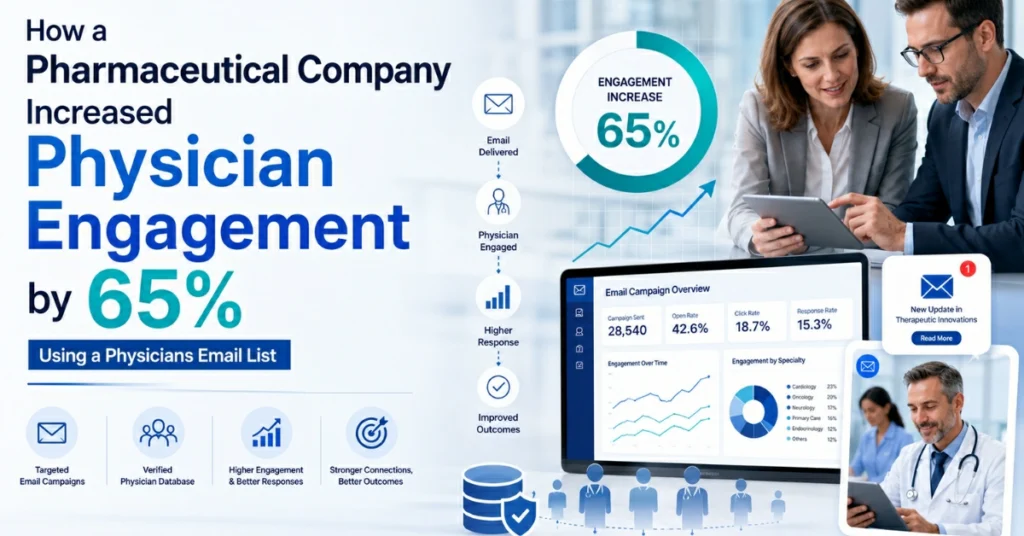
Pharmaceutical Company marketers operate in a highly competitive healthcare environment where connecting with physicians requires precision, relevance, and timely communication. Traditional advertising methods often fail to provide the personalized engagement needed to capture the attention of busy medical professionals. As healthcare providers receive countless promotional messages daily, pharmaceutical brands must adopt more targeted outreach strategies.
A Physicians Email List offers a practical solution by providing access to verified physician contacts for focused marketing campaigns. With accurate data and audience segmentation, companies can deliver educational content, product updates, and industry insights directly to relevant healthcare professionals. This case study examines how a pharmaceutical company increased physician engagement by 65% through a strategic, data-driven email marketing initiative.
The Challenge: Reaching Physicians in a Competitive Environment
The pharmaceutical company in this case study was preparing to launch a new treatment designed for patients with chronic cardiovascular conditions. Although the product had strong clinical benefits, the marketing team faced several obstacles:
- Limited visibility among busy healthcare professionals
- Low engagement rates from previous digital campaigns
- Difficulty reaching relevant specialists
- Rising marketing costs across traditional channels
- Need for measurable campaign performance
The company recognized that reaching physicians directly would be essential for educating healthcare providers about the new treatment. However, generic marketing efforts were producing inconsistent results.
To overcome these challenges, the marketing team decided to implement a targeted physician outreach strategy using a verified physicians email database.
Why Physician Engagement Matters
Physicians play a critical role in healthcare decision-making. They evaluate treatment options, review clinical data, and make recommendations based on patient needs.
For pharmaceutical organizations, physician engagement contributes to:
- Increased awareness of new therapies
- Better understanding of clinical evidence
- Stronger relationships with healthcare providers
- Improved educational outreach
- More effective product adoption initiatives
When physicians receive relevant and valuable information, they are more likely to engage with educational materials and stay informed about emerging treatment options.
The Strategy Behind the Campaign
Rather than sending broad promotional messages, the pharmaceutical company developed a highly targeted strategy focused on relevance and personalization.
The campaign consisted of three primary components:
1. Audience Identification
The company first identified its ideal physician audience based on:
- Specialty
- Geographic location
- Practice type
- Years of experience
- Clinical interests
Cardiologists, internal medicine physicians, and primary care providers became the primary target segments.
2. Data Verification
The marketing team partnered with a reliable data provider to ensure contact accuracy.
The physicians email database included:
| Data Element | Purpose |
| Physician Name | Personalized communication |
| Specialty | Relevant content targeting |
| Email Address | Direct outreach |
| Practice Information | Segmentation |
| Geographic Location | Regional campaigns |
| Professional Credentials | Audience qualification |
Accurate data reduced bounce rates and improved campaign deliverability.
3. Content Personalization
The company developed customized content for different physician segments.
Instead of sending identical messages to all recipients, marketers created:
- Specialty-specific newsletters
- Clinical research summaries
- Educational webinars
- Product updates
- Case studies
- Continuing medical education resources
This approach increased content relevance and encouraged engagement.
Campaign Execution
The campaign was rolled out over a six-month period.
The marketing team created a structured email sequence designed to nurture physician relationships gradually.
Phase 1: Awareness
The first phase focused on introducing the new therapy and sharing educational information.
Topics included:
- Disease burden statistics
- Emerging treatment approaches
- Clinical research findings
- Patient care challenges
The goal was to offer something useful to people before talking about the product itself.
Phase 2: Education
The second phase focused on deeper educational engagement.
Physicians received:
- Peer-reviewed study summaries
- Expert interviews
- Webinar invitations
- Clinical practice insights
This educational approach positioned the pharmaceutical company as a valuable information resource.
Phase 3: Engagement
The final phase encouraged active participation.
Emails included:
- Webinar registration opportunities
- Research downloads
- Product information requests
- Feedback surveys
By this stage, physicians were already familiar with the content and more likely to engage.
Segmentation: The Key Driver of Success
One of the most important factors behind the campaign’s success was audience segmentation.
Rather than treating physicians as a single audience, marketers divided contacts into specific groups.
Specialty-Based Segmentation
Different specialties received different content.
For example:
Cardiologists
Received information focused on:
- Clinical trial outcomes
- Cardiovascular patient management
- Comparative treatment analysis
Primary Care Physicians
Received content focused on:
- Early diagnosis
- Patient education
- Referral recommendations
Internal Medicine Specialists
Received broader disease management resources.
Geographic Segmentation
The campaign also incorporated regional targeting.
Physicians in different regions received information about:
- Local healthcare trends
- Regional events
- Area-specific educational opportunities
This localized approach improved relevance.
Engagement-Based Segmentation
The marketing team continuously monitored physician behavior.
Contacts were grouped based on:
- Email opens
- Click-through rates
- Webinar attendance
- Content downloads
Highly engaged physicians received advanced content, while less engaged contacts received introductory materials.
Email Personalization Tactics
Modern healthcare professionals expect personalized communication.
The pharmaceutical company implemented several personalization strategies.
Personalized Subject Lines
Instead of generic subject lines, emails included:
- Physician name
- Specialty references
- Relevant clinical topics
This significantly improved open rates.
Customized Content Recommendations
Based on physician interests, recipients received content aligned with their specialty and engagement history.
Dynamic Email Content
Different physicians saw different sections of the same email depending on their profile information.
This increased message relevance without requiring multiple campaign versions.
Leveraging Educational Content
The company recognized that physicians respond more positively to educational information than direct sales messaging.
As a result, content marketing became a central component of the campaign.
Clinical Research Summaries
Physicians received concise summaries of recent studies.
These summaries highlighted:
- Key findings
- Clinical implications
- Treatment considerations
Expert Perspectives
Industry experts contributed insights on patient care trends and treatment advancements.
Webinar Programs
Educational webinars became one of the highest-performing engagement channels.
Topics included:
- New treatment approaches
- Clinical best practices
- Disease management strategies
The webinars generated substantial interaction among healthcare professionals.
Measuring Campaign Performance
The company established clear performance indicators before launching the campaign.
These metrics allowed marketers to evaluate effectiveness throughout the process.
Primary Metrics
The team tracked:
- Open rates
- Click-through rates
- Webinar registrations
- Content downloads
- Survey participation
- Engagement duration
Secondary Metrics
Additional measurements included:
- Email deliverability
- Bounce rates
- Unsubscribe rates
- Geographic response trends
Continuous monitoring enabled ongoing optimization.
Results: A 65% Increase in Physician Engagement
After six months, the campaign delivered impressive results.
Engagement Growth
Overall physician engagement increased by 65%.
This improvement reflected stronger interaction across multiple channels.
Improved Open Rates
Targeted segmentation and personalization significantly increased email opens.
Physicians were more likely to engage with messages relevant to their specialties.
Higher Webinar Participation
Educational webinars attracted substantial attendance.
Many participants continued interacting with additional content after the events.
Increased Content Consumption
Downloads of clinical resources and educational materials exceeded initial expectations.
Physicians demonstrated strong interest in evidence-based information.
Better Audience Insights
The campaign also generated valuable behavioral data that informed future marketing efforts.
The company gained a deeper understanding of:
- Preferred content formats
- Physician interests
- Engagement patterns
- Regional trends
Why the Campaign Worked
Several factors contributed to the campaign’s success.
Data Accuracy
Reliable physician contact information ensured messages reached intended recipients.
Audience Relevance
Segmentation delivered content that aligned with physician interests.
Educational Focus
The campaign prioritized value-driven information rather than excessive promotion.
Consistent Communication
Regular touchpoints helped maintain physician interest over time.
Continuous Optimization
Performance monitoring allowed marketers to refine strategies throughout the campaign.
Lessons for Pharmaceutical Marketers
Healthcare marketers can apply several lessons from this case study.
Prioritize Data Quality
Campaign success begins with accurate physician information.
Poor-quality data can negatively affect deliverability and engagement.
Invest in Segmentation
The more relevant the content, the higher the likelihood of physician interaction.
Focus on Education
Healthcare professionals often prefer evidence-based resources over promotional messaging.
Use Behavioral Data
Engagement insights help marketers improve future campaigns.
Measure Everything
Tracking performance metrics enables data-driven decision-making and continuous improvement.
The Future of Physician Email Marketing
Healthcare marketing continues to evolve rapidly.
Emerging trends include:
Artificial Intelligence
AI-powered tools can improve personalization and audience targeting.
Predictive Analytics
Marketers can identify physicians most likely to engage with specific content.
Marketing Automation
Automated workflows enable more efficient communication.
Omnichannel Integration
Email campaigns increasingly work alongside webinars, social media, and digital advertising.
Organizations that embrace these innovations may achieve even stronger engagement results.
Conclusion
This case study demonstrates how a pharmaceutical company successfully increased physician engagement by 65% through a strategic and data-driven email marketing initiative. By combining accurate contact information, audience segmentation, personalized messaging, and educational content, the organization created meaningful interactions with healthcare professionals while improving overall campaign performance.
As pharmaceutical marketing becomes increasingly competitive, targeted outreach strategies continue to play an important role in building physician relationships and delivering valuable information. Companies that invest in high-quality data, relevant content, and measurable engagement strategies can achieve stronger results and greater marketing efficiency. A well-maintained Physician Mailing List remains one of the most valuable assets for organizations seeking to connect with healthcare providers and support long-term marketing success.