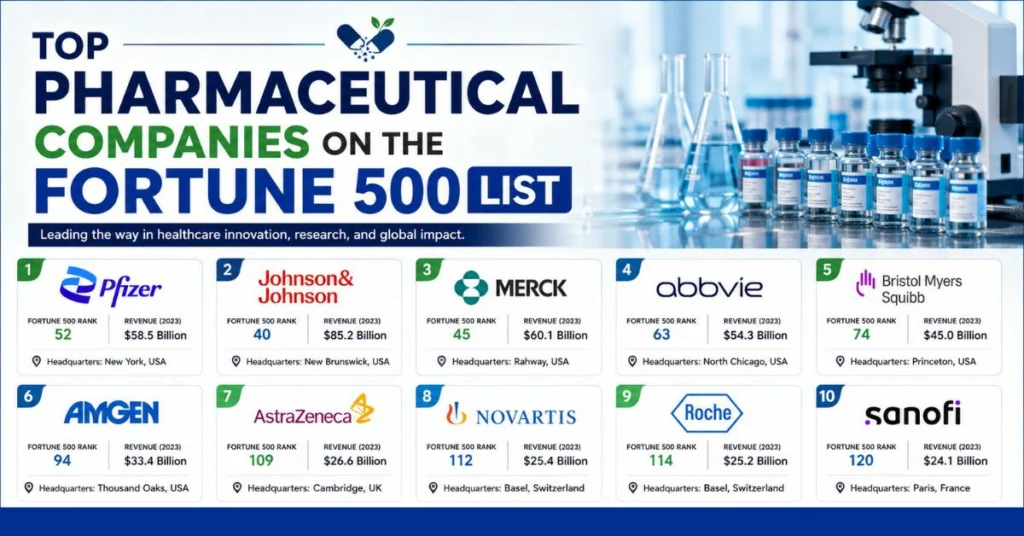
Pharmaceutical Companies continue to shape the global healthcare landscape, with the Fortune 500 ranking highlighting the industry’s most successful organizations based on revenue, market performance, and business growth. These leading drug manufacturers drive innovation through groundbreaking research, advanced therapies, and strategic investments that improve patient care worldwide. Their financial strength and expanding product portfolios reflect the growing demand for life-saving medicines and healthcare solutions across diverse markets.
For businesses focused on outreach and industry engagement, a Pharmaceutical Industry Email List helps connect with key decision-makers, executives, researchers, and healthcare professionals within these influential organizations. This guide explores the top pharmaceutical companies featured on the Fortune 500, what sets each apart, and the factors influencing their rankings year after year.
Why the Fortune 500 List Matters for Pharma
The Fortune 500 list isn’t just a scoreboard for corporate bragging rights. It reflects real economic weight — total revenue, market influence, and the scale of operations that touch millions of patients worldwide. For consumers, understanding which pharmaceutical companies sit at the top of this list can shed light on where the medications in your medicine cabinet come from, which companies are driving new treatments, and how competitive (or consolidated) the healthcare industry has become.
Pharmaceutical companies on the Fortune 500 span several categories: drug manufacturers that research and produce medicines, biotechnology firms specializing in cutting-edge therapies, and pharmacy or distribution companies that get products into the hands of patients. This article focuses primarily on the drug manufacturers and biopharma innovators that consumers most often recognize by name.
What It Takes to Rank Among the Top Pharma Companies
Before diving into the list, it helps to understand what drives these rankings. A few consistent factors separate the top performers from the rest of the pack:
Revenue from blockbuster drugs. Companies that develop one or more “blockbuster” medications — drugs generating over a billion dollars annually — tend to see outsized revenue growth. Treatments for diabetes, obesity, cancer, and autoimmune conditions have been especially lucrative in recent years.
Heavy investment in research and development. Pharmaceutical companies routinely reinvest a significant share of revenue into R&D, betting on new drug candidates that may take a decade or more to reach the market.
Mergers and acquisitions. Company size often grows through acquiring smaller biotech firms with promising drug pipelines rather than developing every product internally.
Global market reach. Companies with strong footholds in multiple regions — North America, Europe, and increasingly Asia-Pacific — are better positioned to weather regulatory or economic shifts in any single market.
Adaptability. The ability to pivot quickly, as many companies did during the COVID-19 pandemic, has proven to be a defining trait of long-term Fortune 500 pharma leaders.
Top Pharmaceutical Companies on the Fortune 500 List
Below is an overview of some of the most recognizable pharmaceutical companies that consistently rank among the largest U.S. corporations by revenue.
1. Johnson & Johnson
Johnson & Johnson remains one of the most diversified healthcare companies in the world, with strengths spanning pharmaceuticals, medical devices, and consumer health products. Its pharmaceutical division has been driven in recent years by strong oncology and immunology products. J&J’s scale and diversified business lines have helped it maintain consistent financial performance even as individual drug patents expire.
2. Pfizer
Pfizer is one of the best-known names in the industry, particularly after its role in developing one of the first widely distributed COVID-19 vaccines. Beyond its pandemic-era products, Pfizer maintains a broad portfolio covering oncology, vaccines, and rare disease treatments. While its post-pandemic revenue has normalized compared to peak COVID years, the company continues to invest heavily in new drug development and strategic acquisitions.
3. Merck & Co.
Merck has built its reputation on a strong pipeline of vaccines and cancer treatments, most notably its widely used cancer immunotherapy drug. The company’s continued investment in oncology research has kept it near the top of pharmaceutical revenue rankings, and its vaccine portfolio remains a steady contributor to overall performance.
4. AbbVie
Spun off from Abbott Laboratories, AbbVie has grown rapidly through a combination of blockbuster autoimmune treatments and strategic acquisitions, including its purchase of Allergan. This expanded the company’s footprint into aesthetics and neuroscience, diversifying its revenue streams beyond its historically dominant immunology drugs.
5. Eli Lilly
Eli Lilly has seen remarkable growth thanks to its diabetes and weight-management treatments, which have become some of the most in-demand drugs in the industry. The company’s long history of innovation — from early insulin production to modern biologics — continues to fuel its position among the industry’s top performers.
6. Bristol Myers Squibb
Bristol Myers Squibb focuses heavily on oncology, cardiovascular, and immunology treatments. The company blends the resources of a large pharmaceutical enterprise with the innovative approach often associated with smaller biotech firms, giving it a distinctive position in the market.
7. Amgen
As one of the world’s largest independent biotechnology companies, Amgen has built a strong portfolio in oncology, cardiovascular disease, and inflammatory conditions. Its focus on biologics and cutting-edge science has helped it maintain a steady position among top-revenue pharmaceutical companies.
8. Gilead Sciences
Gilead is best known for its work in antiviral treatments, including therapies for HIV and hepatitis C. The company’s focus on addressing major global health challenges has earned it a strong reputation, and it continues to expand its research into oncology and other therapeutic areas.
Quick Comparison Table
| Company | Headquarters | Known For | Key Therapeutic Areas |
| Johnson & Johnson | New Brunswick, NJ | Diversified healthcare portfolio | Oncology, immunology, MedTech |
| Pfizer | New York, NY | COVID-19 vaccine (Comirnaty) | Vaccines, oncology, rare disease |
| Merck & Co. | Rahway, NJ | Cancer immunotherapy leadership | Oncology, vaccines |
| AbbVie | North Chicago, IL | Autoimmune treatments | Immunology, neuroscience, aesthetics |
| Eli Lilly | Indianapolis, IN | Diabetes and weight-loss drugs | Endocrinology, neurodegenerative disease |
| Bristol Myers Squibb | Princeton, NJ | Oncology and cardiovascular drugs | Oncology, cardiovascular, immunology |
| Amgen | Thousand Oaks, CA | Biotechnology innovation | Oncology, cardiovascular, inflammation |
| Gilead Sciences | Foster City, CA | Antiviral treatments | HIV, hepatitis C, oncology |
Note: Rankings and revenue figures shift year to year based on new drug approvals, patent expirations, and market conditions. Always check the most recent Fortune 500 release for exact positions.
How These Companies Impact Everyday Consumers
It’s easy to think of Fortune 500 pharmaceutical rankings as an abstract business exercise, but the impact reaches into daily life in several tangible ways:
Access to treatment. The scale of these companies allows them to manufacture and distribute medications globally, often making treatments available in regions that smaller companies couldn’t reach.
Pricing and affordability. Because these companies dominate market share, their pricing strategies directly affect what patients pay out of pocket or through insurance. Public scrutiny over drug pricing has intensified as some of these companies have grown.
Pace of innovation. Larger, well-funded companies can absorb the financial risk of long, expensive drug development cycles, which smaller biotech firms sometimes cannot. This has led to significant breakthroughs in cancer treatment, diabetes management, and vaccine technology in recent years.
Employment and local economies. Many of these businesses are important employers in the areas where they have their headquarters, making substantial contributions to manufacturing operations, local economic activity, and research jobs.
Common Challenges Facing Top Pharma Companies
Despite their size and revenue, even the largest pharmaceutical companies face persistent challenges:
- Lengthy regulatory approval processes. Bringing a new drug to market can take over a decade and cost billions of dollars, with no guarantee of approval.
- Patent cliffs. When patents expire, generic manufacturers can quickly erode revenue from once-blockbuster drugs.
- Public pressure over pricing. High drug costs remain a hot-button issue, with ongoing calls for pricing reform in the U.S. market.
- Global supply chain complexity. Manufacturing and distributing medicine across dozens of countries requires navigating varied regulations, tariffs, and logistical hurdles.
These pressures mean that even companies sitting comfortably in the top ranks of the Fortune 500 must continue innovating and adapting to maintain their position.
What to Watch in the Years Ahead
Looking forward, a few trends are likely to shape which pharmaceutical companies continue climbing the Fortune 500 rankings:
- Continued growth in metabolic and weight-management drugs, an area that has already reshaped revenue rankings industry-wide.
- Expanded use of artificial intelligence in drug discovery, potentially shortening development timelines and reducing costs.
- Greater investment in personalized medicine, combining diagnostics with targeted treatments.
- Growth in emerging markets, particularly across Asia-Pacific, as healthcare spending rises in developing economies.
Companies that successfully adapt to these shifts are likely to maintain or improve their standing on future Fortune 500 lists.
Beyond the U.S.: Global Pharma Leaders Worth Knowing
While the Fortune 500 specifically ranks American companies, it’s worth noting that several international pharmaceutical firms compete directly with U.S.-based giants on the global stage. Companies such as Roche and Novartis (Switzerland), Sanofi (France), and AstraZeneca (UK) regularly rank among the world’s largest pharmaceutical companies by revenue and market capitalization, even though they appear on Fortune’s separate Global 500 list rather than the U.S.-focused Fortune 500. Roche, for example, has built a strong reputation by integrating diagnostics with pharmaceuticals, giving it a unique edge in personalized medicine. Novartis continues to expand its oncology and neuroscience pipelines, while Sanofi and AstraZeneca maintain broad portfolios spanning vaccines, respiratory disease, and rare conditions.
For consumers, this global context is a helpful reminder that the medications available in local pharmacies often originate from a mix of domestic and international manufacturers, all competing — and sometimes collaborating — to bring new treatments to market faster.
How Rankings Can Shift From Year to Year
It’s worth emphasizing that Fortune 500 pharmaceutical rankings are not static. A single blockbuster drug approval, a major patent expiration, or a large acquisition can shift a company’s position significantly within a single year. For instance, a company that dominated headlines during a public health emergency may see its ranking normalize once demand for that specific product declines. Conversely, companies with strong, diversified pipelines — spanning multiple therapeutic areas rather than relying on one or two flagship drugs — tend to see more stable, long-term rankings.
This volatility is part of why industry watchers, investors, and healthcare professionals pay close attention to quarterly earnings reports and annual pipeline updates, rather than relying solely on last year’s Fortune 500 position as an indicator of current standing.
Frequently Asked Questions
Does a higher Fortune 500 rank mean a company makes better medications?
Not necessarily. The ranking is based purely on revenue, which is influenced by factors like pricing strategy, market size, and product mix rather than clinical effectiveness or safety. A smaller company with a narrower but highly effective product line can still make an enormous difference in patient outcomes without approaching the revenue scale of the largest players.
Why do rankings vary so significantly between years?
Pharmaceutical revenue can swing significantly based on a single successful drug launch, a patent expiration, or a shift in public health needs, as seen with the recent surge in demand for metabolic and weight-management treatments. Because the industry depends heavily on a relatively small number of high-revenue products, gains and losses tend to be more dramatic here than in more diversified sectors.
Are international pharmaceutical giants excluded from this list?
Yes. The Fortune 500 only includes companies incorporated in the United States, so major international drugmakers headquartered abroad don’t appear on this particular ranking, even if their global revenue would place them competitively among the companies listed here.
How often is the list updated?
Fortune publishes an updated ranking once a year, typically in the first half of the year, based on each company’s most recently completed fiscal year revenue.
Conclusion
The Fortune 500 list provides a helpful, if flawed, perspective on how pharmaceutical companies currently control the majority of the U.S. market based solely on revenue. Johnson & Johnson, Eli Lilly, Merck, Pfizer, AbbVie, and Bristol-Myers Squibb make up the leading tier this year, each shaped by different forces, from surging demand for weight-management drugs to the steady normalization of pandemic-era vaccine sales. For businesses, researchers, and marketers who want to stay connected with decision-makers across these organizations, a well-maintained Pharmaceutical Industry Mailing List remains one of the most direct ways to reach the people shaping the future of medicine.