Skip to main content
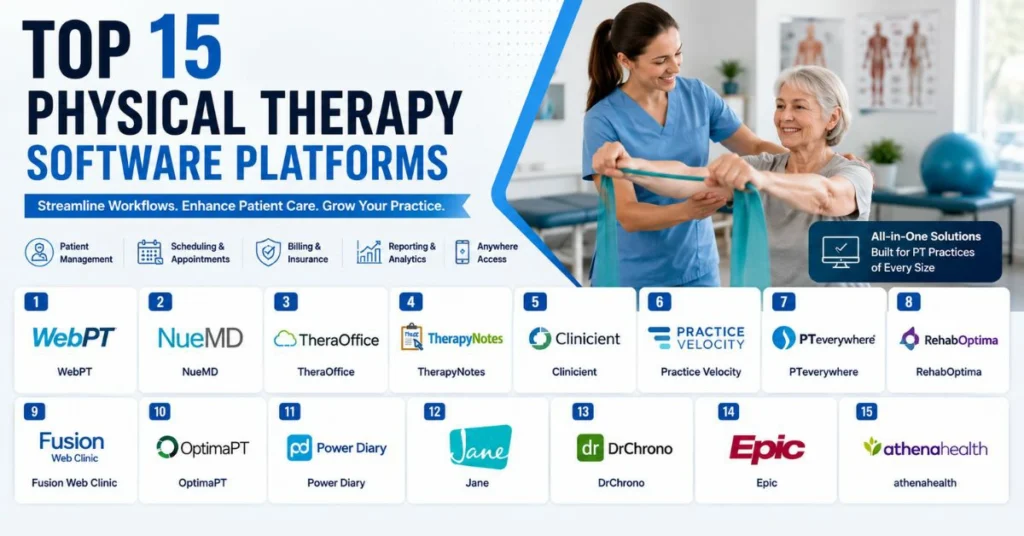
Physical Therapy Software plays a vital role in helping clinics streamline scheduling, documentation, billing, patient communication, and overall practice management. Choosing the right solution can improve operational efficiency, enhance patient experiences, and support better clinical outcomes while reducing administrative workload.
With numerous platforms available, selecting software that aligns with your clinic’s workflow, budget, and growth objectives is essential for long-term success. Physicians Email Lists also help healthcare marketers connect with physical therapists, clinic owners, and healthcare decision-makers for targeted outreach and business development. This guide reviews 15 leading physical therapy software platforms, highlights their key features and benefits, and provides practical insights to help you choose the best solution for your practice.
Why Physical Therapy Software Matters
Physical therapy practices juggle a unique mix of demands: detailed clinical documentation, insurance billing with specialty-specific codes, home exercise program tracking, and frequent, recurring patient visits. Generic medical software often falls short here because it wasn’t built around the specific rhythms of rehab care — multiple visits per week, progress-based treatment plans, and outcome tracking tied to functional milestones rather than a single diagnosis.
Purpose-built PT software solves this by combining electronic medical records (EMR), scheduling, billing, and patient engagement tools into a single system designed around therapy-specific workflows. The right platform can cut documentation time significantly, reduce claim denials, and make it easier for patients to stay engaged with their recovery between visits.
What to Look for Before Comparing Platforms
Before diving into specific tools, it helps to know which features actually move the needle for a physical therapy practice:
- Specialty-specific documentation templates built around PT, OT, or multi-discipline rehab workflows, not generic medical notes
- Billing and claims management with strong first-pass acceptance rates to minimize denied claims
- Scheduling and automated reminders to reduce no-shows, which can cost clinics tens of thousands of dollars annually
- Home exercise program (HEP) tools that let patients follow guided routines between appointments
- Telehealth capability for remote check-ins and hybrid care models
- Reporting and analytics to track outcomes, productivity, and financial performance
- Integration options with existing billing, imaging, or referral systems
With those criteria in mind, here is a closer look at 15 platforms commonly used across physical therapy clinics today.
1. WebPT
WebPT is one of the most established names in physical therapy software, offering PT-specific documentation templates, scheduling, and billing tools built around outpatient rehab workflows. It’s widely used by both single-location clinics and larger multi-site practices, and its longevity in the market means a large support and integration ecosystem.
2. SPRY
SPRY is a newer, AI-driven platform built for PT, OT, and speech-language pathology clinics. It emphasizes automated documentation, high clean-claim rates, and AI-assisted prior authorization tools designed to reduce administrative time spent chasing insurance approvals. Its all-in-one structure appeals to clinics looking to consolidate multiple tools into one system.
3. TheraOffice
TheraOffice positions itself as a highly adaptable EMR and practice management system for rehab therapy of all kinds, including physical, occupational, and speech therapy. It’s often chosen by practices that want deep customization in documentation and reporting.
4. Raintree Systems
Raintree offers comprehensive EHR and billing tools aimed at larger, multi-location, or enterprise rehab organizations. Its strength lies in scalability and configurability for practices managing complex operational structures across several clinics.
5. Prompt
Prompt is a modern EMR and practice management platform built for physical therapy, occupational therapy, and chiropractic clinics. It’s positioned as a replacement for older legacy systems, with an emphasis on streamlined documentation and a more contemporary user interface.
6. Clinicient
Clinicient simplifies care delivery for PT, OT, and speech-language organizations through a single platform focused on clinical workflow efficiency and business performance. It’s commonly used by practices that want tighter alignment between clinical documentation and revenue cycle management.
7. Net Health
Net Health specializes in therapy-focused tools with strong patient engagement and reporting functionality. It’s often selected by hospital-affiliated outpatient therapy departments that need robust reporting for larger healthcare systems.
8. TheraPlatform
TheraPlatform supports telehealth sessions, scheduling, billing, documentation, and note-taking, with a design that works well for therapy professionals who see a meaningful portion of patients through virtual visits.
9. SimplePractice
SimplePractice is a broadly used practice management platform popular with solo practitioners and small practices across multiple therapy disciplines. It’s known for a relatively fast implementation timeline and straightforward pricing, making it accessible for smaller or newly launched clinics.
10. Jane App
For health and wellness practitioners, Jane is cloud-based practice management software that offers online booking, scheduling, billing, and charting. Because of its user-friendly interface and strong patient-facing booking experience, it is a popular option for multidisciplinary clinics that offer physical therapy.
11. ClinicSense
ClinicSense is frequently highlighted for its usability, particularly around appointment scheduling and client management. Reviewers often point to its intuitive interface, easy online booking, and automated reminders as reasons it works well for smaller practices focused on reducing administrative overhead.
12. Noterro
Noterro is known for strong customer support and flexible customization, allowing clinics to tailor documentation and workflows to their specific business needs. It supports customizable SOAP note templates and is often praised for responsive onboarding support.
13. Vagaro
Vagaro is widely used across wellness and healthcare-adjacent businesses, including physical therapy, and is particularly strong in mobile app functionality. Due to its accessibility, Vagaro is frequently preferred by clinics that place a high priority on staff and patient scheduling and payment processing while on the go.
14. Mindbody
Mindbody offers a broad, all-in-one platform covering scheduling, billing, documentation, and patient engagement, and is used across a range of physical therapy and rehab settings, from sports rehabilitation centers to multi-location therapy groups. Its scale and brand recognition make it a familiar option for practices that also want strong consumer-facing booking tools.
15. AdvancedMD
AdvancedMD provides practice management, EHR, and patient engagement tools with scheduling, billing, telemedicine, and reporting functionality. It’s often chosen by multi-specialty practices that include physical therapy among a broader mix of services, since it isn’t limited to rehab-specific workflows alone.
Comparing the Top Platforms at a Glance
| Platform | Best For | Notable Strength |
| WebPT | Established PT-specific practices | Long-standing PT-focused workflows |
| SPRY | AI-driven documentation & billing | Automated prior authorization |
| TheraOffice | Highly customizable rehab EMR | Deep documentation flexibility |
| Raintree Systems | Enterprise & multi-location clinics | Scalable, configurable operations |
| Prompt | Practices replacing legacy systems | Modern, streamlined interface |
| Clinicient | PT, OT & SLP organizations | Clinical-to-revenue workflow alignment |
| Net Health | Hospital-affiliated outpatient therapy | Strong reporting for larger systems |
| TheraPlatform | Telehealth-focused practices | Built-in virtual visit tools |
| SimplePractice | Solo practitioners & small clinics | Fast setup, accessible pricing |
| Jane App | Multidisciplinary wellness clinics | Clean patient booking experience |
| ClinicSense | Small practices reducing admin work | High usability & automated reminders |
| Noterro | Practices wanting flexible customization | Strong customer support |
| Vagaro | Mobile-first clinic management | Robust mobile app functionality |
| Mindbody | Multi-location & consumer-facing clinics | All-in-one scale and brand reach |
| AdvancedMD | Multi-specialty practices | Broad practice management feature set |
How to Choose the Right Platform for Your Practice
With so many capable options, the decision often comes down to a few practical factors rather than which platform has the longest feature list.
Practice size and structure. A solo practitioner has very different needs than a ten-location rehab group. Smaller practices often benefit from simpler, faster-to-implement tools like SimplePractice or ClinicSense, while larger organizations may need the configurability of Raintree Systems or TheraOffice.
Billing complexity. Clinics with high patient volume and complex insurance mixes should prioritize platforms with strong first-pass claim acceptance rates, since denied claims are costly and time-consuming to rework.
Discipline mix. Multidisciplinary clinics offering physical therapy alongside occupational therapy, speech therapy, or chiropractic care often benefit from platforms explicitly built to support multiple specialties in one system, rather than stitching together separate tools.
Implementation timeline. Some platforms can be up and running within one to two weeks, while more configurable enterprise systems may take two to four months to fully implement. Clinics evaluating options should weigh how quickly they need to transition and how much internal bandwidth they have for training.
Support and training resources. Even the most intuitive software has a learning curve, and staff turnover is common in healthcare settings. Vendors that offer robust onboarding materials, live training sessions, and responsive customer support tend to see smoother adoption and fewer workflow disruptions during the first few months after go-live.
Total cost of ownership. Sticker price alone rarely reflects the true cost of a platform. Implementation fees, add-on modules, per-provider licensing, and the potential revenue impact of switching systems all factor into the real cost over a multi-year contract. It’s worth requesting a full cost breakdown rather than comparing monthly subscription prices alone.
Patient engagement needs. If home exercise adherence and remote check-ins are a priority, platforms with strong telehealth and HEP tools should be weighted more heavily in the decision.
Common Pitfalls When Switching Software
Clinics frequently underestimate the transition period when moving from one system to another. Historical patient data migration, staff retraining, and temporary workflow disruptions are common challenges. It’s worth requesting a detailed implementation timeline from any vendor before committing, along with references from clinics of a similar size and specialty mix.
Another common oversight is focusing purely on documentation speed while overlooking billing performance. A platform that saves time on notes but generates a higher rate of denied claims can end up costing a practice more in the long run, both financially and in administrative hours spent on rework.
Data security and compliance should also factor into the decision. Any platform handling patient records needs to meet HIPAA requirements for data storage, transmission, and access controls. Clinics should confirm a vendor’s compliance certifications and ask directly about how patient data is encrypted, backed up, and protected against breaches before signing a contract.
The Growing Role of AI in Physical Therapy Software
One of the clearest trends across the platforms covered above is the increasing use of artificial intelligence to reduce administrative burden. AI-assisted documentation tools can now generate clinical notes in real time during a session, cutting the hours therapists traditionally spend charting after clinic hours. Some platforms have extended this further into billing, using AI to flag likely claim denials before submission or to automate portions of the prior authorization process.
This shift matters because documentation and billing administration are consistently cited as leading causes of burnout among physical therapists. A platform that meaningfully reduces this workload doesn’t just improve operational efficiency — it can directly affect staff retention and job satisfaction, which in turn affects the consistency and quality of patient care.
That said, AI features vary significantly in maturity across vendors. Clinics evaluating AI-driven claims should ask for specific performance data, such as measured reductions in documentation time or improvements in first-pass claim acceptance rates, rather than relying on general marketing language.
Frequently Asked Questions
Is cloud-based software safer than on-premise systems for physical therapy clinics?
Cloud-based platforms are now the industry standard and, when properly configured, typically offer stronger security than on-premise systems. Reputable vendors invest heavily in encryption, redundant backups, and compliance monitoring that would be costly for an individual clinic to replicate on its own servers.
How long does it typically take to switch physical therapy software?
Implementation timelines vary widely depending on platform complexity and practice size. Simpler, cloud-native tools can be operational within one to two weeks, while more configurable enterprise systems with extensive data migration needs may take two to four months.
Do smaller clinics need the same features as large multi-location practices?
Not necessarily. Solo practitioners and small clinics often benefit more from simplicity, fast setup, and affordable pricing than from the deep configurability larger organizations require. Overpaying for enterprise-level features that go unused is a common mistake smaller practices make when selecting software.
Can physical therapy software integrate with other healthcare systems?
Many platforms offer integrations with billing clearinghouses, imaging systems, and referral networks, though the depth of integration varies by vendor. Clinics working closely with hospital systems or larger referral networks should confirm integration capabilities before committing to a platform.
Conclusion
The physical therapy software market has matured considerably, offering purpose-built solutions for nearly every practice size, specialty mix, and operational priority. Whether a clinic needs deep customization, AI-assisted billing, strong telehealth support, or simple, fast-to-implement scheduling tools, there is a platform suited to the job. Just as accurate outreach data — such as a well-maintained Physician Mailing List — helps healthcare marketers connect with the right professionals, choosing the right practice management software helps clinics connect more efficiently with the patients they serve. Evaluating platforms against practice size, billing needs, and patient engagement priorities is the clearest path to finding the right long-term fit.